What Is a Gross Lease in Commercial Real Estate?
A commercial gross lease is a lease where the tenant pays one fixed monthly amount that already covers the major operating costs. That single payment usually includes taxes, insurance, utilities, and routine maintenance, so the tenant doesn’t deal with separate bills or changing expenses.
This setup appears often in offices, retail units, and other multi-tenant buildings because it keeps budgeting straightforward. The structure can shift depending on how the parties want to handle shared costs.
- A modified gross lease splits some expenses. The tenant might handle electricity while the landlord covers water, waste, or common-area services.
- A full-service lease wraps almost every cost into one flat fee, which makes planning easier but raises the base rent.
A simple gross lease example is a small office that pays one steady charge each month and never has to track individual operating costs. It’s a clean approach for tenants who want certainty and for landlords who prefer to manage building expenses themselves.
A Gross Lease Works Well When...
- You want predictable monthly rent and a simple setup.
- You don’t want to manage utilities, maintenance, or service providers.
- You want insulation from rising utility or maintenance costs.
- You’re leasing space in a multi-tenant building with shared costs.
- You’re a landlord who prefers a higher base rent in exchange for covering operating expenses.
Gross Lease vs. Net Lease
A gross lease and a net lease split costs differently. A gross lease rolls major expenses into one payment, and the landlord covers taxes, insurance, and operating costs. The tenant pays a steady monthly amount, plus certain expenses, and each version adds a little more:
- A single net lease adds property taxes.
- A double net lease adds taxes and insurance.
- A triple net lease adds taxes, insurance, and maintenance.
A net lease shifts most cost increases to the tenant, while a gross lease keeps payments predictable. If you want steady monthly costs, a gross lease fits. If you prefer lower base rent and don’t mind added expenses, a net lease works.
Looking for More Resources?
If you want to learn more about renting out commercial property, start with our guide on how to rent out a commercial property. And if you need additional documents along the way, you can use:
These resources make it easier to manage new leases, handle changes, or close out an agreement.
What’s Included in a Gross Commercial Lease?
A gross lease bundles most building costs into one monthly payment. The rent is higher because the landlord handles the major operating expenses. The tenant pays one steady amount each month, which keeps budgeting simple. Landlords typically cover:
- Property taxes
- Building insurance
- Basic utilities
- Routine maintenance
If certain utilities or insurance aren’t included, the tenant pays those items directly. Rent often reflects past operating expenses, so it’s based on real building costs.
How Cost Sharing Works Inside a Gross Lease
A gross lease bundles most operating costs into one payment, but a few expenses can still fall outside that flat rate. These exceptions exist because some costs depend on how each tenant uses the space. Landlords usually cover services that benefit the whole property. Tenants may handle items tied to their own direct use. This keeps the rent stable while making sure higher-use tenants pay their share. These items often fall on the tenant:
- Utilities metered to the tenant
- Services the landlord provides for shared areas
- Costs that don’t fit normal building operations
Some gross leases also account for times when usage rises above normal levels. That can mean higher-than-usual utility consumption. It can also mean service needs that stretch past the building’s standard operating cycle. These adjustments keep the gross rent predictable and give both sides a fair way to handle unusual spikes.
How to Fill Out Your Gross Commercial Lease Agreement
When you fill out a gross lease for a commercial space, every section should reinforce what the bundled rent includes, how building expenses are handled, and when the tenant may owe extra. Use the steps below to define those cost boundaries clearly.
1. Add the Property Information Connected to the Gross Rent
Enter the full address and suite number so it’s clear which space the landlord services under the bundled rate. If the building layout affects operating costs, such as shared entries or multi-tenant floors, you can add a map. The goal is to identify the exact area the landlord maintains with the flat rent.
2. Describe the Space the Gross Rent Covers
List the square footage included in the gross rate, since operating costs are tied to size. Add the percentage of the total building if that helps explain how the landlord allocates expenses. Also note the shared areas the landlord maintains, such as:
- Lobbies
- Hallways
- Shared restrooms
- Parking
If storage is included, list it here. Additional areas increase the landlord’s cost obligations under the gross structure.
3. Enter the Gross Rent and What It Covers
Add the monthly rent amount that includes the landlord’s operating expenses. Then enter:
- Payment frequency
- Due date
- Security deposit
- Grace period
- Late-fee method
These details matter in a commercial gross lease because the landlord uses the rent to cover predictable operating costs. Steady payment terms help keep the cost-sharing model stable.
4. Select the Utilities Covered by the Gross Rent
Choose the utilities the landlord pays for under the bundled rate. These may include:
- Electric
- Water
- Gas
- Trash
- Internet
- Janitorial
Anything not selected becomes a tenant expense. This section defines the cost limits of the gross lease and prevents confusion about what falls inside the flat rent.
5. List the Services Included in the Landlord’s Operating Costs
Gross leases often include services that the landlord provides regularly. Add those here, such as:
- Routine maintenance
- Minor repairs
- Landscaping
- Common-area cleaning
These services directly shape the landlord’s operating budget and must align with the rent amount.
6. Set the Landlord’s Cost-Based Maintenance Duties
Enter the building systems the landlord maintains under the gross rent. These typically include:
- Roof and structure
- Plumbing
- Electrical
- HVAC
- Fire-safety systems
- Common areas
These items form the backbone of the landlord’s operating expenses, so they need to be defined clearly.
7. Add High-Usage Rules That Protect the Gross Rent
Some tenants use more resources than others. If needed, add terms for:
- Heavy electricity use
- High water consumption
- Long business hours
- Extra trash
These rules protect the gross rent when tenant usage exceeds normal operating-cost assumptions.
8. Add Cost-Protection Terms for Operating Increases
Gross leases sometimes include limits or triggers that shift costs back to the tenant if expenses rise sharply. Add terms such as:
- Stop levels
- Cost caps
- Base-year increases
These terms help manage risk when operating costs change.
9. Set the Sign Rules That Affect Operating Costs
Signs can increase maintenance or utility usage. Enter when signs require approval and who pays for them. For example, a retail tenant may need approval for a lit storefront sign and must cover installation, electricity use, maintenance, and removal at lease end.
10. Add Insurance Requirements That Protect Operating Costs
A commercial gross lease places more responsibility on the landlord, so insurance helps manage unexpected expenses. Add:
- Liability coverage limits
- Property-damage coverage
- Whether the landlord is an additional insured
- Required cancellation notice
These items reduce the chance that building repairs increase the landlord’s operating costs.
11. Define Damage and Repair Rules Within the Gross-Cost Model
Enter what counts as major damage. Then note when repairs fall under the landlord’s operating costs and when the tenant’s activities shift costs back to them. This keeps the gross rent tied to normal building conditions and prevents cost disputes.
12. List Any Extra Services Covered by the Gross Rent
If the landlord includes services like security, snow removal, or pest control, enter them here. These items raise operating costs and must match the gross rent amount.
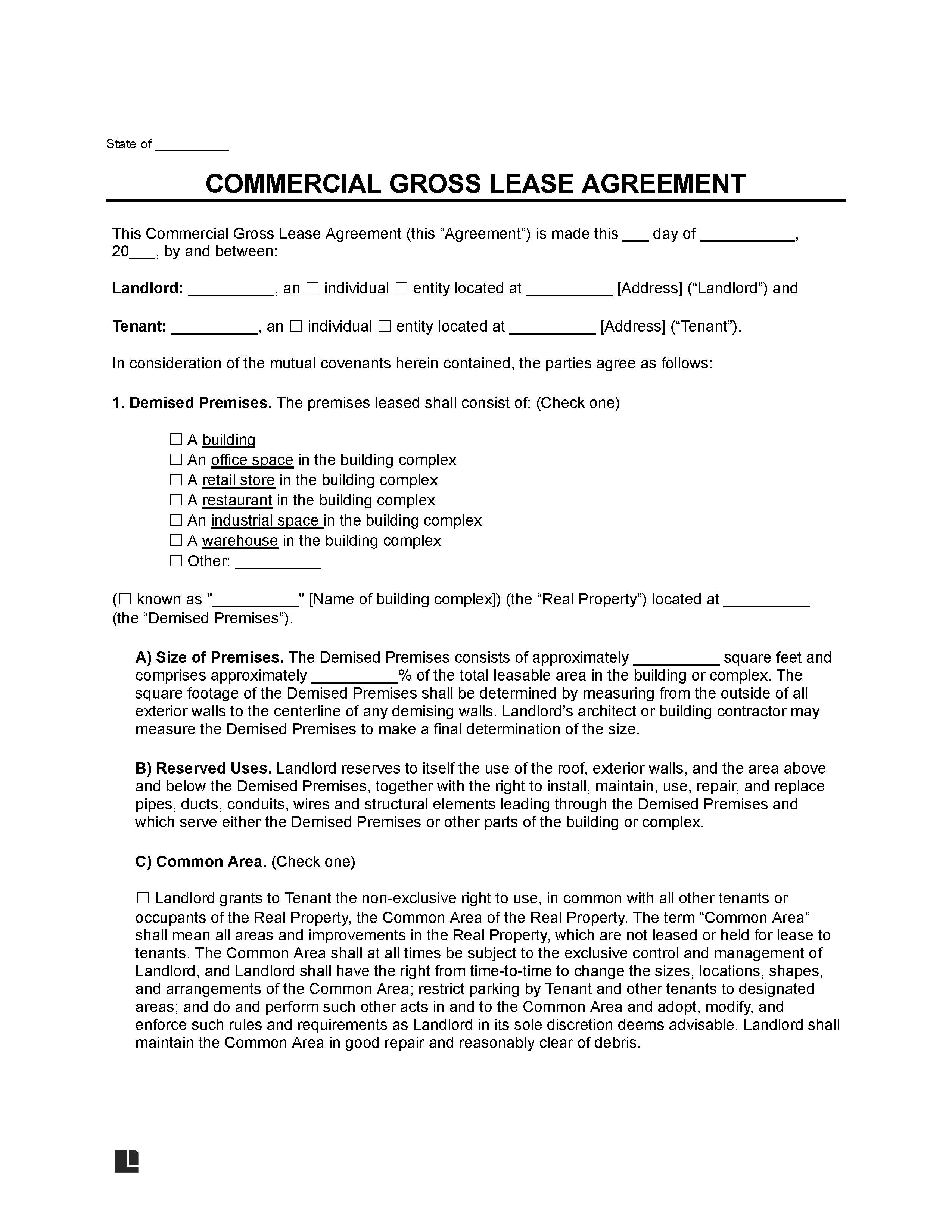
Commercial Gross Lease Agreement Sample
Take a quick look at our completed sample to see how a gross lease is structured. When you’re ready, customize our commercial gross lease template and then download it in Word or PDF. The sample shows how the terms and bundled costs work together.