


What Is an Employment Termination Letter?
An employment termination letter is a notice from an employer to an employee that the employee is being fired or laid off. It explains the reasons for ending the relationship and the effective date. It also lists any final steps, like the return of company property.
This formal document proves a business acted fairly in ending a working relationship. It finalizes a termination and shows that an employee received a chance to improve, if applicable.
Our employment termination letter template helps you relay the news respectfully. Even if it’s tough, the form uses simple and professional language to make it easier.
When to Use a Termination of Employment Letter
You may need to terminate an employee if the company is downsizing and no longer needs the employee’s position. If you want to reduce company costs but not fire an individual permanently, consider writing a furlough letter.
Here are some employee-initiated reasons you’d need to end an employment relationship and issue a termination letter:
- Being habitually late or absent
- Failing to meet performance goals
- Engaging in poor conduct
- Damaging company property
- Violating company policies
- Misusing company resources
- Falsifying company records
What to Include in an Employment Termination Letter
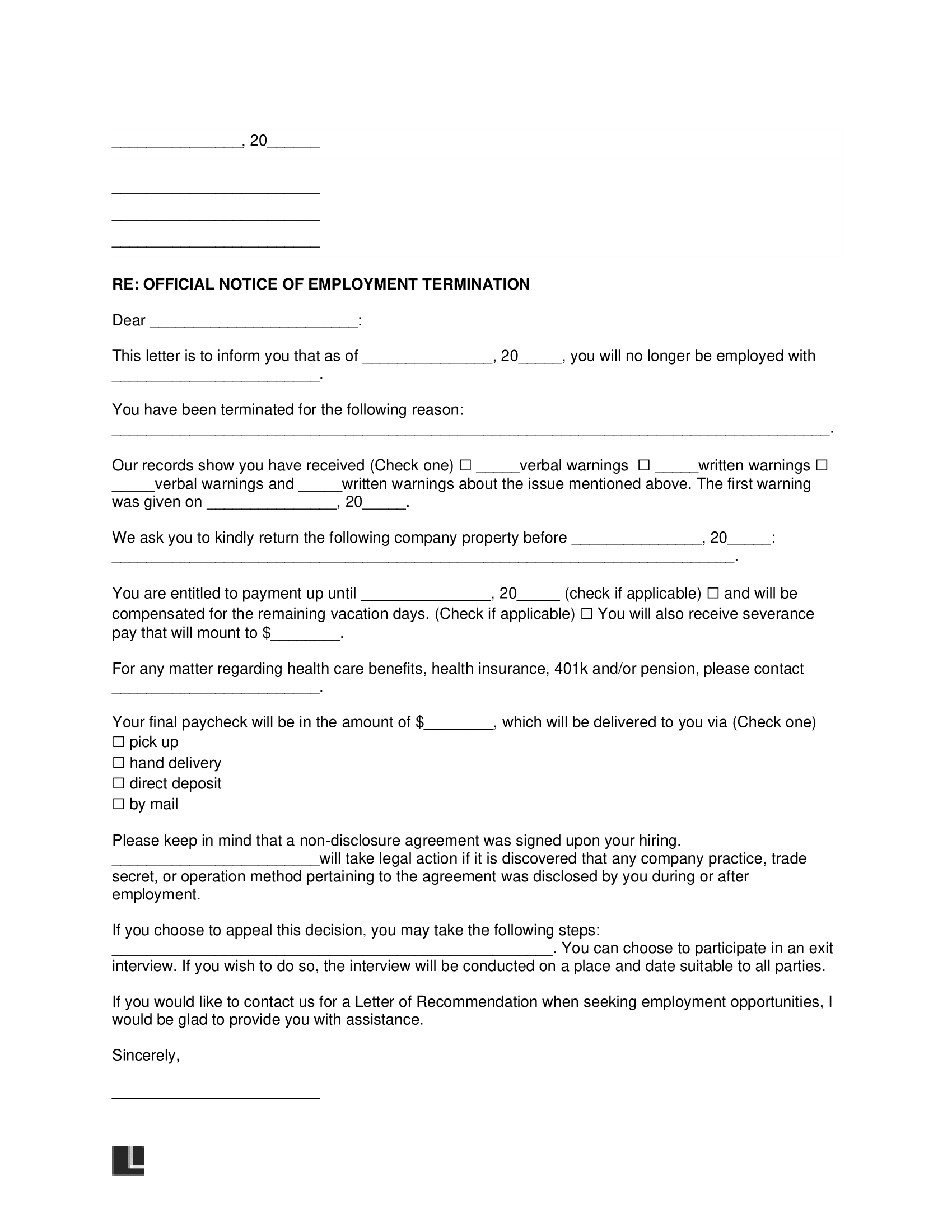
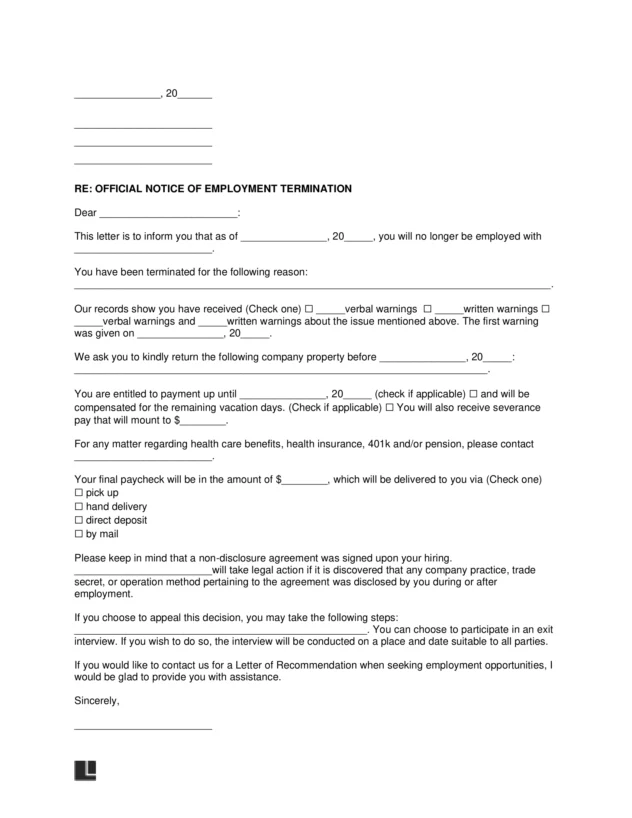
An effective end of employment letter contains all the information an employee needs to know what’s happening:
- Dates: Date of letter delivery and effective date.
- Employer details: Company name and the name of the person filling out the form.
- Employee’s information: Employee’s full name and address.
- Reason: Reason the employee is being fired or laid off.
- Corrective actions: Ways you’ve attempted to address the issue before.
- Returning company property: A request to return company property.
- Payment notice: Notice of the payment they’ll receive, including final paycheck and severance details.
- Contact information: A phone number for the terminated employee to call if they have questions about health benefits or retirement plans.
- Repeal options: Steps the employee can take if they want to appeal the decision.
- NDA reminder: A reminder of an NDA they’ve signed, if applicable.
How to Write a Letter of Termination of Employment
Here’s how to write a letter of termination of employment so you can deliver the news clearly.
1. Understand Your Company’s Termination Process
Before you fire an employee, review your company’s termination process. Ensure the reasons for firing someone correspond to company policies and confirm they aren’t discriminatory. Discuss the decision with the appropriate personnel, whether legal counsel or the human resources department.
2. Structure the Employee Termination Letter
Begin by writing the letterhead. Include the date you’re writing the letter and the name and address of the employer.
Address the employee by their full name. Use a formal salutation like “Dear.” For clarification, add their job title and employee ID number.
3. List the Termination Details
List the date the termination will take effect, as it may be different from the date you write the letter. Include the reasons or events that led to an individual’s dismissal. If there’s a previous written warning, state it in the letter. Ensure you account for any relevant evidence that supports the dismissal to avoid confusion and legal issues.
While you can choose not to include a reason if you and the employee have an at-will employment contract, you should still consider including a reason to be respectful of the employee’s time at the company.
4. Request the Return of Company Property
Highlight any company property the employee must return. This may include a company cell phone, car, laptop, badge, or keys.
5. Include Employee Benefits Owed
Always clarify the compensation and other benefits an employee will receive during dismissal. A termination of employment letter can include details regarding one’s final pay, severance pay, 401(k), unused leave days, and health benefits.
6. Spotlight All Legal Agreements
Reminding employees about all documents they signed during onboarding or their employment is critical, such as non-disclosure and non-compete agreements. This way, they won’t share company information with competitors or the general public.
7. Provide a Dispute Method
An employee may want to appeal the decision if they think the termination is wrongful. For example, they may claim that you’ve confused their actions with someone else’s. Or, they may claim you lack employee evaluations showing issues with their work. Give employees steps to follow if they want to appeal their termination.
8. Offer the Opportunity for an Exit Interview
Provide the employee with an opportunity to participate in an exit interview. This interview can let the employee share their thoughts on how the company can improve in the future. Encourage this opportunity, but make it clear that it’s optional.
9. Finalize & Sign the Letter
Review the letter and confirm all details are correct. Add a brief statement about being willing to write a recommendation letter if this is true. Close the letter with your signature right after the word “Sincerely.”
10. Schedule a Meeting
Schedule an in-person meeting with the employee to deliver the news. Choose a time and day that makes sense for your company’s goals, as you may prefer to deliver the news at the end of a week versus at the beginning of a week. Inform them of their termination verbally and provide them with the letter to keep for their records.
Keep the meeting short to respect the employee’s time, but be mindful that the news may affect them emotionally. Be empathetic and offer them resources if possible. Stay calm and allow them to express their feelings openly.