





When Can a Landlord Raise Rent?
Landlords can raise rent, but how and when depends on the type of lease. With a fixed-term lease, rent can’t go up during the lease period unless the lease says it can or the tenant agrees.
Otherwise, the landlord must wait until the lease ends to offer a new one with higher rent. For month-to-month rentals, landlords can raise the rent at any time, but they need to give written notice first.
How Much Notice Is Required to Increase Rent?
Most states require landlords to give 30 days’ written notice before raising the rent. Some require more time, especially if the increase is large or the tenant has lived in the unit for a long time. In California, for example, the notice period increases to 60 days if the rent is going up by more than 10 percent.
These rules usually apply even when there’s no formal lease in place, which is more common in residential rentals. A tenant at-will, for instance, rents with the landlord’s permission but without a fixed-term agreement. People renting in rooming houses, where rent is often paid weekly, fall into a similar category.
In both cases, landlords still need to give proper written notice before raising the rent. Keeping a copy of that notice can help clear up any confusion later.
How Much Can a Landlord Increase Rent?
There’s no federal limit on how much a landlord can raise rent, and most states don’t set one either. In areas without rent control, landlords can increase rent as much as they want once the lease ends.
Even so, large increases can come with risks. They might lead to tenant turnover or disputes, especially if the new rate is out of step with the market. Tenants may also push back if you haven’t kept up with basic responsibilities like handling repairs or routine maintenance.
To help prevent those issues, some states and cities have rent control or stabilization rules to limit how much rent can go up. Many landlords take a more measured approach:
- 1–2% annual increases to keep up with inflation.
- 3–5% if local market rates are rising or there are tenant-related concerns.
For context, the Consumer Price Index, which tracks rent trends, reported a 3.8% increase in June 2025, down from 5.1% in June 2024.
How to Write a Rent Increase Notice Letter
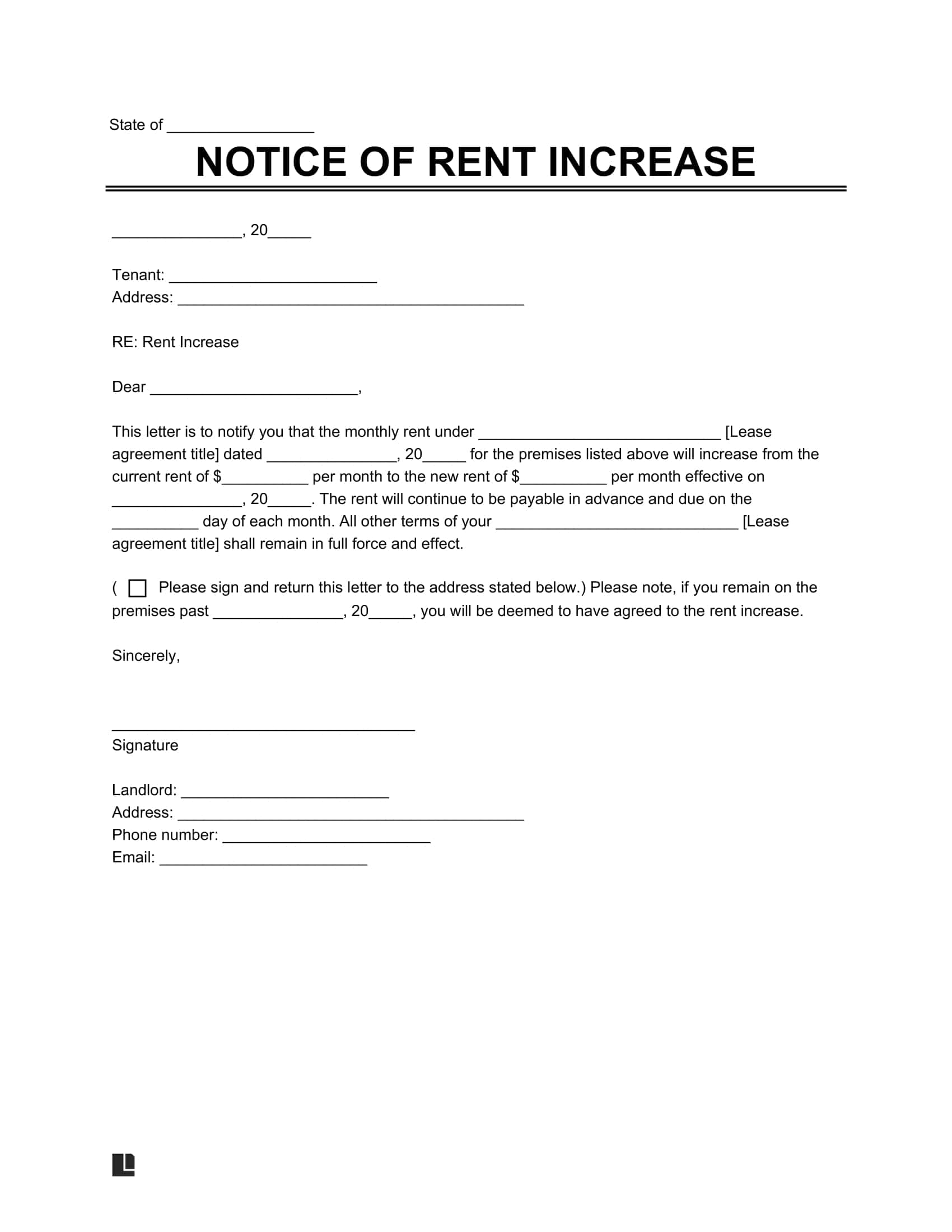
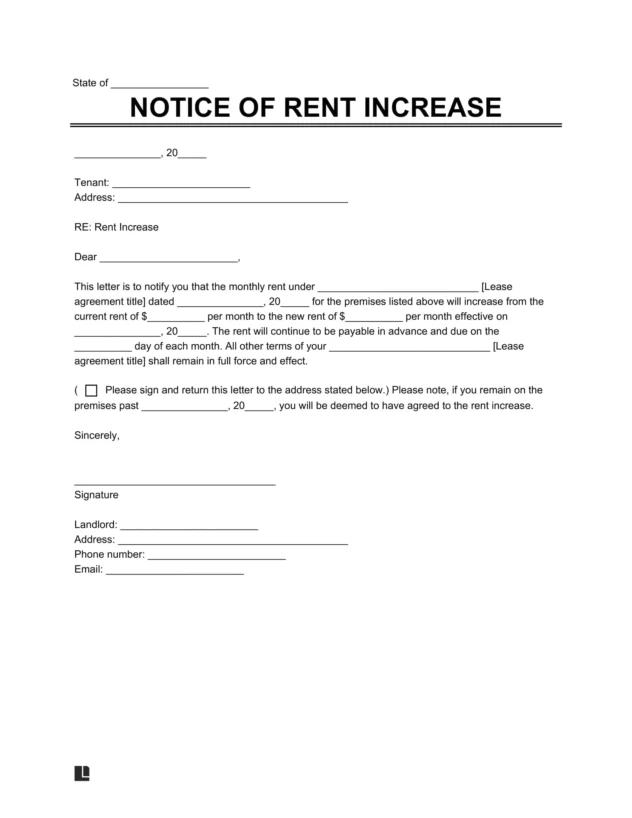
If you’re planning to raise the rent, you’ll need to send a rent increase notice first. It should clearly explain what’s changing, when it takes effect, and follow any local notice rules. Here’s how to do it right.
1. Use a Template
Use Legal Templates’ free rent increase notice, available in Word and PDF. It covers lease details, rent changes, dates, and party names. Fill it out, customize as needed, and stay compliant.
2. List Lease Details
Start by saying when the lease began and if it’s a month-to-month or fixed-term. This helps explain why the timing of the increase makes sense.
3. Show the Current Rent
Mention how much the tenant is currently paying. This gives a clear starting point before you introduce the new amount.
4. Add the New Rent and Start Date
Include the updated rent and the exact date it will take effect. Make sure the notice period follows local rules and any applicable state laws, which are often 30 to 60 days.
5. Name Both Parties
Add your full name along with the tenant’s. This keeps everything clear and official.
6. Add the Date
Write the date you’re sending the letter so there’s a clear record of when notice was given.
7. Explain Next Steps
Let the tenant know what to do after reading the rent increase notice. If you need them to respond or sign something, make that clear. They may need to agree to a new lease with the increased rental amount.
8. Note the Delivery Method
Say how you delivered the notice, by mail, email, or in person, and keep a copy in case you need it later.