What Is a Property Disclosure Statement?
A property disclosure statement is a written document that a seller gives to a buyer. It shares known issues with a residential property before the sale moves forward. It typically covers:
- Material defects and hazards the seller already knows about
- Problems that affect value or desirability, such as structural or environmental issues
- Facts based on the seller’s actual knowledge, not an inspection or third-party report
Sellers aren’t required to investigate the property, but they do need to be honest about issues they already know exist. Leaving out known problems can lead to claims of fraud or misrepresentation. Property disclosure statements apply to residential sales, not rentals. Even when a state doesn’t require a specific form, sellers still have a duty to disclose known defects.
Common Types of Property Disclosures
The exact disclosures a seller must make depend on state law and the property itself. That said, certain categories come up again and again in residential sales. The table below outlines common types of property disclosures and what sellers may need to share in each area.
| Disclosure Type | What Sellers May Need to Share |
|---|---|
| Deaths or Crimes | Whether a murder or suicide happened on the property, if required by state law or if asked. |
| Neighborhood Issues | Ongoing noise, odors, or nearby activities that could affect living there. |
| Environmental or Safety Risks | Flood zones, natural hazard risks, contamination, or dangerous materials. |
| Homeowners Association (HOA)Information | Whether the home is part of an HOA and subject to fees or rules. |
| Repairs and Structural Problems | Known repairs or issues with the home’s structure or major systems. |
| Water Damage or Plumbing Issues | Past or current leaks, flooding, drainage, or plumbing problems. |
| Fixtures and Included Items | Which appliances or fixtures stay with the home. |
| Permits, Zoning, and Pests | Unpermitted work, zoning issues, boundary concerns, or pest problems. |
For homes built before 1978, lead disclosure rules apply. Sellers must disclose any known lead-based paint or lead hazards. They also need to provide a lead information pamphlet, include required warning language in the contract, and give buyers time to test for lead if requested. Use a lead-based paint disclosure form to meet these requirements.
When Do You Need a Property Disclosure Statement?
You typically need a property disclosure statement when preparing to sell a home and before a buyer commits to the purchase. It gives the buyer a clear picture of the property’s condition early in the process.
Sellers often share the disclosure during negotiations or before accepting an offer. Doing it sooner helps avoid surprises that can slow down or derail the sale. Selling a home “as is” usually does not remove the duty to disclose known issues. Even with an as-is sale, sellers still need to be honest about material defects they know about, and state law may require these disclosures even in an “as-is” sale
Use a purchase and sale agreement to document the final terms of the home sale once disclosures are complete.
What to Include in a Property Disclosure Statement
A property disclosure statement helps buyers understand the home before they move forward. To keep things clear and organized, the form focuses on a few key areas that sellers are usually expected to cover.
Basic details
- Names of the seller and buyer
- Type of property and when it was built
- Whether the seller lives in the home or rents out any part of it
Home condition
- Yes or no answers about major systems and appliances
- Known issues with electrical, plumbing, heating, or cooling
- Roof condition and any past repairs
- Structural concerns or moisture problems
Health and safety
- Past or current pest issues
- Water source and any known quality problems
- Flooding, mold, or other environmental risks
Legal and community
- Zoning, permit, or boundary issues
- Whether the home is part of a homeowners’ association
- Deaths on the property, where disclosure is required
Final step
- Any additional issues the seller wants to disclose
- State law that applies, and the date the form is signed
Covering these areas helps buyers review the information easily and gives sellers a clear record of what they disclosed.
Common Mistakes Sellers Make on Property Disclosures
Many sellers underestimate how important property disclosures are. Small oversights can come back to cause trouble after the sale. The issues below are some of the most common ways disclosures go wrong.
- Leaving out or misstating known defects
- Assuming an “as is” sale removes disclosure duties
- Not updating the disclosure when new issues come up before closing
- Treating the disclosure as optional or informal
- Hiding information on purpose, which can lead to lawsuits or penalties
Taking the time to complete and update the disclosure matters. It creates a clear record of what was shared. That record can help protect the seller if questions or claims come up later.
Property Disclosure Requirements by State
Property disclosure requirements are not the same everywhere. Each state sets its own rules, which affect what sellers must disclose, how disclosures are made, and when buyers receive them.
Some states require sellers to use specific disclosure forms, while others rely on a general duty to disclose known material facts. Timing also varies. Disclosures may be required before an offer is made, after an offer is accepted, or before closing. Homes in HOAs or other common interest communities often trigger additional disclosure obligations, especially around fees, rules, and shared responsibilities.
A few states follow a buyer-beware (caveat emptor) approach. In those states, buyers carry more responsibility to inspect the property, though sellers still cannot hide known defects. Rules around earnest money also vary by state. The deposit a buyer puts down may be held differently depending on local law, and disclosure issues can affect when it becomes non-refundable or whether the buyer can recover it.
The table below breaks down property disclosure requirements by state, including required forms, timing rules, and related considerations.
| State | Property Disclosure Statement Required? | Buyer Beware Policy | Laws |
|---|---|---|---|
| Alabama | Optional | Yes | – |
| Alaska | Yes | No | AS 34.70.010 |
| Arizona | Yes | No | Hill v. Jones, 725 P.2d 1115) |
| Arkansas | Optional | Yes | – |
| California | Yes | No | CC § 1102 |
A few states follow unique disclosure rules.
- California: Sellers must complete a real estate transfer disclosure statement themselves. Agents are not allowed to fill it out for them.
- South Carolina: Buyers and sellers can agree in writing to waive the disclosure statement before the sale.
- Tennessee: Sellers must provide a disclosure unless both parties agree in writing to waive it.
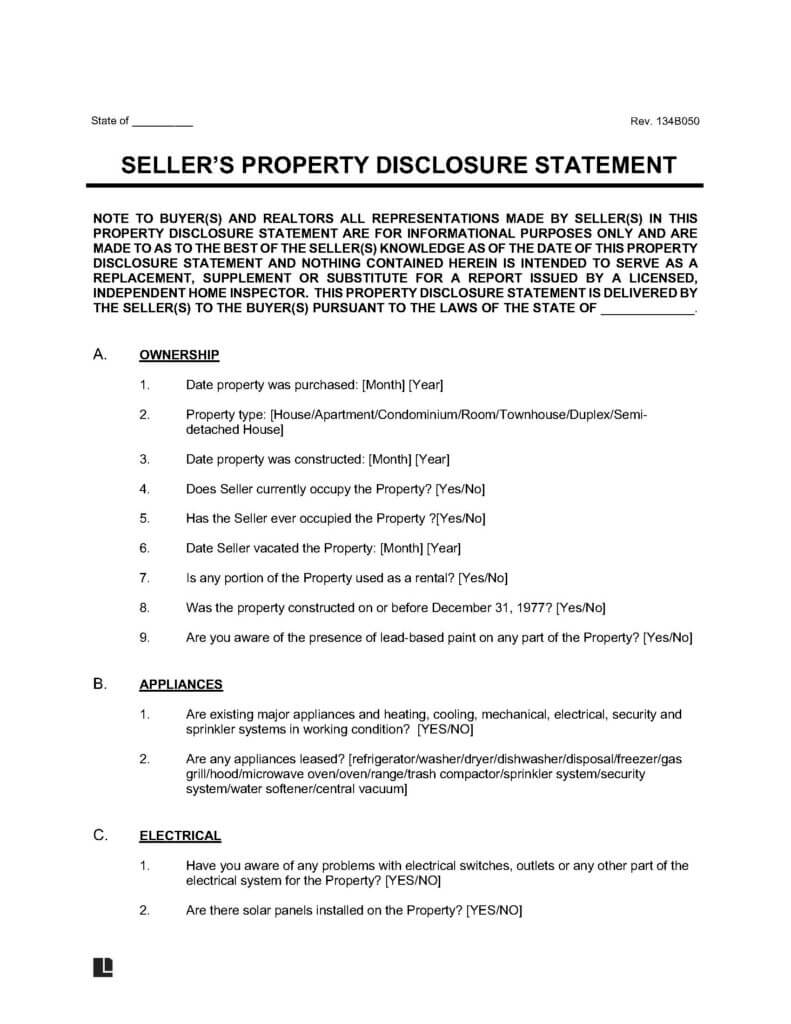
Property Disclosure Statement Sample
Look through a property disclosure statement sample to understand the format, then customize the template before downloading in Word or PDF.