What Is a Behavior Contract?
A behavior contract is a simple written agreement between a student, a teacher, and, sometimes, a parent or guardian. It helps students know what’s expected of them at school and how to meet those expectations.
The contract outlines the rules the student agrees to follow, the rewards they can earn for making good choices, and what happens if they fail to do so. It provides everyone with a shared plan and helps students develop good habits. Teachers often use behavior contracts in the classroom, as part of support plans, or as part of special education services.
When to Use a Behavior Contract
Behavior contracts can be helpful when a student requires additional support to meet behavioral expectations. Below are some common situations where a contract can help:
Ongoing Behavior Concerns
When a student regularly disrupts class, ignores directions, or breaks rules, it can be hard to know what to do next. A behavior change contract helps by shifting the focus from punishment to progress and improvement. It gives students a chance to take responsibility, follow precise steps to correct behavior, track their progress, and earn positive rewards. It also helps both teachers and parents work as a team to support these lasting changes.
Transitions or Big Changes
When a student is adjusting to a new classroom, teacher, or school, the shift in routine can make expectations unclear and hard to follow. A student behavior contract helps by offering structure during these uncertain times.
Part of an Intervention Plan
Some students need more support than day-to-day classroom reminders. In these cases, a behavior contract can be added to a broader behavior support tool, such as the following:
Support for Diverse Learning Needs
Students with an Individualized Education Program (IEP) or 504 Plan may use a behavior contract to support classroom or social-emotional goals. When a contract is used in this manner, it becomes part of the student’s larger support plan. It must comply with federal laws, such as the Individuals with Disabilities Education Act (IDEA) and Section 504 of the Rehabilitation Act.
Support for Attention and Focus Needs
Some students, including those with ADHD, benefit from clear, step-by-step expectations. A behavior contract breaks tasks and routines into simple goals, which can help students stay focused, reduce frustration, and build positive habits over time.
How to Write a Behavior Contract
Before you start writing your contract, ensure you meet with the student and, when possible, their parents or guardians. A meeting can help everyone understand the purpose of the contract and provide students with the opportunity to share what they need to be successful.
Once you arrange a meeting with the relevant parties, you can follow these steps to create your behavior contract.
Step 1 – Add Student Information
Start by adding basic student information such as their name, school name, and the date the contract starts.
Step 2 – Set Clear and Positive Expectations
List the specific behaviors the student will be working on. Use short, positive statements that the student can understand, such as:
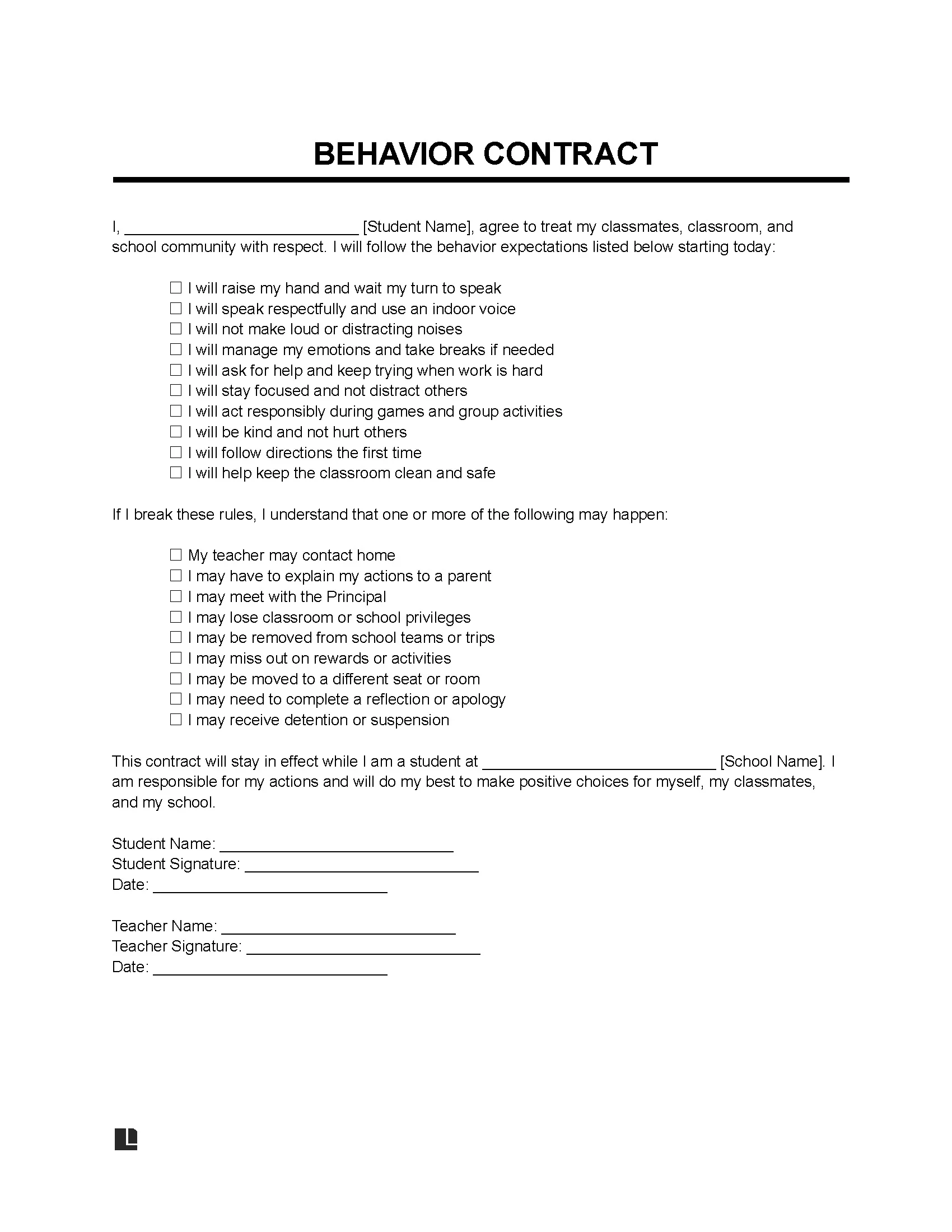
- I will raise my hand and wait my turn to speak.
- I will speak respectfully and use an indoor voice.
- I will not make loud or distracting noises.
- I will manage my emotions and take breaks if needed.
- I will ask for help and keep trying when work is hard.
- I will stay focused and not distract others.
- I will act responsibly during games and group activities.
- I will be kind and not hurt others.
- I will follow directions the first time.
- I will help keep the classroom clean and safe.
Step 3 – Choose Rewards and Consequences
Explain that the student is responsible for their actions and emphasize that making positive choices impacts themselves and their performance, as well as their classmates and their school as an institution.
You can also indicate consequences if they fail to adhere to the rules outlined in the behavior contract, such as:
- A phone call home
- A discussion with their parents
- A meeting with the school’s principal
- A loss of classroom privileges
- Removal from school teams or trips
- A loss of rewards or participating in activities
- A relocation to a different seat or classroom
- The completion of a reflection or written apology to the affected party
- Detention or suspension
Step 4 – Decide How You Will Track Progress
Choose a simple method to track the student’s progress. This could be a daily chart, point system, or a checklist. Tracking helps the student see their progress and gives teachers a clear record to review.
Step 5 – Include Parent Agreement
Add a section where a parent or guardian confirms they understand the plan and will support it at home. This keeps communication open and involves the parents in the process.
Step 6 – Add Signatures
Ensure that the student, teachers, and parents or guardians sign the contract to confirm that everyone has read and agrees to its terms.
Step 7 – Review and Adjust as Needed
Set a time to check in with the student to talk about what is working and what needs to change. Adjust the contract if needed so that the student has a fair chance to improve.
To save time, you can customize and download a free behavior contract in PDF format using Legal Templates’s guided form.
How to Make a Behavior Contract More Effective
A behavior contract is most helpful when it is clear, fair, and easy for the student to follow. Here are some aspects to keep in mind when developing a behavioral contract:
- Focus on skills, not just rules. Students sometimes need help learning how to meet the expectations. Teaching skills, such as how to ask for help or how to stay organized, can make the contract more effective and set the student up for success.
- Use plain language. Keep each rule or step short and straightforward so the student knows exactly what to do. Avoid long sentences and vague terms. Precise wording reduces confusion and makes the contract easier to follow.
- Frame expectations in a positive way. Tell the students what to do, not only what to avoid. For example, “Speak in a calm voice” is clearer and more encouraging than “Don’t shout in class.” Positive wording helps students build good habits instead of focusing only on the mistakes.
- Be consistent. Follow the contract the same way each day. This includes rewards, consequences, and check-in routines. Consistency helps students trust the process and understand that expectations remain constant from one day to the next.
Sample Behavior Contract
Below is a sample behavior contract template that shows you what to include in your contract. You can use it as a starting point for your own. To create a version that fits your classroom or student needs, use our guided form. It guides you through each part of the contract and lets you customize and download your own in PDF format in minutes.