What Is a Hawaii Vehicle Bill of Sale?
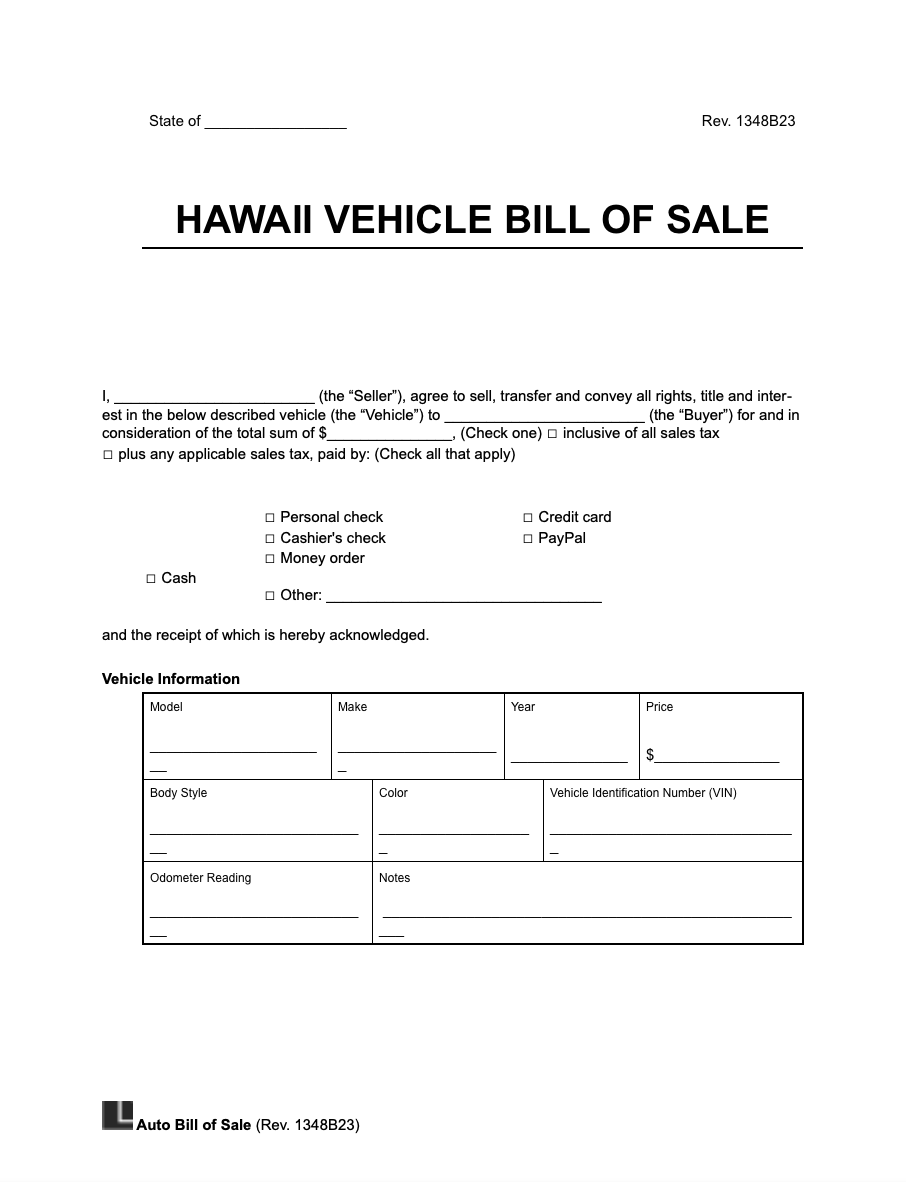
A Hawaii vehicle bill of sale form records the transfer of ownership of a vehicle from a seller to a buyer. It serves as proof of the transaction and includes the following information:
- Make
- Model
- Year
- Body type
- Vehicle identification number (VIN)
- License plate number
- Mileage
- Sale price
- Date of sale
- Buyers’ and sellers’ names and addresses
If applicable, the HI car bill of sale should also list the names of lienholders or indicate that the vehicle is free and clear of liens.
Is a Vehicle Bill of Sale Required in Hawaii?
A vehicle bill of sale is usually optional in Hawaii. It’s only required if the seller’s name is missing from the title or if the seller is otherwise unable to fully complete the title form. For other transfers, a car bill of sale is not required, but it can assist the Division of Motor Vehicles in Honolulu or wherever the vehicle is being registered. Plus, a Hawaii motor vehicle bill of sale protects both parties and mitigates disputes between the buyer and seller over ownership.
While a Hawaii vehicle bill of sale may be optional, the buyer must submit other documents to complete registration, such as the:
- Certificate of title (must be properly endorsed)
- Current registration
- Safety inspection certificate
Does a Bill of Sale for a Car in Hawaii Need to Be Notarized?
A Hawaii car bill of sale should be notarized to comply with the requirements on the official state form. It’s especially important in certain instances, like when the seller’s name is absent from the title or when there’s a duplicate title application.
In all cases, notary acknowledgment can improve the document’s legitimacy and prevent confusion over the accuracy of the details.
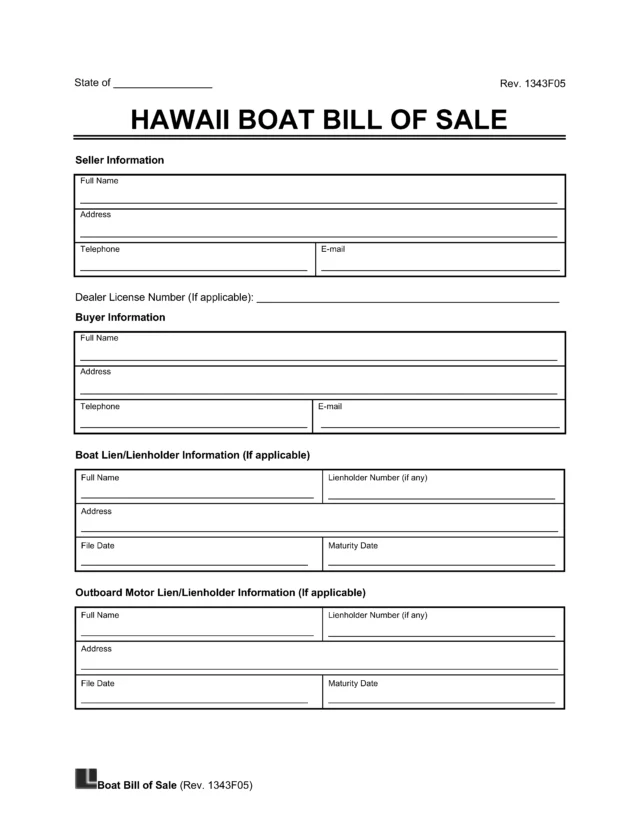
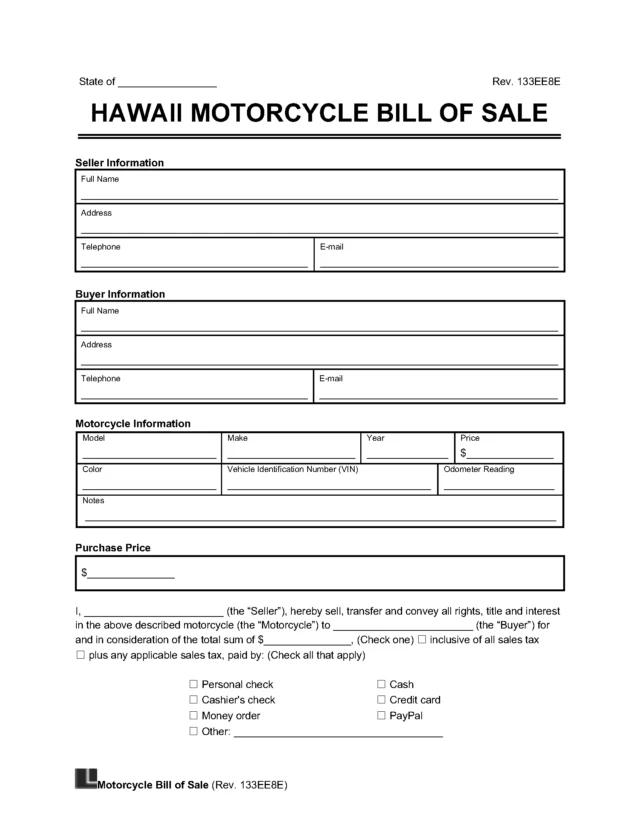
Hawaii Motor Vehicle Bill of Sale Sample
View an example of a Hawaii motor vehicle bill of sale form to get an idea of what yours should look like. Then, enter your vehicle and transaction details into our guided form, and download it as a PDF or Word document for storage in your records.