What Is an Indiana Eviction Notice?
An Indiana eviction notice informs a tenant of something they did to breach the lease agreement. It may communicate that they failed to pay rent or broke a rule in the lease. When you write and send an Indiana eviction notice, you can demand compliance or request that they move out.
An Indiana eviction notice allows you to follow the proper legal channels. You must send it and let the appropriate notice period pass before you can file an eviction lawsuit in court. Using this notice helps you kickstart the eviction process and ensure compliance with state law.
Types of Eviction Notices in Indiana
You must issue a certain amount of notice, depending on the reason for eviction in Indiana. View the Indiana eviction notice templates we offer, both of which are customizable and comply with state law.
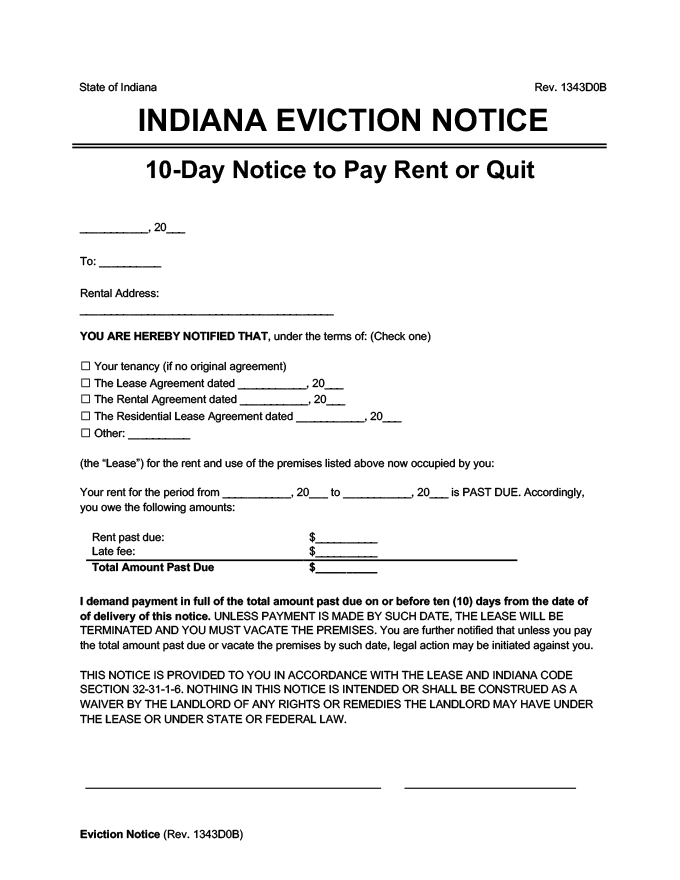
10-Day Eviction Notice in Indiana (for Nonpayment of Rent)
A 10-day notice to pay rent or quit in Indiana communicates that a tenant has not paid rent by the agreed-upon due date. When you use this notice, you must give the tenant 10 days to pay all owed rent and late fees or move out of the unit (IN Code § 32-31-1-6). If the tenant still fails to pay after a 10-day eviction notice in Indiana, you can file for eviction.
There is no state-mandated grace period, so you can send this notice as soon as rent is late (unless the lease includes a grace period).
10-Day Notice to Pay Rent or Quit
Use this notice when the tenant falls behind on rental payments. Once the tenant receives this notice, they have 10 days to either pay the rent or vacate the property.
Reasonable Eviction Notice in Indiana (for Noncompliance)
Sometimes, a tenant may violate the lease in a way unrelated to rent payments. For example, they may house unauthorized pets, exceed the guest occupancy, park their vehicle improperly, or fail to remove trash from the unit. In these cases, you must serve a notice to cure or quit.
IN Code § 32-31-7-7 only specifies that landlords must give tenants a “reasonable amount of time” to remedy the issue. Typically, a 30-day eviction notice in Indiana is sufficient. If the violation is more serious, such as property damage, you may issue something shorter than a 30-day notice to cure or quit in Indiana.

Notice to Quit for Noncompliance
Use it if the tenant broke the terms of your lease (any except for late rent).
Lease Termination Notices in Indiana
If there is no lease violation or case of nonpayment, you can still terminate a lease with proper notice. End a month-to-month lease with a 30-day notice to quit in Indiana, or terminate a year-to-year lease with a 90-day lease termination letter.
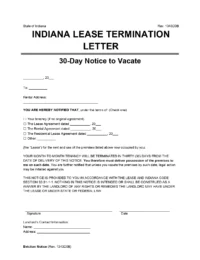
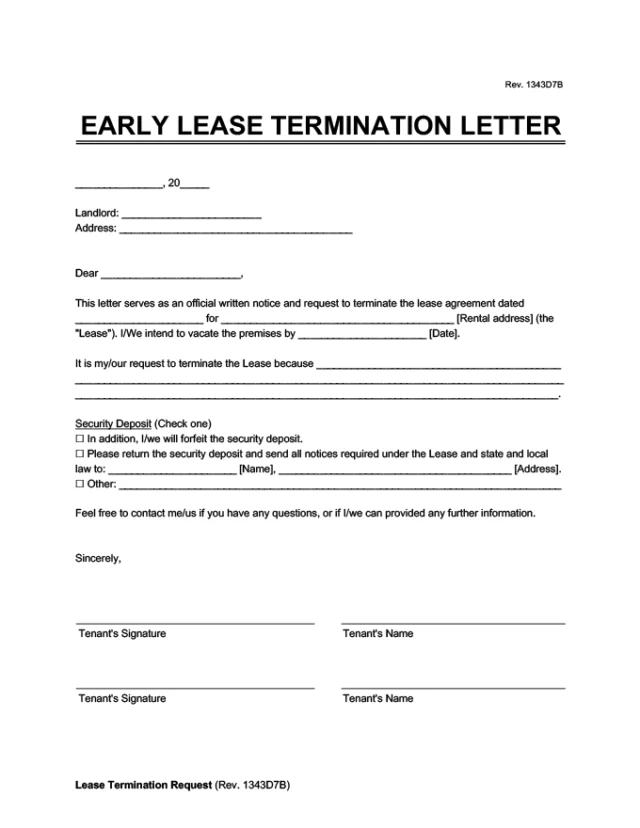
Lease Termination Notice
Grant a tenant 30 days to move out if you're ending a month-to-month lease. If the lease is year-to-year, give them 90 days under state law.
How to Evict a Tenant in Indiana
The Indiana eviction process starts with you serving an eviction notice stating the reason for potential eviction if the tenant doesn’t address the violation. If the tenant ignores the eviction, you can proceed with filing for eviction, which involves a hearing and physical removal of the tenant by a sheriff, if needed. Read on to learn all the steps involved in evicting a tenant in Indiana.
Step 1 – Serve an Eviction Notice
Begin by serving an eviction notice in Indiana. Remember to provide proper notice depending on the violation:
- 10-day notice to pay rent or quit
- Reasonable notice to cure or quit for noncompliance
We offer ready-to-fill-out Indiana eviction notice templates that include references to state law. This way, the tenant understands your right to proceed with a lawsuit if they don’t comply.
Once you fill out the eviction notice, you send it by:
- Personally delivering it to the tenant.
- Handing the notice to a person of suitable age who lives at the property.
- Posting the notice in an obvious place on the property and mailing a copy.
Eviction for Serious Offenses
If the tenant engages in criminal drug activity or intentionally destroys the property, you can issue an immediate notice to quit (IN Code § 32-31-6).
Step 2 – File the Eviction Lawsuit (Notice of Claim)
If the notice period expires and the tenant has not corrected the issue or moved out, you can file a formal lawsuit. In many cases, you will file the lawsuit in the Small Claims division of the local Superior or Circuit Court. If the filing takes place in a Small Claims division, the financial damages you pursue must not exceed $10,000 (IN Code § 33-28-3-4).
File a Notice of Claim specific to your county and the lease violation (whether it’s nonpayment of rent or another lease breach). For example, Switzerland County offers a Notice of Claim for Nonpayment of Rent. The Summons (also called the Order to Appear) is prepared alongside the claim.
Step 3 – Serve the Tenant
The court clerk will coordinate the service of the claim and summons to inform the tenant when they must appear in court. However, you, as the landlord, must pay the associated processing fees.
Rule 4.1. Summons allows the county sheriff to serve the summons via one of the following methods:
- Registered or certified mail
- Personal delivery
- Posting it on the property (must be followed with mail delivery)
- Serving it to the tenant’s agent (must be followed with mail delivery)
Step 4 – Attend the First Hearing
Indiana splits the eviction judicial process into two distinct hearings. The first hearing prioritizes regaining possession of the property, while the second focuses on monetary disputes.
The first hearing is usually scheduled within 20 days of service of the eviction notice. The parties attend the first hearing and present their evidence. As the landlord, you can show a physical copy of the lease, financial records of unpaid rent, and proof that you issued the proper notice in Step 1. This evidence may prove to the judge that you had proper grounds to initiate eviction.
If the judge rules in your favor (or if the tenant fails to appear), the court issues an official Order of Possession. This document states a date and time by which the tenant must voluntarily vacate. It should provide at least 48 hours’ notice, as required by IN Code § 32-30-3-10.
New Indiana Law on Eviction Records
Senate Bill 142 allows certain eviction records to be exempt from public disclosure. Tenants typically take advantage of their right to request nondisclosure if the court rules in their favor or dismisses the case.
Step 5 – Have the Sheriff Enforce the Eviction
If the tenant does not comply with the Order of Possession, you must request a Writ of Assistance from the court clerk. A Writ of Assistance gives the county sheriff the authority to physically remove the tenant. You must never attempt to remove the tenant yourself by force or using other illegal measures, such as changing the tenant’s locks or shutting off their utilities.
Step 6 – Deal With Left-Behind Belongings
Once a tenant has been removed, you may not throw away their belongings immediately. Per IN Code § 32-31-4-2, you must obtain a court order permitting the removal of their belongings.
However, before removal can occur, you must store the tenant’s items in a secure storage facility. The tenant has 90 days to collect their belongings and pay the reasonable costs of removal and storage. If they don’t claim their items within 90 days, you may dispose of them or sell them.
Step 7 – Attend the Damages Hearing
After things have settled down, you must attend the second court hearing. This court hearing will allow you to pursue monetary damages. By presenting evidence such as utility bills left in arrears and itemized receipts documenting property damage beyond normal wear and tear, you can show that you are entitled to compensation from the tenant. This last step in the eviction process can help you recover financial losses.
Sample Indiana Eviction Notice
View an Indiana eviction notice template to see how to communicate that you need a tenant to comply with the lease terms or move out. Our printable Indiana eviction notice form is easy to customize with your tenant’s name, violation, and compliance dates. Download a final copy in Word or PDF for easy distribution to your tenant.