What Is a Commercial Lease Letter of Intent?
A letter of intent to lease commercial property is a short document that landlords and tenants use to outline the main business terms before a formal lease is drafted or signed. It works as an “agreement to agree“, giving both sides a clear starting point while leaving room to negotiate details.
Because parties use a commercial lease letter of intent while discussions are still underway, terms can change, and nothing is final yet. Writing down the key points early helps keep rent, term length, and build-out expectations from changing later.
Tenant screening often happens before or alongside LOI discussions. Landlords may want to review our commercial tenant screening guide before putting lease terms in writing.
Is a Commercial Lease Letter of Intent Legally Binding?
A commercial lease letter of intent is usually not legally binding. Courts generally treat it as a document that guides negotiations, rather than a final agreement. Without a signed lease, either the landlord or tenant can typically walk away.
Wording can change that outcome. If an LOI reads like a completed deal, a court may treat it as binding. Judges look at whether key terms remain open and whether the document clearly states that it is non-binding.
Court cases show how this works in practice. In the 2004 McDonald Ave. Realty case, the LOI listed rent and other terms, but the court ruled it was not binding because the parties were still negotiating. In A.J. Richard & Sons, the court enforced the LOI because it included all key terms, used binding language, and did not state that it was non-binding.
Even when a letter of intent to lease commercial property is not binding overall, some sections can still apply. Clauses about deposits, exclusivity, or access may be enforced if the language is clear. Without a signed lease, neither side is usually required to move forward unless the LOI clearly says so.
When to Use a Commercial Lease Letter of Intent
Use a commercial lease letter of intent once the main deal points are agreed and before the lease is drafted. At that stage, landlords and tenants often rely on an LOI in the following situations:
- After both sides agree on the main terms
- Before rent and other key terms are written into a lease
- When the deal involves time, money, or ongoing negotiation
- While both sides still need to stay aligned as the lease is drafted
Even though a letter of intent to lease commercial property is often non-binding, most parties take it seriously once it is signed. The terms are usually treated as settled and are hard to reopen during lease drafting.
If tenant improvements or build-out work are part of the deal, those terms are often documented separately in an improvements and modifications lease addendum.
What Happens After a Commercial Lease Letter of Intent?
After a commercial lease letter of intent is signed, the process moves toward drafting the formal lease. The LOI guides the next steps, but several things usually happen before anything is final. What typically happens next:
- The LOI may be reviewed, changed, or countered until both sides agree
- The agreed terms are used to draft the first version of the lease
- Due diligence usually happens while discussions continue
- A formal commercial lease is drafted from the agreed-upon business terms
- Some details may still be negotiated during lease drafting
- If no lease is signed, neither side is usually required to move forward unless the LOI says otherwise
At this point, the lease turns the agreed terms into binding language. Final details are worked out before both parties decide whether to sign.
If negotiated terms change during drafting, a lease amendment is often used to document those updates.
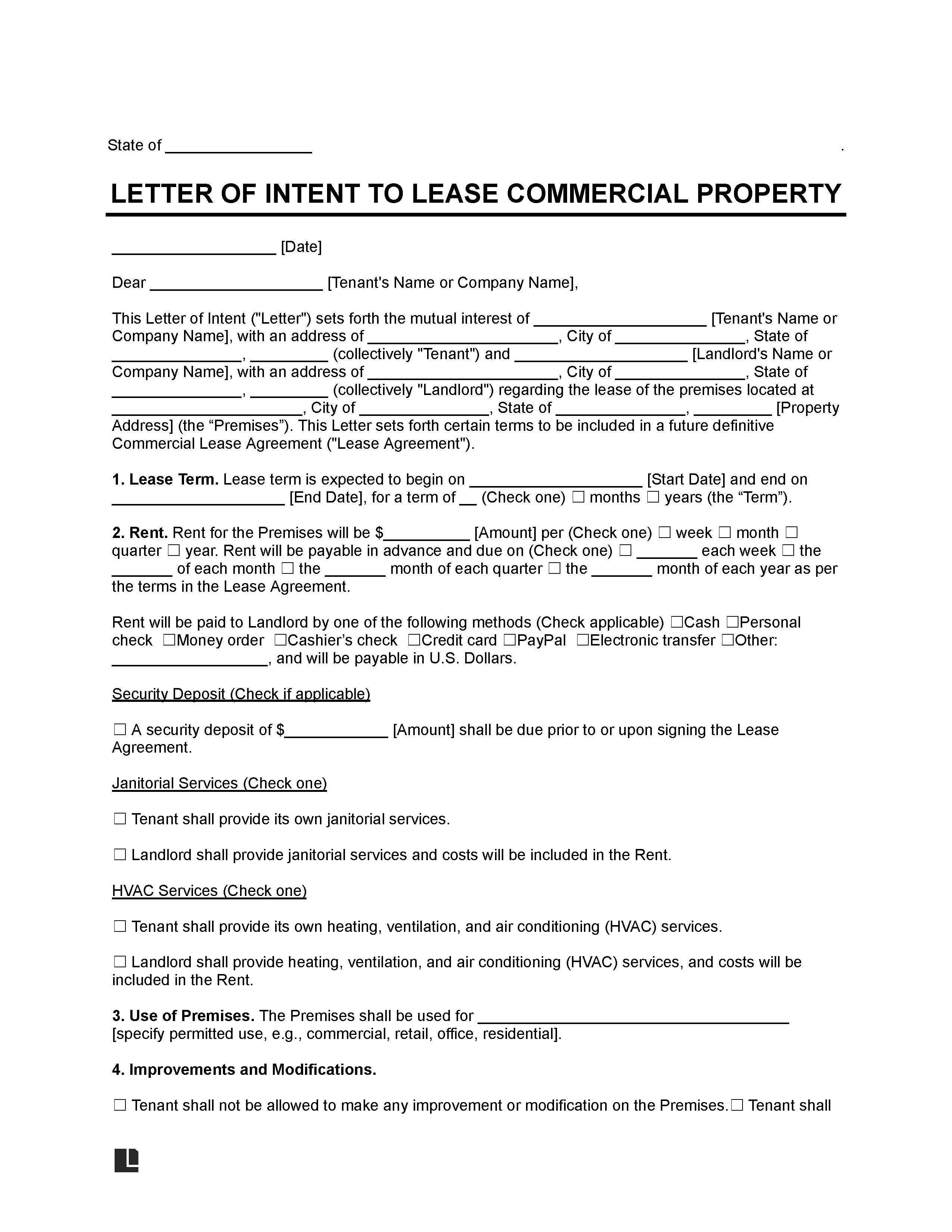
Sample Letter of Intent to Lease Commercial Property
Look through a sample letter of intent to lease commercial property before creating your own. You can customize the template and download it in Word or PDF.