





What Is an Advance Directive?
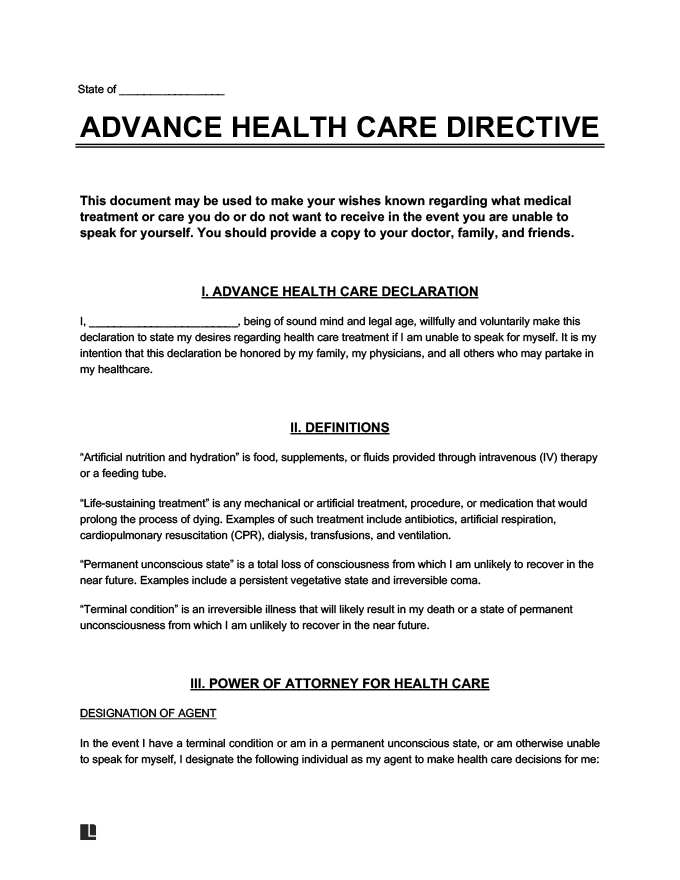
An advance directive is a legal document that declares what medical treatment you want if you can’t communicate. It informs healthcare professionals and loved ones of your preferences. It’s a great tool for planning ahead, as you can dictate your medical care for when you’re unconscious or otherwise unable to act.
This document outlines your wishes for end-of-life care, including tube feeding and palliative care. It also lets you appoint an agent to make decisions for you. When you give doctors and family members thorough instructions for your medical care in advance, you can prevent confusion and conflict.
Without an advance directive, your care will be left up to your spouse or another family member per your state’s law. As a result, you may not get the treatment you want. If you’re at least 18 and mentally competent, it’s best to fill out an advance directive. This will give you the best chance at ensuring your healthcare wishes are respected.
What’s Included in an Advance Healthcare Directive?
An advance healthcare directive often contains multiple documents:
- Living will: A living will explains your treatment decisions (such as how to prolong your life or manage pain) if you fall into a coma or are unresponsive. It’s used when you face terminal illness or permanent unconsciousness and will likely not recover.
- Medical power of attorney (MPOA): An MPOA lets you name an agent to act on your behalf. The agent can act with the most current information available, helping them make informed decisions in complex medical situations.
- Do-not-resuscitate (DNR) order: A DNR tells healthcare providers to withhold CPR and not try to keep you alive if you experience cardiac or respiratory arrest.
Be sure to check your state’s laws. Some states offer all these documents under one advance directive, while others require you to fill out the forms separately.
Does an Advance Directive Guarantee Your Wishes?
An advance directive does not always guarantee your wishes. Your medical team and your attorney-in-fact will do their best to respect your wishes. However, it may not always be possible. You may be in an unforeseen medical situation that requires your healthcare team to take a different approach than what you specified.
You may receive medical care other than what you requested if your advance health directive goes against:
- Generally accepted medical practices
- The institution’s protocols
- The healthcare provider’s conscience
How to Get an Advance Directive
Legal Templates offers comprehensive advance directives in states that allow for the combination of forms. Below, you can learn how to get an advance directive if your state permits a living will and MPOA under one document. Otherwise, you’ll need to complete the forms separately.
1. Make Your Declaration
Name yourself as the principal and proclaim that you’re of sound mind and legal age to create an advance directive. Anyone can create an advance directive, but it’s especially common for those who are:
- Military personnel
- Pregnant
- Traveling abroad for an extended period
- Undergoing surgery
- Entering the hospital for any reason
- Diagnosed with a terminal illness
- Undergoing continuous medical treatment
- Concerned about their overall health
- Engaged in a high-risk profession
2. Designate a Healthcare Agent
Name an agent whom you feel comfortable granting authority over your healthcare matters. Place any desired limitations on what they can do for you. For example, you may forbid them to consent to certain procedures unless specific circumstances apply.
Ensure your appointed agent is someone you can trust, such as a family member, as they must make crucial decisions in times of great stress, sadness, and uncertainty. You can name an alternate and a second alternate agent in case your primary agent becomes unavailable.
Nominating a Guardian
You may choose to nominate a legal guardian on Legal Templates’s form, but this step is often unnecessary. Naming a healthcare agent is usually sufficient. If it becomes necessary for you to have a guardian, the court will consider your nomination, but the decision is ultimately left up to the court.
3. Complete Your Living Will
List your healthcare wishes in the living will section of your advance directive. These wishes can apply whether you have a terminal condition or are in an unconscious state. Indicate whether you want to:
- Receive life-sustaining measures
- Accept artificial hydration or nutrition
- Receive pain-relieving treatments
- Release your healthcare records to your agent
You can also state your preferences for organ donation and make other end-of-life arrangements as needed.
4. Name Your Primary Physician
While optional, you should consider including your primary care physician’s information in your advance directive. Naming them ensures they know about your wishes and can help coordinate your care, whether providing treatment directly or guiding other healthcare providers.
5. Finalize Details
State whether you want the document to become effective:
- Immediately upon signing
- When you become disabled or incapacitated
Review the document to ensure you’ve accurately included your wishes and instructions. Meet the document’s signing requirements for your state. Depending on where you live, you may need to sign in front of a notary public or witnesses.
6. Store & Distribute
Store a copy of your advance care directive in your records. Ensure all relevant parties, including your agent and healthcare provider, have a copy. This way, they’ll know how to follow your wishes to the best of their abilities.
7. Update as Needed
Your healthcare wishes and preferences may change, so be sure to update your advance directive to reflect them. While you can amend the document, it’s best to create a new one. A new one can prevent confusion and make your wishes clear. When creating a new one, specify that all previous advance directives are null. Fulfill the proper signing and notarization requirements, and deliver the new document to the involved parties.