




What Is a Business Continuity Plan?
A business continuity plan is a document establishing your organization’s strategies for dealing with a disaster. These procedures help you resume business quickly, reducing downtime and lost revenue.
It encompasses essential processes such as protecting assets, managing human resources issues, and interacting with business partners.
Business Continuity Planning vs. Disaster Recovery Planning
An effective business continuity plan helps a company continue its overall operations after a catastrophe, while a disaster recovery plan focuses on reviving a business’s IT-related functions.
When to Use a Business Continuity Plan
Creating a business continuity plan before you need it can help you prepare for the unexpected. It enables you to be proactive, so you don’t have to devise a plan in the midst of a disaster.
Once your continuity plan is in place, you may need to implement it during disasters like:
- Cyberattacks
- Natural disasters like hurricanes, earthquakes, tornadoes, and floods
- Major IT or internet disruptions
- Pandemics or health crises
- Supply chain disruptions
- Man-made disasters or times of social unrest
Benefits of a Business Continuity Plan
Explore the benefits of a business continuity plan for your company:
Better Decision-Making
A BCP offers a structured framework for employees to make decisions during high-stress situations. Clear protocols and communication methods enable your business continuity management team to make informed decisions, promoting confidence and encouraging action among employees.
A More Efficient Return to Normal Business Operations
A BCP could make the difference between continued operations and further turmoil in an emergency. Returning to business operations quickly can prevent customers from seeking out competing businesses.
A business continuity plan template makes planning for contingencies in various scenarios easy and addresses the most critical roles and responsibilities necessary for keeping your company running.
Above all, a BCP limits confusion during critical situations and orients employees to the primary focus.
Increased Employee Safety
BCPs prioritize employees’ safety and well-being during emergencies. These plans include guidelines for remote work so employees don’t have to be near the disaster site. They also contain protocols for communicating with one another and evacuation plans in case a disaster happens during work hours.
A Reduction in Lost Time and Revenue
Unmitigated disruptions can quickly financially weaken an organization. Business continuity plans account for all factors necessary for continued operations. The more effort you put into planning, the more time and money you can save.
Ensure a reliable backup plan for essential systems and enable remote access to customer, product, and company data to maintain a steady revenue stream.
Ability to Quickly Implement IT Fixes
Natural and manufactured disasters typically involve disruptions to systems. To remain functional, build redundancy into your critical systems. This proactivity will allow you to implement essential fixes to hardware and software assets.
Increased Organizational Resilience
A BCP prepares a company to encounter any challenges it may face. It lets the company’s employees adapt strategies as necessary and work towards continuous improvements, allowing the company to experience long-term success no matter the obstacles it encounters.
Elements of a Business Continuity Plan
Explore some essential elements in a business continuity plan:
- Business Impact Analysis: Determine how a disaster would impact your business’s operations.
- Risk Assessment: Identify the risks that may disrupt your business’s processes.
- Business Continuity Strategy: Detail the steps you’ll take to keep your company running if an interruption occurs. Tailor this strategy to your business’s needs.
- Recovery Team: Include members from across key departments in your recovery team.
- Training: Define training procedures to ensure all members have sufficient knowledge relating to emergency protocols.
- Business Continuity Exercises: Create simulations to practice how your business continuity team would react in an emergency.
- Communication: Establish methods for distributing information internally and externally.
- Backup Locations and Physical Assets: List backup locations for conducting business operations if the primary location isn’t usable. Summarize the equipment you’ll need to continue operations.
- Periodic Review and Recommendations: Include policies for reviewing and updating your plan. Accept recommendations from employees to improve the plan’s efficiency.
- Technology: Describe the processes for retaining access to technology systems. Detail the importance of having emergency power and data backup procedures in place.
How to Write a Business Continuity Plan
Step 1 – Write Your Company’s Information
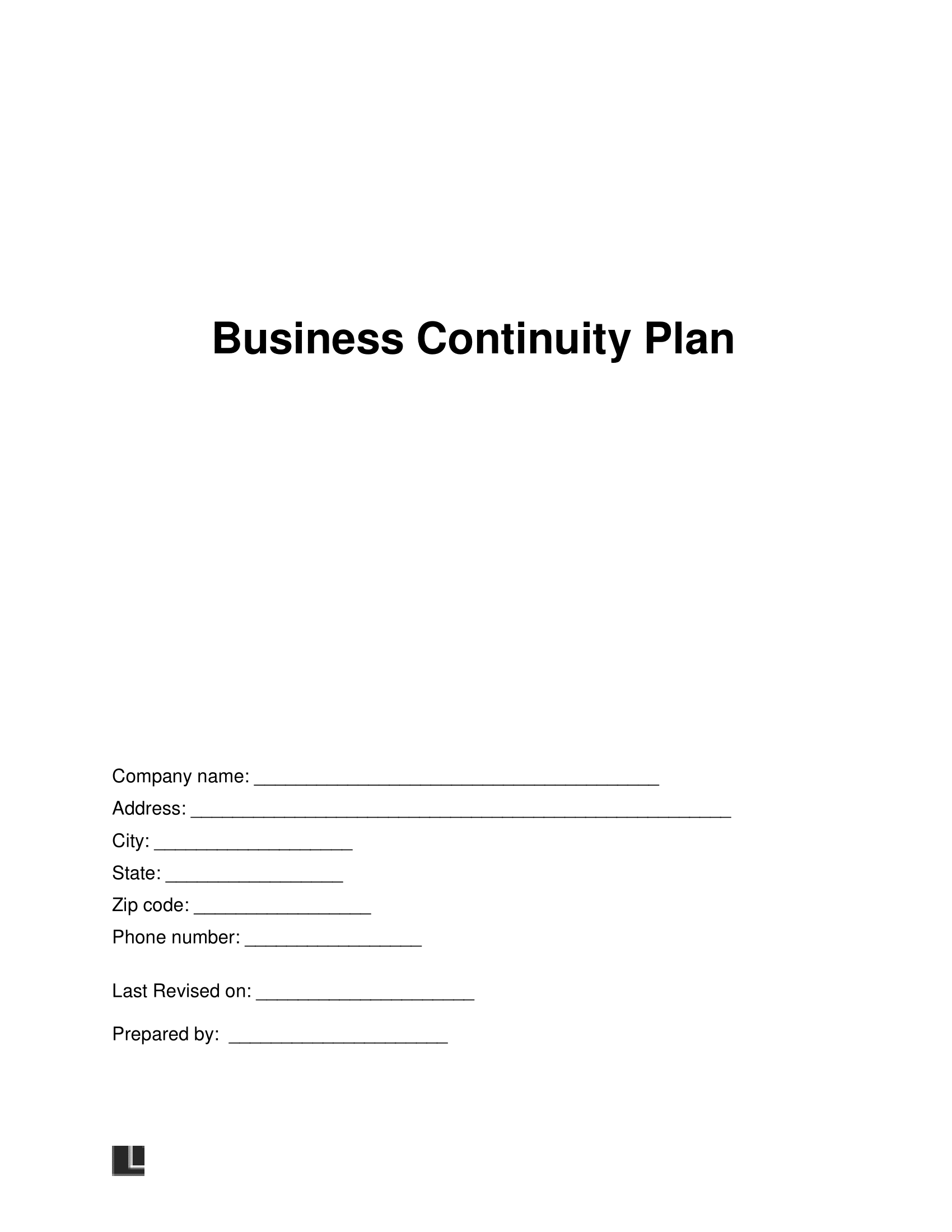
Write your company’s information, including its name, address, and phone number. Include the name of the person writing the plan and the date you last revised it.
Step 2 – Define the Document’s Purpose
Define the document’s purpose, restating that the document is to establish procedures for the execution and recovery of business activities for your specific company. Check off the specific events you want to plan for.
Step 3 – Outline the Applicability
Clarify the applicability of the document. State which operations the document applies to, including the operation’s name, description, and impact on the business.
Step 4 – Define the Recovery Strategies
Define the recovery strategies for all the events you’ve outlined. Explain the recovery procedure and resource requirements for each event, such as a natural disaster, fire, epidemic, pandemic, technical issue, cyberattack, supply chain disruption, business site disruption, labor strike, or civil unrest.
Step 5 – Name Your Recovery Team
Name your recovery team, including a team and an alternate team lead. These individuals will restore and maintain business continuity and ensure the document’s compliant execution. Include each member’s name, role, email, phone number, and responsibilities.
Step 6 – Detail Processes for Vendor Communication
Designate a person who will be responsible for contacting vendors and partners. This way, external parties key to the business’s functions will know what’s going on and the plan for continued operation.
Step 7 – Name an Internal Communicator
Name an internal communicator, providing their name, email, phone number, and roles within the organization. This person will provide all employees with business-wide updates as the appropriate teams implement the continuity plan.
Step 8 – Describe Relocation Procedures
Describe relocation procedures, including backup offices and methods for obtaining equipment and assets for relevant business activities. Provide an estimated timeline for a transition back to normal operations.
Step 9 – Write Testing Procedures
Write testing procedures to periodically examine the BCP’s effectiveness. This way, the company can make updates to improve the plan’s effectiveness.
Step 10 – Outline Deactivation Procedures
Outline deactivation procedures so your team knows when your company has officially restored its normal operations.
Step 11 – Provide Exceptions
Write exceptions so your team knows when the business continuity plan doesn’t apply. For example, the plan might not apply if business operations can restore themselves within a certain number of hours.