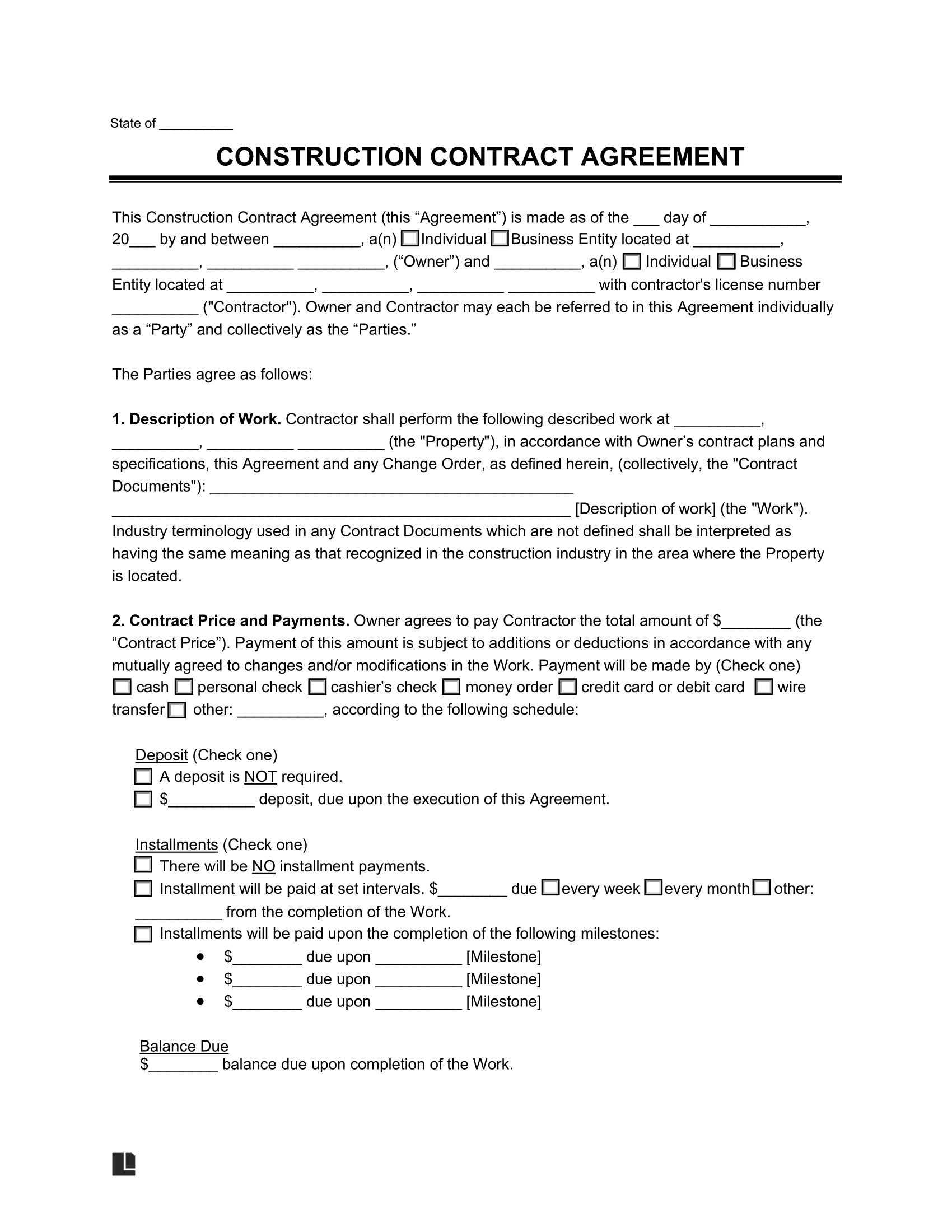



What Is a Construction Contract?
A construction contract is a legally binding agreement between a client and a construction contractor. It lays the groundwork for a smooth construction project by explaining the work scope, timelines, deliverables, and pricing.
Clients and contractors can write this contract for various projects, such as home builds, additions, renovations, and repairs. It protects the client’s investment and keeps the project running smoothly. With a well-written construction contract, you can lay out everything from the start and move forward with building confidently.
Pre-Contract Checklist for Construction Projects
Before you write your construction project agreement, you can prepare by taking these steps:
- Review local construction laws to learn about regulations that may impact your contract.
- Verify the contractor’s license to ensure they’re competent and knowledgeable.
- Negotiate terms to get on the same page about expectations and deliverables.
- Define clear project milestones and deadlines.
- Review the scope of work to ensure it covers all necessary tasks and details.
- Consider whether you need insurance or bonding to protect against potential issues.
- Discuss confidentiality requirements to protect any sensitive information exchanged.
- Ensure all parties agree on how they will handle additions or changes to the project.
How to Write a Construction Contract
A simple construction contract will convey the terms and conditions of your project and offer protection to both parties. Follow these steps to write a construction services contract tailored to your project.
1. Provide Parties’ Information
Provide both parties’ information, indicating whether each is a business entity or individual. This identification clarifies each party’s legal obligations, which may differ in construction work.
The contractor should also include their license number. This way, the client can know that the contractor has updated credentials. It also shows they’re knowledgeable and capable of performing the work. Furthermore, it may affect their eligibility for insurance coverage.
2. Give a Description of the Work
Describe the work the contractor will perform so their expectations are clear. You can also list the work location to ensure the contractor can commit to showing up and completing their tasks.
You can also attach work plans, work specs, and other accompanying documents to clarify the expected work. These documents provide more detailed guidance for the contractor. They can refer to these documents if they get stuck on a project or need clarification on how to proceed.
Maintain a good working relationship by outlining the process for work changes. Explain that the parties need to complete a construction change order before a contractor begins more work than originally agreed upon. This precaution can prevent an overload of work for the contractor.
3. List the Contract Price & Payment Terms
List the contract price and payment terms to help both parties manage their cash flow and prevent disagreements. Outline the payment schedule, including whether the client will pay in installments at certain milestones or upon project completion.
Before beginning a construction project, the contractor can issue a construction quote to give the client an estimate.
What Are Pricing Structures in a Construction Contract?
Depending on the type of project it outlines, a construction contract may price services differently. Here are some of the different pricing structures in a construction job agreement:
- Lump-sum (Fixed-price): The contractor agrees to complete the project for a set price.
- Cost-plus (Cost-reimbursement): The contractor is reimbursed for project costs, plus a profit percentage.
- Time and Materials: The client pays for the actual time spent and materials used, plus a markup.
- Unit Pricing: The contractor receives payment for the units of work they complete at predetermined prices.
4. Mention Completion & Inspection Terms
Include terms for project completion so that both parties know when the work is finished. These guidelines also help them know under what circumstances the work passes inspection. These terms establish guidelines for quality control and ensure the client is happy with the work.
5. Discuss Materials & Labor Provisions
Clarify who will provide the materials and labor for the construction project. In most cases, the contractor will provide the labor, but the materials division can differ.
For example, consider a client who hires a contractor to build a backyard deck. The homeowner might provide the wood they already bought, but they might need the contractor to bring the remaining supplies. When you outline who will provide what, the contractor will have everything they need to finish the project to the client’s satisfaction.
6. Decide Responsibility for Licenses & Permits
Consider the project’s scope and determine what licenses and permits are necessary. Use your construction contract to record which party must obtain and pay for these documents. When you assign these duties, you can ensure compliance with relevant laws. Addressing these details can also help you avoid work delays or other complications during the project.
7. Clarify Supervision Duties
The contractor will likely assume responsibility for supervision. Specify if they’re allowed to have a subcontractor or another individual assist with the work supervision. When you assign these duties upfront, you can ensure that someone will oversee the completion of work to the agreed standards.
8. State Whether There’s a Warranty
A warranty can be a great safety net to fall back on if there’s an issue with the work performed or materials used. It ensures that the contractor stands behind their work, providing peace of mind to the client.
In your contract, be sure to define the duration of the warranty, what it covers, and any conditions that may void it.
9. Include Insurance Obligations
Insurance provisions protect both parties in case of unforeseen events. The contractor reduces their financial risk by ensuring coverage for liability claims and worker injuries.
At the same time, the client is protected from liability for damages, workplace injuries, or accidents caused by the contractor. The contract should specify minimum coverage amounts and require the contractor to show proof of insurance before work begins. You should also have a plan to document any accidents or injuries using a construction incident report template to ensure proper recordkeeping.
10. Describe Termination Procedures
Sometimes, either party may decide it’s best not to proceed with the rest of the construction work agreement. The contractor may decide to end it because of non-payment by the client. The client can decide to end it because the contractor isn’t completing the work properly. In either case, specify that the terminating party must provide written notice. Be sure to outline the financial and legal consequences of ending the contract early.
11. Record Confidentiality Clauses
Sometimes, a contractor might need access to security information or proprietary details to get the job done. Confidentiality clauses protect sensitive information that the contractor shares with the client.
Some projects may need this clause more than others. For example, a renovation project for a high-tech manufacturing plant may demand it. Alternatively, a residential project like a home renovation may not.
12. Outline Dispute Resolution Methods
A well-drafted construction contract should include a clause for dispute resolution. Depending on the issue, it may specify that mediation, arbitration, and litigation are available to the parties.
For example, suppose a contractor believes they need more payment for unexpected work. If the client disputes the charge, the parties can refer to the dispute resolution clauses in their contract. This way, they can work toward a fair and timely resolution.
The Consequences of Not Using a Construction Contract
If you don’t have a contract, you risk wasting time and money, not to mention the quality of the construction. Say your contractor and his team suddenly stopped working, and he or she is demanding excessive payment for materials and labor not originally agreed upon. Or your client, the owner, refuses to pay you after completing the project.
Owners can protect against construction delays with a liquidated damages clause in their agreement. Rather than litigating damages in court, the owner and the contractor can agree on a liquidated damages amount in advance. Liquidated damages are a set amount the contractor will pay the owner for each day that construction is delayed.