




What Is a Corporate Resolution?
A corporate resolution is a written record of a major decision by a company. It is primarily used to record the decision of the shareholders or board of directors and provide written evidence of the company’s authority to undertake that action.
They also serve as important compliance documents that show the shareholders or directors complied with company policy, state, and federal law, or relevant regulations.
When to Use a Corporate Resolution?
A corporate resolution is used to document any major decisions made during a shareholder or board of directors meeting. A corporate resolution is generally a required document for both C-Corps and S-Corps. Major decisions may include, but are not limited to:
- Opening a new corporate bank account
- Transferring business ownership
- Hiring a new employee
- Voting for a new board member
- Selling shares of stock
- Designating corporate officers
- Setting up a new location or place of business
- Adopting large marketing campaigns
- Taking out a loan
- When the corporate bylaws require a corporate resolution to be filed
What to Include in a Corporate Resolution Form
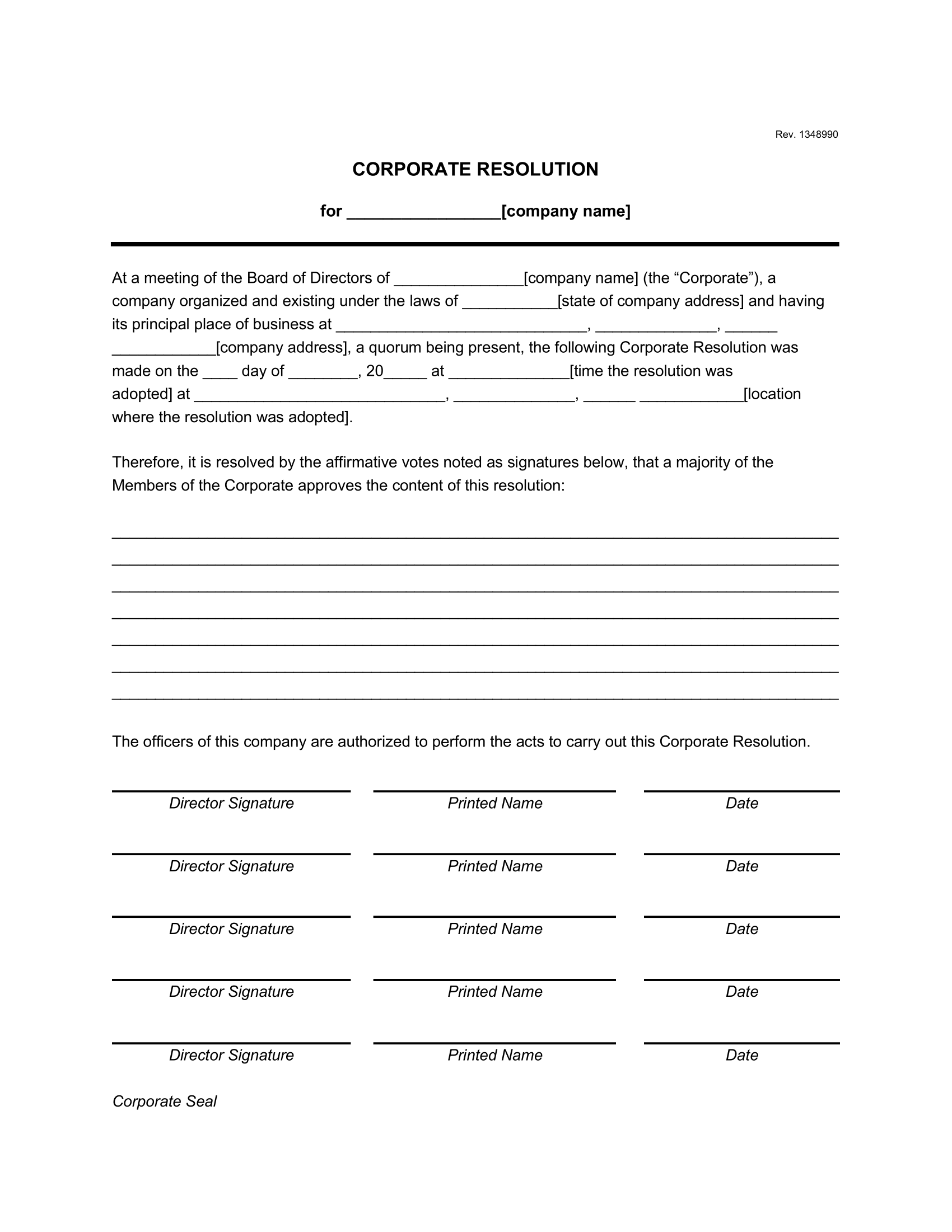
Your corporate resolution needs to include the following details:
- The company’s legal identification
- The state that governs the company
- Company address
- Date the corporate resolution was made
- That a quorum was present
- Location of where the resolution was adopted
- The content of the resolution
- Signatures of the officers
- Certificate of Secretary
How to Write a Corporate Resolution
Writing a corporate resolution can seem daunting if you attempt to create one yourself. Instead, you can use a corporate resolution template and our step-by-step builder to help you.
The following items should be a part of your corporate resolution:
Step 1: Add the Company Name
The top of the resolution should include the name of the company passing the resolution. This should consist of the business’s legally registered name, not just the trade name.
Step 2: Outline the Jurisdiction Identification
The resolution should state under which state laws the company is organized and exists.
This helps identify what laws apply to the corporate resolution and shows that your company is legally compliant.
Step 3: Identify the Principal Place of Business
The corporate resolution should identify the company’s principal place of business.
This can significantly impact which laws apply to the decision and where legal claims may be filed related to the resolution.
Step 4: State That a Quorum Was Present
The corporate resolution should show that a quorum was present when the decision was made. This demonstrates that the signing members had the legal authority to take the actions listed in the resolution.
Step 5: Date the Decision Was Made
The corporate resolution form should specify the date on which the decision was adopted. This is key evidence that the formalities were appropriately followed when they occurred.
Step 6: Add the Location Where the Decision Was Made
The resolution should also include where the decision was made. This information may have a legal impact or simply record the pertinent details of how the decision was made.
Step 7: Fill Out the Resolution Content Section
The corporate resolution should include a section that adopts the content of the resolution. This section should consist of all the decisions made as part of the resolution.
For example, the board of directors may decide to hire two new executives and take out a corporate business loan during the same board meeting. Each of these decisions should be identified in the resolution’s content section.
Step 8: Add Officer Signature Lines
The resolution should include a section with signature lines for all officers. It should state that the officers of the company are authorized to carry out the acts necessary to carry out the corporate resolution.
The signature lines should include the following:
- Signature line for each individual member
- A line for the printed name of the individual member
- A line for the date the signature occurred
Step 9: Certificate of Secretary
The corporate resolution should also include a section for the certificate of the secretary. The secretary of the company should be identified by name in the resolution document.
It should also include a statement from the secretary certifying that the record is true and accurate.
It should also identify the date, time, and location the resolution was adopted. It should then provide a signature line, printed name line, and date line for the secretary to sign.
The certificate of the secretary serves as a record of the actions taken by the members. This may be necessary to prove that the board acted with the proper authority when making their decision.