



What Is a Late Rent Notice?
A late rent notice is a letter from a landlord to a tenant stating that rent is overdue. Also called a past-due rent notice, it serves as a formal reminder and creates a written record in case the issue continues.
This notice is not an eviction notice, but it’s an important first step. It encourages tenants to pay before penalties apply and helps landlords follow state laws. In some states, landlords must send a late rent notice before issuing a notice to pay or quit, which demands payment or begins the eviction process.
Depending on state laws, landlords may need to wait for a grace period before sending a late rent notice. Some states let landlords charge late fees, but there may be limits. Also, tenants might have the right to withhold rent if the landlord hasn’t fulfilled their duties.
When to Send a Late Rent Notice
A late rent notice should be sent as soon as rent is overdue and any grace period has ended. Many states require landlords to wait a set number of days before applying late fees or taking legal action. If your lease agreement includes a grace period, you must wait until it expires before sending the notice.
For example, if rent is due on the first of the month and the lease allows a three-day grace period, the notice should be sent on the fourth. If there’s no grace period, you can send it immediately after the due date.
How to Write a Late Rent Notice
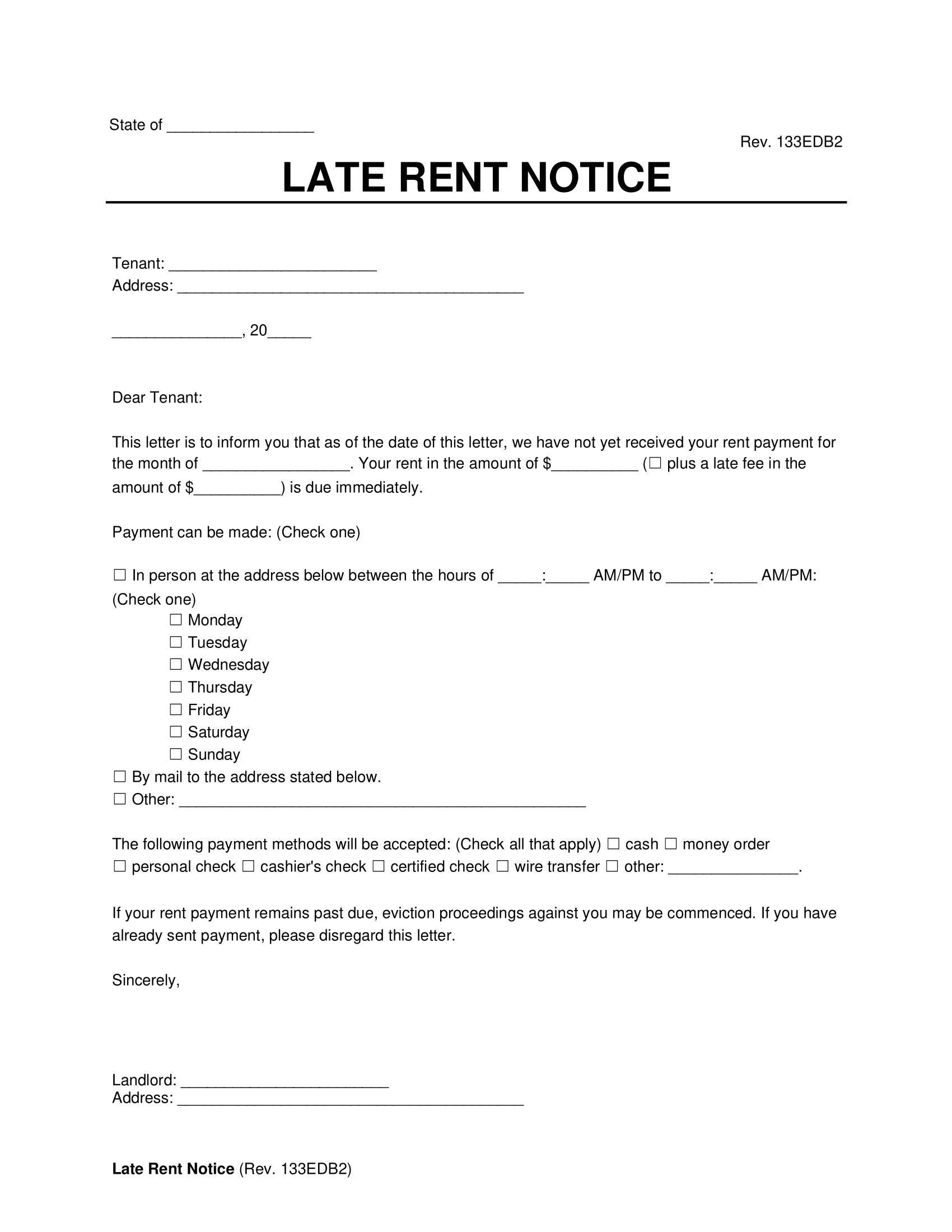
A well-formatted late rent notice should clearly state the issue of overdue rent and the expectations you have for the tenant to resolve it. At a minimum, every late rent notice should include the following elements.
1. Parties’ Details & Property Address
List yourself as the landlord and include your address. State the tenant’s full name as it appears on the lease, adding any additional tenants as needed. Include the complete rental property address (unit number, street, city, and ZIP code). This makes it clear what rent is in arrears.
2. Clear Statement of Non-Payment
Use professional and direct language, such as “This letter is to inform you that as of the date of this letter, we have not yet received your rent payment.” Clarify for what month the rent is overdue.
Certain states mandate specific language, such as informing tenants of their right to dispute the notice. Use Legal Templates’s form to get the wording right and convey the purpose of your message.
3. Amount of Rent Due
In addition to stating for what month the rent is past due, include the amount the tenant must pay. Emphasize that the payment is due immediately, and give accepted payment methods to assist the tenant in sending what they owe. If the tenant owes money from previous rental periods, you can list those amounts as well. State the consequences if they fail to pay, i.e., initiation of a formal legal eviction proceeding.
4. Late Fees
If the lease agreement specifies late fees and state law allows for them, list the exact fee amount. Clarify that the late fee is due on top of the overdue rent amount.
How Much Can I Charge in Late Fees?
Some states cap late fees based on a percentage of rent or a fixed amount. Others mandate late fees to be “reasonable” but don’t give an exact maximum. Still, a few states don’t impose any limit. Review your state’s laws before implementing fees in your late rent notice to ensure compliance.
5. Notice Date & Signature
Specify the date you’re sending the notice, as this detail can help you keep a clear record of your tenant communication. Without a timeline, it can be difficult to know when you’re allowed to initiate eviction proceedings. With all of these details, you can sign the late rent notice to validate its contents before delivery.