




What Is a Revocable Living Trust Form?
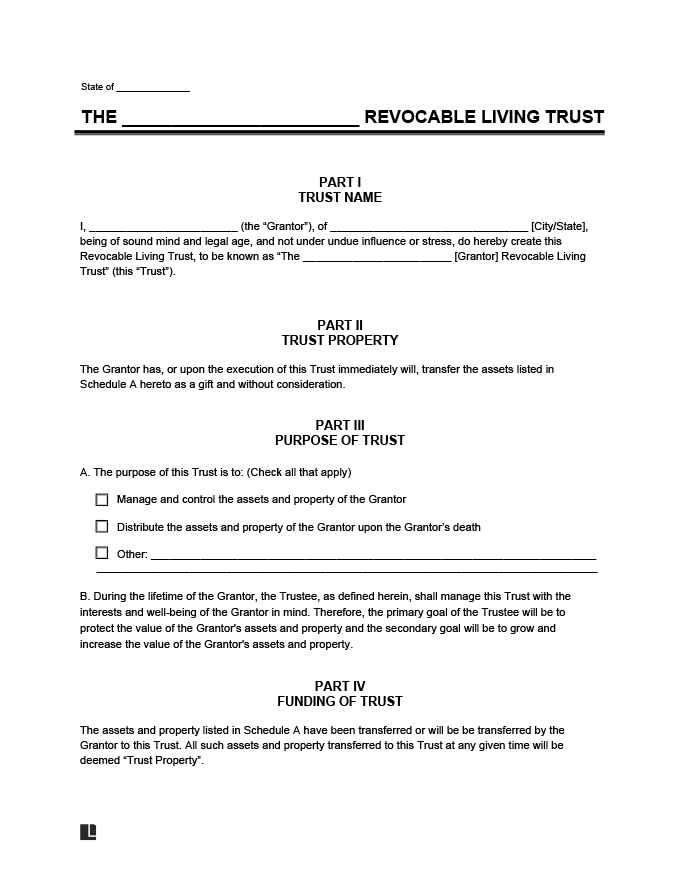
A revocable living trust form is a document that creates a legal entity (called a trust) to hold assets like real estate, money, and valuables. The trust lets you manage these assets and nominates a trusted person to take over if you can’t act for yourself. It’s a more flexible option than a last will, as it allows asset management during your lifetime.
A revocable trust can be changed or canceled at any time, as long as you’re mentally able and follow the right steps. This makes it easier to update the trust if you want to add or remove assets or choose a new trustee.
Our revocable living trust form lets you establish a trust and take charge of your estate planning. Use it to avoid probate and state succession laws, protecting your assets how you see fit.
Who Are the Parties to a Revocable Living Trust?
A revocable living trust (or a revocable inter vivos trust) involves several parties:
- Grantor: The trust’s creator and the original owner of the assets named in the trust.
- Primary trustee: The party responsible for managing the assets in the trust.
- Successor trustee: The party who will take over management of the trust if the original trustee cannot.
- Beneficiaries: The individual(s) who receive the benefits of the trust assets after the grantor dies or after the terms of the trust are met.
Revocable Trust vs. Irrevocable Trust
The main difference is asset protection. Irrevocable trusts move assets out of your estate, so they can’t be touched by creditors and won’t be taxed when you die. But that protection comes at a cost: you give up control, and you usually can’t make changes without court or beneficiary approval.
Revocable trusts, on the other hand, let you stay in control. You can change the terms or revoke the trust entirely, but the assets remain part of your estate—which means no protection from creditors or estate taxes.
| Factor | Revocable Living Trust | Irrevocable Living Trust |
|---|---|---|
| Ability to Change or Revoke | Yes | Possible but difficult |
| Grantor Keeps Control of Their Assets | Yes | No |
| Assets Protection from Creditors | No | Possibly (depends on the circumstances) |
| Avoidance of Probate | Yes | Yes |
| Tax Benefits | No | Yes |
| Complexity to Manage | Less complex | More complex |
| Belongs to Grantor's Estate | Yes | No |
How to Create a Revocable Living Trust
If you want to know how to set up a trust to protect your assets, you can complete the process in five steps.
1. Consider Your Goals
Start by considering what you want to accomplish through the creation of your living trust. That includes:
- what assets you want to protect
- who will benefit from the trust
- who will control your assets normally
- who will control your assets if you become incapacitated or pass away.
By considering these critical elements ahead of time, you can streamline the creation of your revocable living trust.
2. Review Legal Requirements
Most states have adopted the Uniform Trust Code, which guides the creation and changes of living trusts. It also outlines the grantor’s and beneficiaries’ rights. However, some states have their own laws or modifications to the Uniform Trust Code. Do your research to make sure that you follow those requirements. If you have a complex situation, consult a lawyer.
3. Write the Form
As you fill out the revocable trust form, you’ll establish the specifics you considered in the first step. Our revocable trust template makes it easy to include all relevant legal information:
- Grantor information: Determine whether one person or multiple people are creating the living trust.
- Trust’s purpose: Explain whether the trust will manage and control the grantor’s assets or distribute them after the grantor’s death.
- Property: Describe the property you’re placing into the trust.
- Trustees: Name the initial trustee and successor trustee, if applicable.
- Powers: List the trustee’s powers, noting any limitations or restrictions.
- Compensation: Specify if the trustee will receive compensation for acting in their role.
- Beneficiaries: Name your beneficiaries, who will receive all property not specifically named to other entities.
- Gifts: Make specific gifts you intend to give as part of the trust, including funds designated to children, pets, charities, or other individuals or entities.
4. Sign & Notarize
Once the form is complete, you may need to sign before a notary public or witnesses. This step is often essential to legalizing your new revocable living trust.
Check your state’s requirements to see if you need a notary public’s or witnesses’ signatures. Even if you don’t, it’s still helpful to have these third parties observe your signature for increased validity.
5. Review & Update
Because a living trust is revocable, you can update it at any time. Regularly review and update your trust to reflect life changes such as marriage, divorce, or new assets.