




What Is a Release of Liability Form?
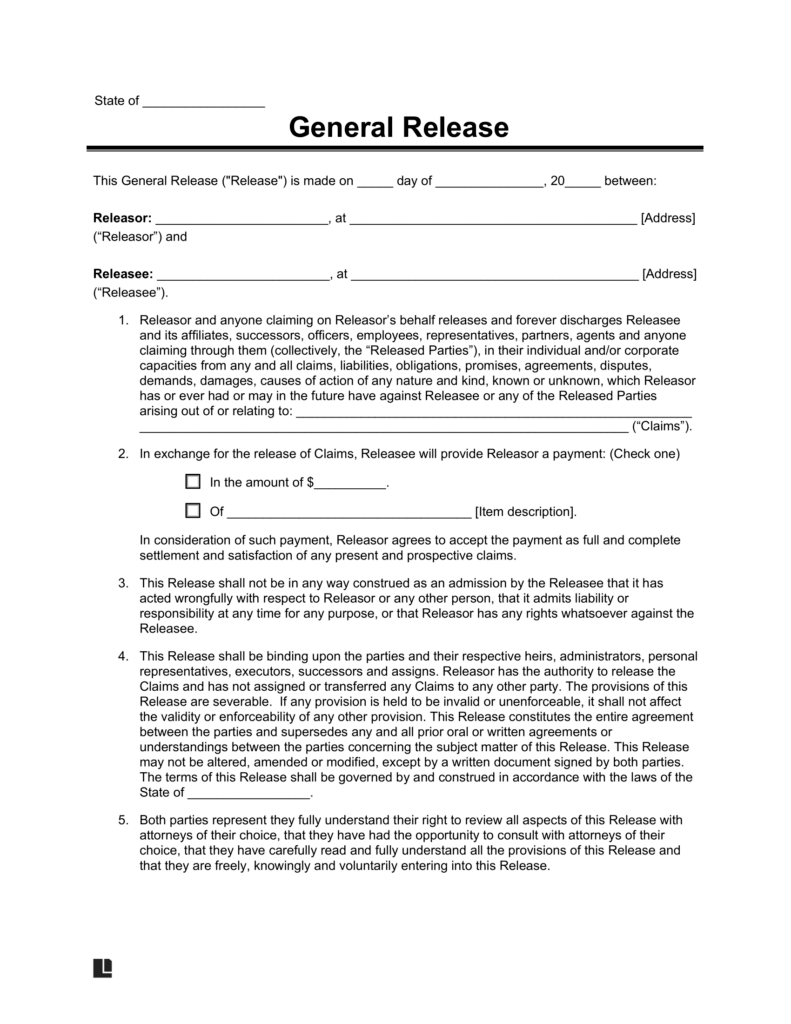
A release of liability form (also known as a liability waiver or liability release form) is a legal document where one party agrees not to hold another legally responsible for injuries, damages, or losses related to a specific activity or event.
To be legally valid, the party waiving their rights must receive something in return, such as money, services, or access to an activity. This exchange, called consideration, is what makes the agreement enforceable.
Many forms also include an assumption of risk clause, where the signing party acknowledges potential dangers and accepts the risks involved.
When to Use a Release of Liability Form
These forms are commonly signed before high-risk situations, such as sports, fitness classes, or volunteer work, to acknowledge the risks and waive the right to sue. They can also be used after an incident, like a car accident or property damage, to resolve claims and avoid legal action formally.
Whether used proactively or reactively, a release of liability helps protect individuals and businesses from future legal claims.
How to Write a Release of Liability Waiver Form
Writing a release of liability waiver form lets you explain the risks involved in an activity and ensure that one party agrees not to hold the other legally responsible for those risks. Whether it’s for a business, event, or personal use, we’ll walk you through the steps to help you create a strong and effective form.
1. Provide Initial Details
List the date of the agreement to set the official start of the waiver’s effectiveness. With a set date, you can ensure that the form only applies to activities that occur after the fact.
2. Give a Claims Description
Clearly describe the activity or event covered by the form and outline the specific claims that the releasor will waive. Be as detailed as possible about the risks involved so both parties understand the scope of the agreement.
For example, consider a releasee hosting a cooking class. They may require the participants (the releasors) to sign a no-liability agreement before taking the class. This form can let the participants acknowledge the risk of minor burns, knife cuts, or allergic reactions to ingredients and release the instructor from liability.
3. Identify the Consideration
A release of liability form must include consideration to be legally binding. This is something of value exchanged between the parties, such as money, services, or access to an event.
Recording the consideration confirms that the releasor is receiving something in return for signing the waiver.
4. Provide the Governing State
Specify the state whose laws will govern the waiver. The enforceability of a release of liability waiver depends on the laws of the jurisdiction, so this step is critical.
For example, a waiver governed by California law will differ from one governed by Texas law because each state has its own rules about liability and negligence.
5. Add Additional Clauses
To strengthen the waiver, include these important clauses:
- No admission of wrongdoing: Clarify that signing the waiver doesn’t mean either party admits to fault.
- Right to attorney: State that both parties have the option to talk with an attorney before signing the agreement to understand its terms.
- Severability clause: Add a clause stating that if one part of the waiver is invalid, the rest of the agreement remains enforceable.
These clauses provide extra legal protection and ensure the waiver is fair and balanced.
6. Obtain Signatures
Finish the form with spaces for both parties to sign and date the signatures.
Is a Release of Liability Form Enforceable?
Yes, a release of liability form is generally enforceable. If the waiver meets the following, it can typically be upheld:
- It contains proper language based on the particular state’s contract law
- It does not violate public policy or any state laws
- The injury stems from risks clearly outlined in the waiver or from the simple negligence of the disclaiming company