What Is a Listing Agreement in Real Estate?
A real estate listing agreement is a legally binding contract between a seller and a real estate agent or broker. It gives the agent the right to market the property, list it on the Multiple Listing Service (MLS), and negotiate with buyers on the seller’s behalf. Without a real estate listing agreement, the agent can’t represent the seller in a transaction.
Once that relationship is in place, the agreement covers the key details of the sale. It includes the listing price, the services the agent will provide (like marketing and showings), how commission is paid, and how long the agreement lasts.
A real estate listing agreement also defines who handles what during the sale. For example, the agent manages marketing, showings, and buyer communication, while the seller signs off on pricing, offers, and final decisions. That split makes decisions easier to manage and defines who’s responsible for each step.
Most listing agreements in real estate last 3-6 months, but you can adjust the timeline based on your needs.
When to Use a Real Estate Listing Agreement
A real estate listing agreement should be signed before an agent starts marketing or selling a property. It gives the agent clear authority to represent the seller and explains how the listing will be managed. You’ll typically need one in a few key situations:
- When a property is being listed for sale. Put the agreement in place before any marketing or outreach begins.
- Before promoting or adding the property to the MLS. A signed agreement is required before it can be advertised or officially listed.
- When renewing or updating an existing agreement. Use it to extend the timeline, adjust terms, or replace an older version.
A real estate listing agreement sets who controls the listing and who earns commission. For example, if a seller works with two agents, the signed agreement confirms who has authority. Legal Templates can help you set or update those terms before moving ahead.
Can You List a Property Without a Listing Agreement?
In most jurisdictions, you are not allowed to list a property on an MLS without a signed real estate listing agreement. This is because licensed real estate brokers are legally required to have a formal contract in place before advertising to the public.
If you will handle the real estate sales process entirely on your own, you don’t need a listing agreement. You can instruct a real estate agent to market your home to a private network of buyers without officially listing it on the MLS.
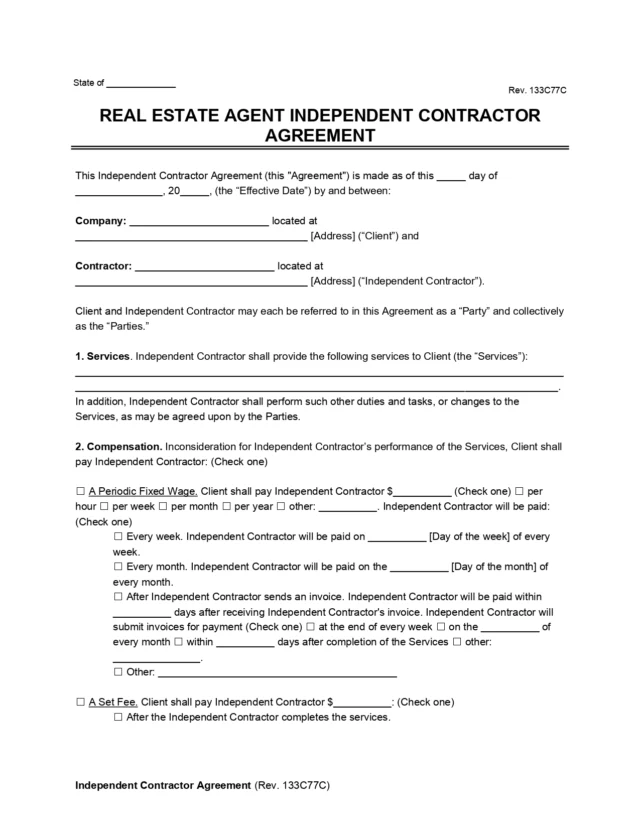
You may also not need one if you enter into a real estate agent independent contractor agreement and ask them to market your home to a private network of buyers. However, having a listing agreement is ideal, as it prevents disputes and ensures the agent can act as your fiduciary.
Types of Real Estate Listing Agreements
The type of real estate listing agreement affects how commission is paid and how responsibilities are divided during the sale. Some agreements give the agent full control, while others allow the seller to take a more active role. Here’s how the main options compare:
| Type | When the Agent Gets Paid | Can You Find a Buyer Yourself Without Paying Commission? | How Much the Agent Handles |
|---|---|---|---|
| Exclusive Right to Sell | Agent gets paid no matter who finds the buyer | No | Handles most or all of the sales process |
| Exclusive Agency | Agent gets paid unless you find the buyer yourself | Yes | Handles key parts, but you can stay involved |
| Open Listing | Only the agent who finds the buyer gets paid | Yes | Handles limited parts of the process |
Exclusive right to sell is the most common option because it gives the agent a clear incentive to market the property and manage the sale. Some agreements allow for a more active role or let you find a buyer on your own, but they also mean you take on more responsibility.
Some real estate listing agreements, like limited-service or net listings, may be available in certain markets, though they’re less common or more restricted. Available options can vary based on local laws and brokerage practices.
How to Write a Real Estate Listing Agreement
Set the key terms before the property goes on the market. Focus on how the sale will be handled, how commission is paid, and how long your real estate listing agreement stays in place. Here’s what to include:
These terms directly affect how commission is handled and when it’s earned. Some parts of a real estate listing agreement can continue after the listing ends, so they need to be handled carefully.
Commission is typically a percentage of the sale price and may be split between agents, but it’s fully negotiable. In some cases, commission can still apply after the listing ends through a protection period, which covers buyers the agent introduced during the listing.
Can I Cancel a Real Estate Listing Agreement?
Yes, you may be able to cancel a real estate listing agreement, but you should first review the original contract’s termination clause. Depending on your contract, it may have one of the two following clauses:
- Termination with Cause: For termination, the agent must fail to perform their duties. This may be engaging in poor communication or unethical behavior.
- Termination without Cause:If the contract allows for termination without cause, either party may cancel, provided they give ample written notice.
Canceling a listing agreement may affect commissions, marketing costs, or other fees, so read the full agreement before taking action. If you move forward, ask the agent or brokerage to confirm the cancellation process in writing.
Sample of Listing Agreement in Real Estate
Use our sample real estate listing agreement to see how the contract is typically structured. It shows how terms like listing price, commission, listing period, and the protection period are written in a clear, usable format. You can customize the real estate listing agreement template to fit your property and download it in Word or PDF.