What Is a Survivorship Deed?
A survivorship deed is a real estate deed that allows co-owned property to pass directly to the surviving owner(s) upon the death of one owner.
A right of survivorship warranty deed is a specific type of survivorship deed. It transfers property to grantees as joint tenants with right of survivorship, not as tenants in common. You may also see this type of deed called a warranty deed with right of survivorship or a deed with survivorship rights.
Because it’s a warranty deed, it also gives the grantee certain title protections. These usually mean the grantor promises they own the property, have the authority to transfer it, and will defend the title against lawful claims. The deed may also list encumbrances, so the grantee knows what title issues still affect the property.
A right of survivorship warranty deed must clearly give the owners the right of survivorship. If it doesn’t, the surviving owner may not automatically receive the deceased owner’s share, and state law may decide what happens next.
Does Joint Tenancy Automatically Include Survivorship?
Not always. A deed should clearly state that the owners hold the property as joint tenants with right of survivorship, not as tenants in common. That wording is important because it shows the owners’ intent. Without clear survivorship language, the deceased owner’s share may not pass directly to the surviving owner.
State rules vary. In Florida, property transferred to two or more people generally creates a tenancy in common unless the deed clearly gives them the right of survivorship (FL Stat § 689.15). In Ohio, the deed or will must show clear intent to create a survivorship tenancy. The word “or” between names isn’t enough by itself (OH Rev Code § 5302.20).
Before relying on survivorship rights, review the deed language. A right of survivorship warranty deed should make the survivorship intent clear and include warranty language as part of the transfer.
Joint Tenants With Right of Survivorship vs Tenants in Common
Joint tenants with right of survivorship can receive the deceased owner’s share directly. Tenants in common usually don’t have that same survivorship right. Because the result is different, the deed should clearly state which ownership structure applies.
Who Should Use a Right of Survivorship Warranty Deed?
A right of survivorship warranty deed is useful for co-owners who want property to pass directly to the surviving owner when one owner dies. It can also help avoid a separate probate transfer for the deceased owner’s share. It may be a good fit for:
- Married couples who want clear survivorship rights.
- Unmarried partners who own property together.
- Family members who want shared property to stay with a surviving co-owner.
- Co-owners who want stronger title protections than a quitclaim deed provides.
A survivorship deed form won’t work for every transfer. It may not be the right choice if co-owners want their shares to pass through a last will or use a different ownership structure. If you want to name someone to receive property only after your death, a transfer-on-death deed may be a better fit. If you want warranty protections without survivorship rights, use a standard warranty deed.
Tax Consequences of Joint Tenancy With a Right of Survivorship Deed
Establishing joint tenancy with right of survivorship can create tax consequences now and later. Depending on the transfer, it may affect transfer taxes, property taxes, gift taxes, and future capital gains. Consider speaking with a tax professional before signing.
How to Fill Out a Right of Survivorship Warranty Deed
A right of survivorship warranty deed can make a future transfer easier, but only if the deed is accurate before anyone signs. Follow these steps to complete it accurately before signing and recording.
1. Start With Who Owns the Property Now
Enter the current owner’s (also known as the “grantor”) full name, address, and owner type. For example, if Jordan owns their home and wants to add Alex with survivorship rights, Jordan is the grantor. The grantor may be an individual, a married couple, a business, or a trust.
2. Name Who Will Receive Property Ownership
Enter the new owner’s full name, address, and owner type in the survivorship deed template. The grantee is the person or entity receiving an interest in the property. You should also choose who will receive the recorded deed after the county files it.
Naming a new owner doesn’t mean the current owner gives up ownership. The current owner keeps their co-ownership interest, and the new owner receives the other side of that shared ownership.
3. Describe the Property Clearly
Enter the property address, county, and legal description. The legal description is different from the street address, so copy it from the current deed or county property records. Then list any exceptions or encumbrances affecting the property, such as easements. For example, a utility easement may let a company access part of the property to access specific equipment.
4. Add Prior Deed Details
If you have details from the prior deed, add the instrument number, book and page, recording date, and county. These details help connect the new deed to the prior chain of title.
5. Explain How the Transfer Works
Identify whether the property is being sold, gifted, or transferred as an exempt transaction. Then add:
- Transfer amount
- Parcel number
- Transfer tax details
- Tax statement recipient
These details help the county process the deed and send future tax notices to the right person.
6. Include Liens and Title Issues
List any liens, mortgages, easements, or other title issues that affect the property. This helps the grantee understand what they’re accepting with the deed.
7. Add Spousal or Co-Owner Details
State whether the grantor’s spouse will sign the right of survivorship deed. If the grantees will split costs or responsibilities in a specific way, attach those terms as an exhibit.
8. Check the Signing Rules
Enter the notary state and county. Then confirm:
- Whether the deed will be notarized online or in person
- Whether witnesses will sign
- The signing date
Before signing, check your state and county rules so the deed meets local requirements.
Don’t sign or file a right of survivorship warranty deed until you’ve checked your state and county rules. The deed may need notarization, witnesses, spousal consent, transfer tax forms, or other recording documents. Once signed, record it with the county land records office where the property is located and keep a copy for your records.
Right of Survivorship Warranty Deed Sample
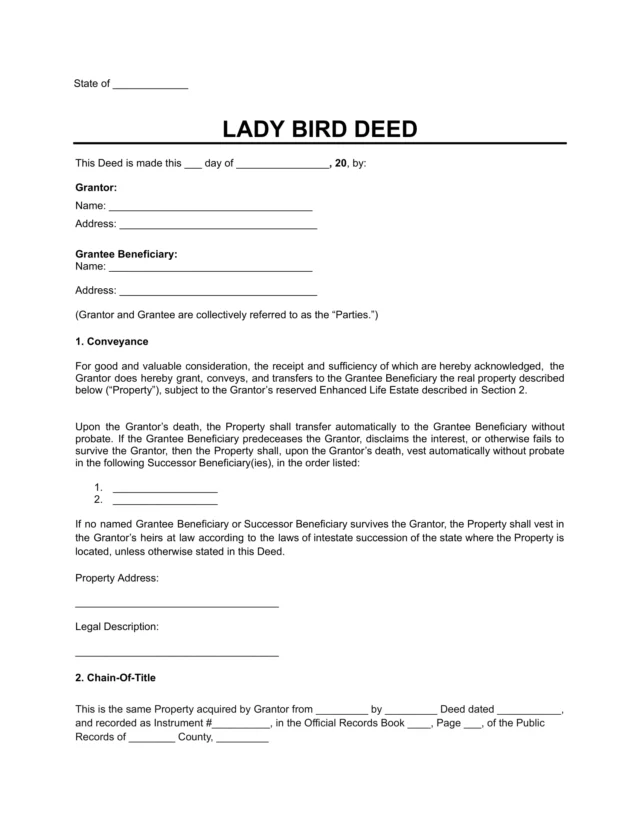
View the sample right of survivorship warranty deed template below to see how the grantor, grantee, property details, warranty language, and survivorship terms fit together. Then fill out Legal Templates’ form and download your completed deed.
Can a Survivorship Deed Be Contested or Changed?
Yes. A survivorship deed can sometimes be contested or changed, but it depends on state law, the deed’s wording, and who agrees to the change. Owners usually can’t remove survivorship rights by editing the existing deed. They typically need a new deed signed by the required parties.
A right of survivorship can also be challenged in court. A challenge may involve fraud, undue influence, lack of capacity, improper signing, or unclear language. Transfers can affect survivorship rights, too. If one owner sells or transfers their share, it may change who owns the property and what happens when an owner dies.
Does a Survivorship Deed Override a Will?
A survivorship deed can override a will for that property share. When one owner dies, their share usually goes straight to the surviving owner instead of through the will. A will can still control property that doesn’t pass by survivorship.