

What Is a Certificate of Incumbency?
A certificate of incumbency is a legal document that declares a corporation or LLC’s authorized officers, directors, and shareholders. It adheres to the corporate bylaws or LLC operating agreement, reflecting the company’s true organizational structure.
Typically, the company’s secretary or president fills out and signs this form. The company can present the completed form to banks and investors to prove that certain parties are authorized to act on the company’s behalf. Without this document, a company may struggle to conduct official business because it can’t prove which individuals have permission to act for the company.
The corporation or LLC does not need to record the certificate of incumbency. Instead, the document remains internal and is distributed to third parties as needed.
How to Get a Certificate of Incumbency
Getting a certificate of incumbency is a relatively simple process. It only takes a few minutes to fill out and will quickly be ready for acknowledgment by a notary public. Follow these steps to fill out and complete your certificate of incumbency.
Step 1 – Obtain a Template
Begin by obtaining a certificate of incumbency template, like the one from Legal Templates. We offer a concise form that contains all the essential information you’ll need to present to requesting legal and financial institutions.
Step 2 – Draft the Document
Have someone from your company draft the document. In most cases, this person will be the secretary, as they’re responsible for maintaining official records. However, another officer can take on the responsibility if needed.
Whoever drafts the document will fill it out with the following information:
- Company’s full legal name (not its trade name)
- State of incorporation
- Certifier’s name and position (e.g., Secretary, Assistant Secretary, President)
- Names and positions of all directors, officers, and shareholders
- Statement verifying the authority of the listed directors, officers, and shareholders
- Date of the certificate’s execution
Step 3 – Sign & Notarize
Once the certifier fills out the certificate, they should go before a notary public and sign it in their presence. A notary acknowledgment may be required for a certificate of incumbency, depending on your state, so be sure to check your area’s rules. Even when it’s not needed, obtaining a certificate of incumbency helps strengthen the document’s credibility and makes it more dependable for third parties.
Step 4 – Submit to the Requesting Organization
Submit your completed and notarized certificate to the requesting organization, whether it be a bank, investor, government agency, vendor, or international partner. The organization will review the document to confirm who has the authority to act on the company’s behalf.
Ensure that you also retain the original certificate of incumbency in your records. This way, you can create certified or regular copies for future distribution. If the requesting organization requires the original certificate, you may request it back to prevent the need to obtain another one.
Step 5 – Update as Needed
Keep your certificate of incumbency up to date. As officers or directors join or leave the company, you must revise the certificate to reflect who has authority. Providing requesting organizations with the most current information helps them confirm that the right people are authorized to act on the company’s behalf.
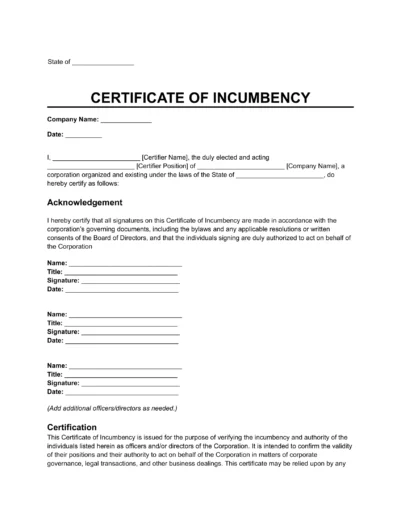
Certificate of Incumbency Sample
If you’re wondering what a certificate of incumbency looks like, you can view our free sample template below. Customize your own certificate for your LLC or corporation using our guided form. When you’re ready, you can download it as a PDF or Word document for your company’s records.
Certificate of Incumbency vs. Other Documents
A certificate of incumbency may be confused with other documents. Below, you can see it compared to other corporate documents:
- Certificate of good standing
- Corporate resolution
- Secretary’s certificate
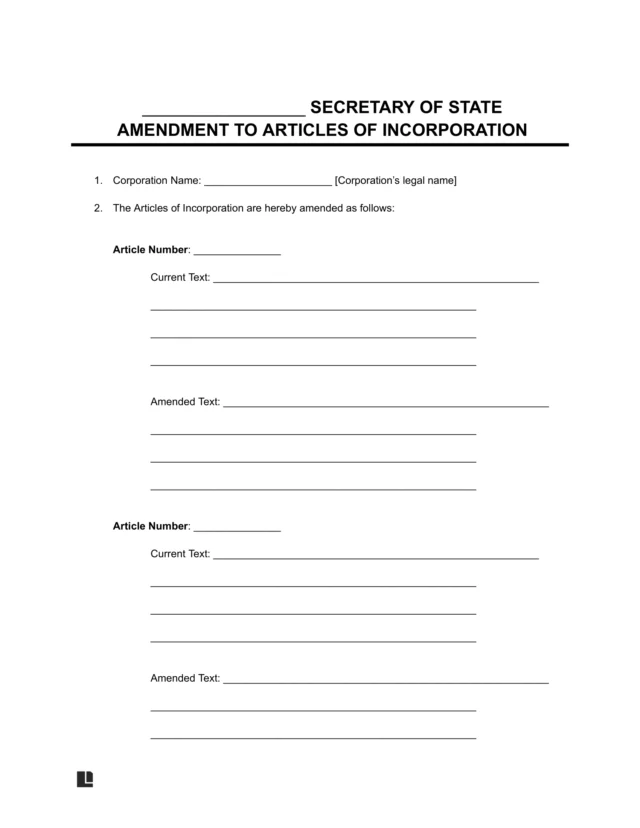
- Certificate of incorporation (articles of incorporation).
| Document | Purpose |
|---|---|
| Certificate of Incumbency | Verifies the current officers, directors, and authorized signers of a company so third parties know who has authority to act on the company’s behalf |
| Certificate of Good Standing | Confirms that a company is legally registered, up to date on required filings, and authorized to do business in its state |
| Corporate Resolution | Records a formal decision made by the board or shareholders and identifies who is authorized to carry out that specific action |
| Secretary's Certificate | Certifies that certain corporate records, such as resolutions or bylaws, are accurate copies and were properly approved |
| Certificate of Incorporation (Articles of Incorporation) | Establishes the company as a legal entity and outlines its basic formation details, such as name, purpose, registered agent, and share structure. |