What Are Bylaws for a Nonprofit?
Nonprofit bylaws are legally binding documents that outline your nonprofit’s governance and decision-making. They outline key aspects of your business, including board structure and voting procedures. You write nonprofit bylaws after filing your articles of incorporation with the state.
Nonprofit bylaws remain internal, so they are not part of the public record. However, donors and other stakeholders interested in the nonprofit’s operations can request to view the bylaws.
Some states require nonprofits to have bylaws. Even in states that don’t, bylaws encourage transparency. Plus, the Internal Revenue Service (IRS) requires bylaws to qualify for 501(c)(3) tax-exempt status. When you fill out your application for 501(c)(3) status (Form 1023), you must provide your nonprofit’s bylaws.
How to Write Bylaws for a Nonprofit
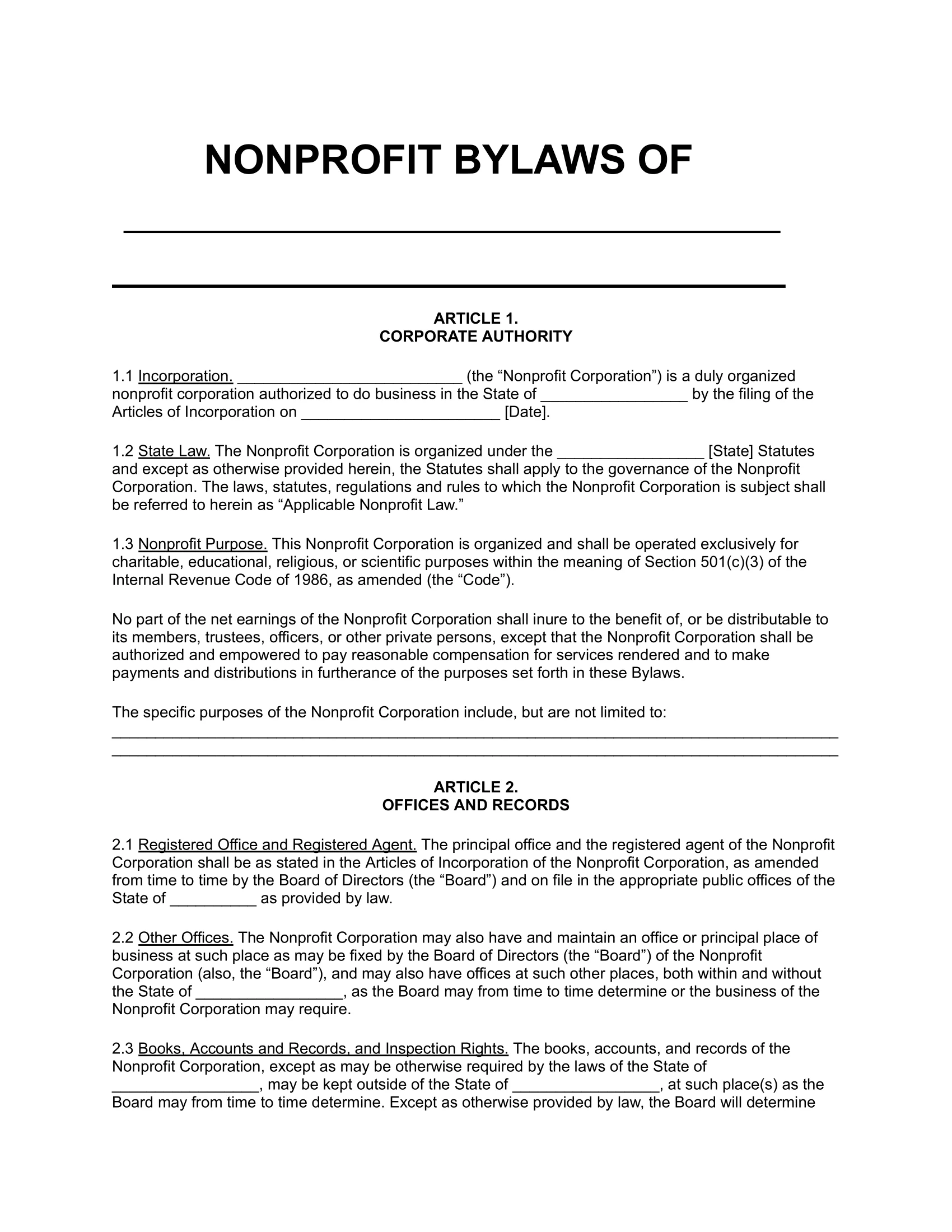
Your nonprofit bylaws should contain key details so it’s clear how your organization conducts itself. Learn about the essential elements of nonprofit bylaws below, all of which are included in Legal Templates’s form:
- Incorporation details: List your nonprofit’s name and date of incorporation. Include the state in which it was formed.
- Nonprofit’s purpose: State the goal of your nonprofit. It could be to promote a cause or address societal needs like poverty or low literacy rates. Refer to your nonprofit business plan as a starting point.
- Members’ meetings: Provide the minimum and maximum amount of time required to send a meeting notice for members to gather and vote on nonprofit matters. State the percentage of voting members who must attend to hold a valid meeting.
- Special meetings: Lay out the guidelines for special meetings that fall outside your regular meeting schedule. They help decide bigger matters, like removing a director or amending the bylaws.
- Directors’ information: Determine the quorum and size of your board of directors, which will establish organizational policies. Give the procedures for removing a director if they engage in misconduct.
- Governance and reporting: To maintain transparency and accountability, give a deadline by which the nonprofit must share its annual report.
- Conflicts of interest: Require board members with a conflict of interest to disclose it, and prohibit any members with conflicts of interest from voting on relevant matters.
- Amendment process: Clarify how the board of directors will implement changes to the bylaws.
- Signer’s title: Provide the full name and title of the person signing the bylaws. It’s usually a board officer, like the president or secretary.
- Date of adoption: Note the date when the board of directors will adopt the bylaws.
Do Nonprofit Bylaws Need to Be Signed?
Nonprofit bylaws don’t strictly have to be signed, but they must be adopted by the board of directors to go into effect. Signing proves there was agreement to the established terms, so it’s highly recommended. You can also consider seeking notary acknowledgment to verify that the bylaws were signed by a director.
Sample Nonprofit Bylaws
View our free sample nonprofit bylaws to understand what they look like. Then, use our guided form to create yours and download it in PDF or Word format.
How to Change Bylaws for a Nonprofit
Review your bylaws to understand the rules for making changes. You may need to draft proposed changes and issue proper notice for a meeting. During the meeting, your directors or board members may need to conduct a vote and achieve a certain percentage of yeses. If the change passes, you’ll document the changes and update your bylaws to show that the old information is outdated.
If you make substantial changes to your bylaws, such as changing your organization’s mission, you must report them to the IRS on your next annual report (Form 990).