What Is a Real Estate Retainer Agreement?
A real estate retainer agreement is a contract that charges a client an upfront fee before a deal is in place. It secures the real estate agent’s time and covers early-stage work, such as property searches, showings, and market research.
It typically includes services like scheduling and attending showings, sourcing listings, and communicating with listing agents. It also sets clear terms for services, payment, and timing.
A retainer is separate from commission. The agent may keep the retainer even if no deal closes, depending on the terms. Many agents use it alongside a buyer representation agreement when they expect to invest time upfront.
What Is a Real Estate Agent Retainer Fee?
A real estate agent retainer fee is an upfront payment a client makes to secure the agent’s time and services early in the process. It doesn’t guarantee a transaction and may not cover the full cost of services. Any unused portion may be refundable, depending on the agreement.
When to Use a Real Estate Retainer Agreement
Use a real estate retainer agreement when an agent is working with a client before a deal is in place and needs to secure time upfront. It’s a good fit in situations like these:
- Starting a home search early. Work begins before a deal is in place, like searches, research, or showings.
- Ongoing support before a deal closes. This includes sending listings, booking showings, and staying in touch with other parties.
- Competitive markets. Agents may prioritize clients who’ve committed upfront.
- Upfront fee required. A retainer is charged before showings or market research begin.
- Working closely with one client. Time is set aside to support one client over a period of time.
- Setting clear terms early. Scope, payment, and expectations are defined before work starts.
- Before a buyer representation agreement. Work begins before signing a longer-term agreement.
In these situations, a retainer helps set expectations early and covers the time spent on upfront work. For example, it works well when listings are shared often, and multiple showings are being scheduled. Legal Templates makes it easy to put these terms into a clear, ready-to-use agreement.
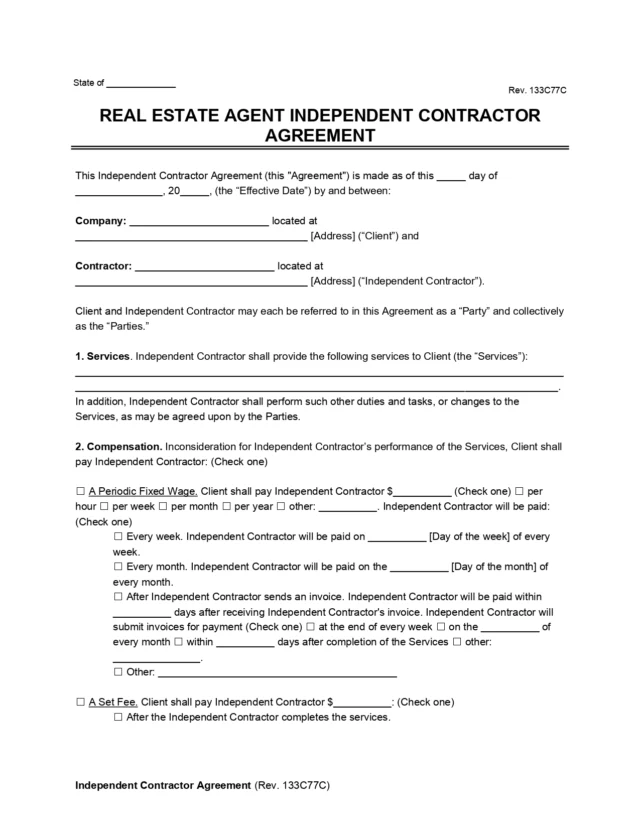
Use a real estate agent independent contractor agreement to define how an agent works with a brokerage. A retainer agreement applies only to the client – agent relationship.
What to Include in a Real Estate Retainer Agreement
A real estate retainer agreement should cover early-stage work and explain how the retainer is handled. It should also include the key terms that guide the relationship. Include details like these:
- Who the client is: Full name and address.
- Agent or brokerage details: Name and contact information.
- What’s handled early on: Searching for properties, sending listings, scheduling showings, and coordinating with listing agents.
- What the client is looking for: Location, price range, property type, and any must-haves.
- How the retainer is structured: A flat upfront fee or an hourly or monthly rate.
- When and how it’s paid: The retainer’s paid before searches or showings begin, and whether it needs to be topped up.
- What happens to unused funds: Whether any remaining amount is refundable if no deal closes.
- What’s included vs extra: Whether travel, property visits, or admin time is covered or billed separately.
- When work begins: The date work starts on the search or sale.
- When the agreement ends: After a set time, once a property is found, or if either party ends it.
- How issues are resolved: Whether disputes are handled through mediation, arbitration, or court.
- Which state laws apply: For example, local laws may affect how real estate agreements are enforced or how agent fees are structured.
- When it takes effect: This marks the start of services and the effective date of the retainer.
- Clearly state how the retainer is used: Whether it’s credited toward commission or kept as a separate fee. This is one of the most common points of confusion if no deal closes.
With these details in place, it’s easier to move forward once showings start and time is already invested. It also makes it clear how the retainer applies to listings, tours, and early-stage work.
A client may not be able to attend important events, such as a closing, due to other commitments. They can enter into a real estate power of attorney to delegate these rights to their agent.
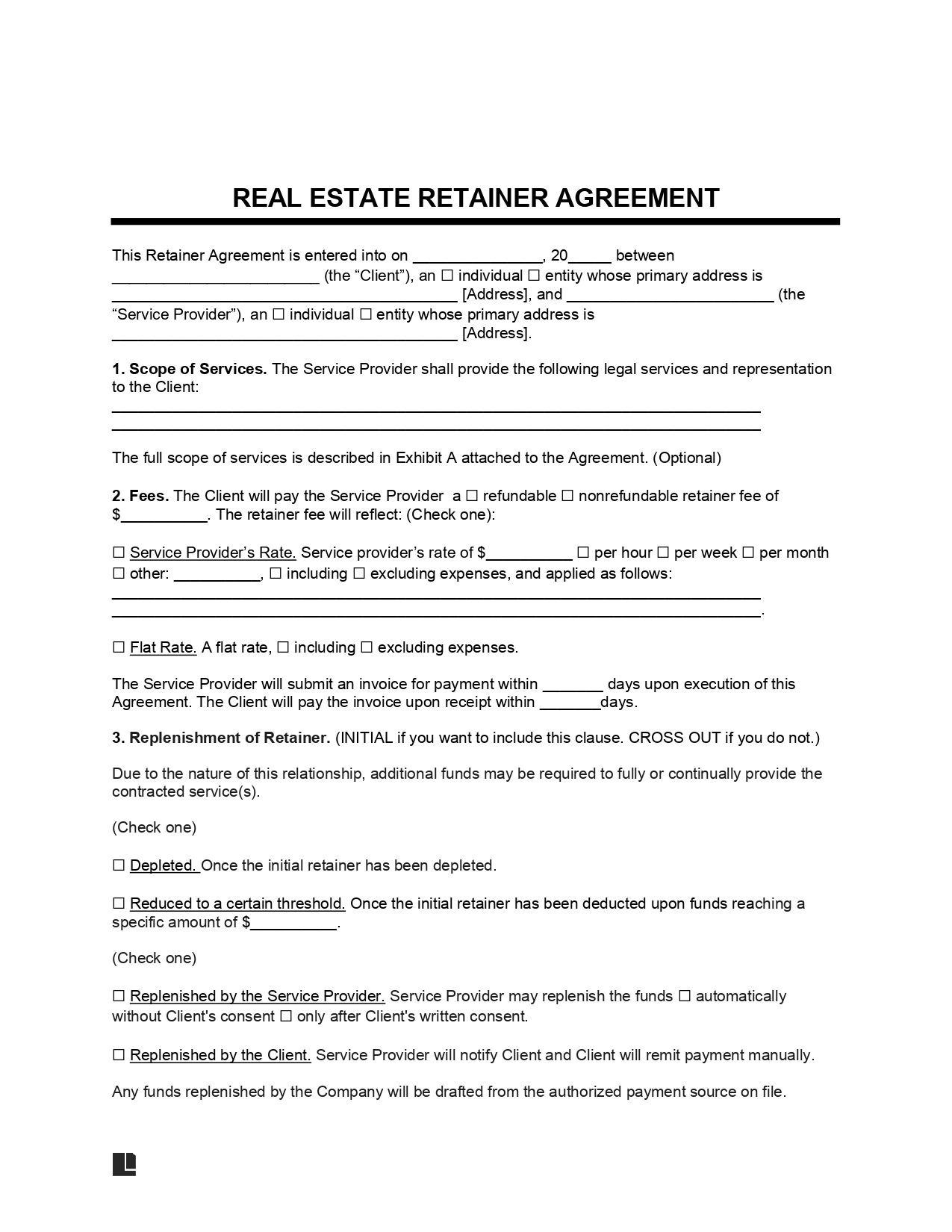
Sample Retainer Agreement for Real Estate Services
Review a sample real estate retainer agreement to see how it’s structured. View the sample, then customize and download the template in Word or PDF format.
How to Price a Real Estate Retainer
Set your real estate retainer based on the work you expect to do before a deal closes. Focus on the time, effort, and costs that usually fall outside commission.
- Estimate your upfront workload by client type. Buyers often need multiple showings, neighborhood research, and support with offers. Sellers may need pricing analysis, listing prep, and coordination. Use your hourly rate as a baseline, then convert that into a flat retainer.
- Cover pre-commission work. Include time spent on property searches, showings, market comparables (“comps”), drafting offers, and ongoing client communication, especially when a deal is not guaranteed.
- Account for real estate-specific expenses. Travel to showings, open house prep, staging coordination, and inspection scheduling can add up. Include these in the retainer or price them separately.
- Adjust based on how the retainer applies. If you credit the retainer toward commission, you may set a lower upfront amount. If any portion is non-refundable, the fee is often higher to reflect the time commitment.
- Decide how much to collect upfront. A full upfront retainer works for high-touch buyers with frequent showings. A smaller amount with required top-ups may be suitable for longer or less predictable searches.
Base the amount on real tasks like showings, comps, and offer preparation, so the work clearly connects to the fee. When that connection is clear, clients can see the real value behind your time, guidance, and expertise.