What Is an Influencer Agreement?
An influencer agreement is a legal contract between a brand (the “client”) and a content creator (the “influencer”). It explains the terms of their promotional work together.
You should use this type of agreement when:
- Paying an influencer to promote your products or services.
- Sending free products with the expectation of content.
- Launching a social media campaign with specific deliverables or timelines.
An influencer agreement helps protect both parties by:
- Outlining expectations and deliverables.
- Preventing miscommunication.
- Ensuring Federal Trade Commission compliance to avoid legal issues.
Legal Requirements: FTC Compliance for Influencer Marketing
Influencer marketing must follow FTC guidelines. These rules say all brand partnerships must be clear. If you pay, give gifts, or work with an influencer, that connection must be shared. If not, both you and the influencer could face legal trouble.
Key FTC Requirements for Influencer Agreements
Your influencer agreement should include key FTC rules on disclosure and endorsements. These come from federal law and help you stay compliant and avoid penalties.
Clear and Conspicuous Disclosures
Influencers must make it obvious when content is sponsored. That means:
- Using clear hashtags like #ad or #sponsored
- Placing disclosures where they’re easy to see (not buried or behind “View More”)
- Saying it aloud in videos or podcasts
- Adding on-screen text in Stories or Reels
Honest, Substantiated Endorsements
Influencers must:
- Share real, firsthand experiences
- Avoid making false or exaggerated claims
- disclose non-cash perks like discounts or free products
Responsibility of Advertisers and Agencies
Advertisers are also responsible. Brands must:
- Give influencers clear disclosure instructions
- Monitor sponsored content
- Fix problems promptly if posts are misleading
Influencers Can Be Liable
The FTC has fined influencers for failing to disclose brand ties or making false claims, even if the brand provided disclosure instructions.
Why This Matters for Contracts
An agreement helps:
- Document your expectations for disclosures
- limit liability
- Show the FTC that your business took reasonable steps to comply with the law
What to Include in an Influencer Contract
Here are the most important sections in an influencer agreement:
- Services: What content the influencer will create and where it will be posted.
- Payment details: flat fee, per post, performance-based, or retainer.
- Content Approval: Whether you want final say before a post goes live.
- Deliverables: Number of posts, stories, videos, etc.
- Usage Rights: Who owns the content and how it can be reused.
- Confidentiality: Protection of brand info and campaign details.
- FTC Compliance: A clause requiring influencers to follow disclosure rules.
-
Termination: How to end the agreement and return assets.
Non-Compete/Non-Solicitation: Prevents influencers from promoting competitors. - Dispute Resolution: What happens if there’s a legal disagreement.
How to Write an Influencer Contract
You don’t need legal training to write a good influencer agreement. A solid template, like the one from Legal Templates, makes it easy to get started.
1. Define the Campaign
Specify the campaign name, goal, and platforms. Such as “’Promote on Instagram, TikTok, and YouTube”.
2. Set Deliverables and Deadlines
Include content types (e.g., one reel, three stories) and due dates. Consider using a production schedule as an exhibit.
Make performance expectations clear, such as a minimum engagement rate or conversion benchmark
3. Determine Payment Structure
Choose a model:
- Per-post fee
- Retainer
- Performance-based (e.g., affiliate commissions)
- Milestone payments
For affiliate-based partnerships, consider reviewing our affiliate agreement template to clearly outline commission terms, tracking, and usage rights.
Clarify when and how influencers should invoice you.
4. Include Platform and Data Compliance
Ensure influencers follow platform rules and protect consumer data (especially if you share metrics or use discount codes).
5. Add Termination, Ownership, and Dispute Resolution Terms
Address:
- Early termination options
- Who owns the content
- What happens if there’s a dispute
Decide whether you want full ownership, a license, or shared rights.
Customizing Your Influencer Contract for Different Campaign Types
Not all influencer campaigns follow the same structure. As you fill out your influencer agreement, keep in mind that your campaign type may affect what terms make the most sense. Consider the following common types of partnerships:
Affiliate Partnerships
Influencers earn a commission on sales or leads through special tracking links or discount codes. These arrangements may involve performance metrics and ongoing reporting, so think about how you’ll define success and track conversions.
Brand Ambassadorships
Long-term relationships that go beyond a single post. These often involve consistent branding, repeated mentions, and exclusivity expectations. Be mindful of how often content will be required and whether you want to include any non-compete terms.
Giveaways/Contests
These campaigns usually focus on reach and engagement. If you’re running a giveaway, consider who will send the prizes, how winners are picked, and whether you need to follow any legal or platform rules.
Event Activations
For live events, product launches, or in-person experiences, influencers may create content in real time. Consider travel expectations, posting schedules during the event, or any brand visibility requirements.
Sample Influencer Contract
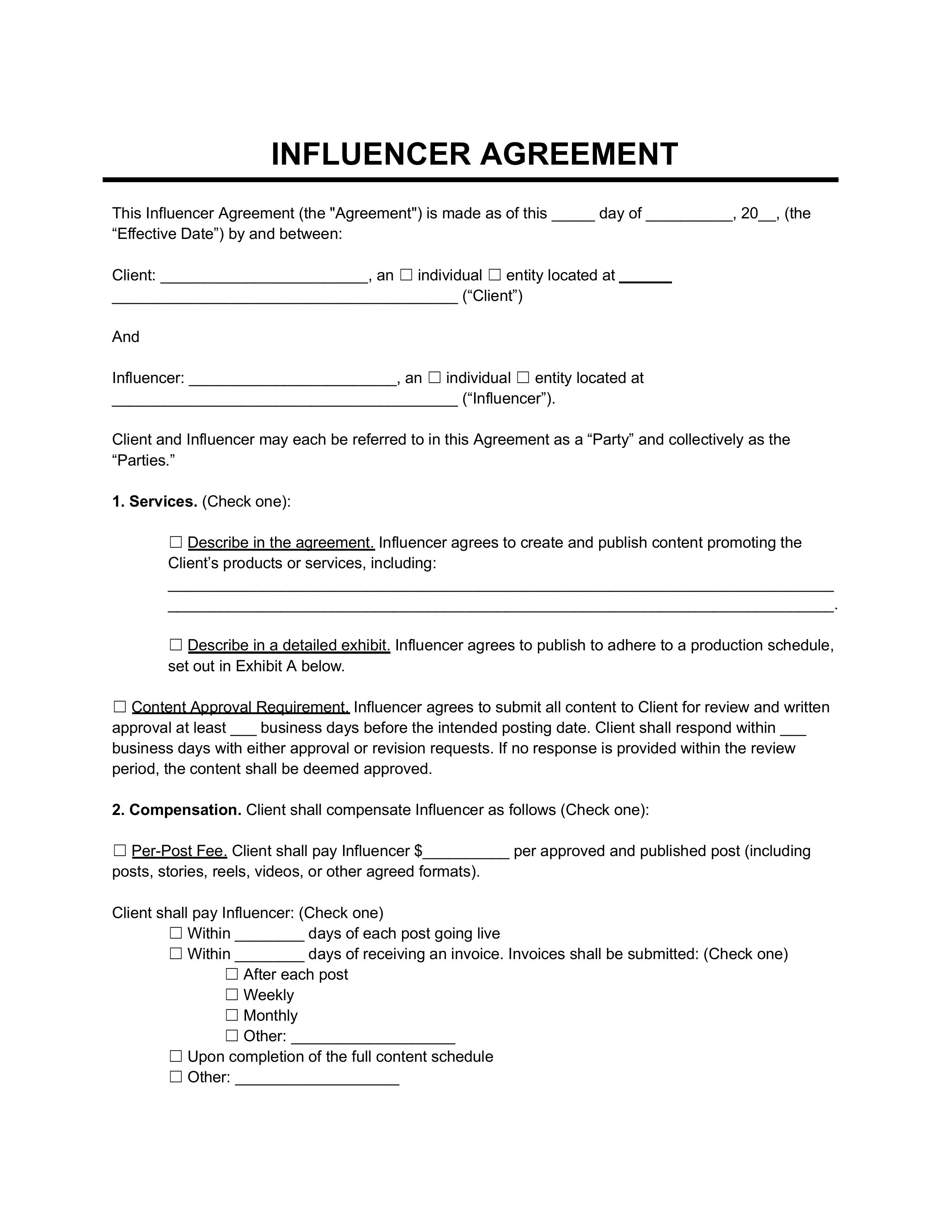
Here’s a sample of what your agreement could look like using our influencer agreement template: