What Is a Moving Contract?
A moving contract is a written agreement between the person moving belongings and the person handling the move. It explains what’s being moved, when the move takes place, how pricing works, and who is responsible if items go missing or arrive damaged.
The contract applies only to the people who sign it, so it doesn’t cover friends, helpers, or anyone else who helps out on moving day unless they sign. That keeps responsibility limited to the agreed parties and avoids assumptions about who is expected to show up, get paid, or take responsibility if something goes wrong.
Use a moving checklist to confirm key details like inventory, timing, and payment terms before signing the contract.
When to Use a Moving Contract
The need for a moving contract depends on how the move works. These situations usually benefit from putting the basics in writing.
- One-time, informal moves between private individuals
- Moves involving friends, family members, roommates, or paid helpers
- Small moves where payment, timing, or responsibility could get awkward without something in writing
In short, a moving contract works best for casual, local moves handled between individuals. For example, it helps when a friend with a truck is getting paid or a helper is moving furniture across town.
Avoid using a moving contract when
- A licensed or insured moving company is involved
- The move is interstate and handled by licensed movers, who follow federal rules and use a bill of lading instead
- You need regulated moving paperwork rather than a simple private agreement
What to Include in a Moving Contract
A moving contract should cover the details before moving day. Once boxes are packed and the truck shows up, written terms help guide how the move will run. Here’s what to include:
- Include the names and addresses of both sides, listing the person hiring the mover and the mover. Add extra helpers if more than one person is involved.
- Describe what’s being moved at a high level, such as boxes, furniture, appliances, or the number of rooms. Enough detail helps prevent scope creep.
- State what the mover will handle, like loading, driving, and unloading, and note what’s not included.
- Confirm the move date and that it’s a one-time move.
- List the pickup and drop-off addresses.
- Add a time window or cutoff time, if timing matters.
- Note whether items can be checked at delivery before final sign-off.
- Define payment terms, including price, when payment is due, and how extras like stairs, long carries, extra stops, or extra hours are handled.
- Explain responsibility for damage.
- Cover what happens if the move runs late or is cancelled.
- Set cancellation rules, including what happens to any deposit.
- State whether the mover can send a replacement, if needed.
- Explain how disputes are handled, such as court, mediation, or arbitration.
- Include signatures and dates from both sides, with each party keeping a copy.
By including these details, both sides know what applies from pickup through drop-off. That shared understanding helps the move run smoothly. Timing, payment, and responsibility are agreed to before loading starts, so the move runs according to plan.
If the price or scope changes, update the agreement in writing before the move continues.
What Happens If Something Gets Damaged?
Damage is one of the biggest gray areas during a move. Informal moves don’t come with automatic legal protections, so responsibility depends entirely on what the parties agree to in writing. Licensed movers handling interstate moves usually offer formal valuation options and a claims process.
Informal or small moves don’t have that structure, which means there’s no default rule to rely on if something breaks. A written contract gives both sides a clear reference when damage happens. Set the rules upfront, such as:
- Limiting responsibility to a legal standard of reasonable care
- Excluding pre-existing damage
- Capping liability at a set amount
- Placing responsibility on the owner for items they packed
With those terms in place, it’s easier to know who’s responsible once the move is underway. For example, if a dresser gets scratched during unloading, the contract already explains who’s responsible and how that situation gets handled.
Moving Contract Sample
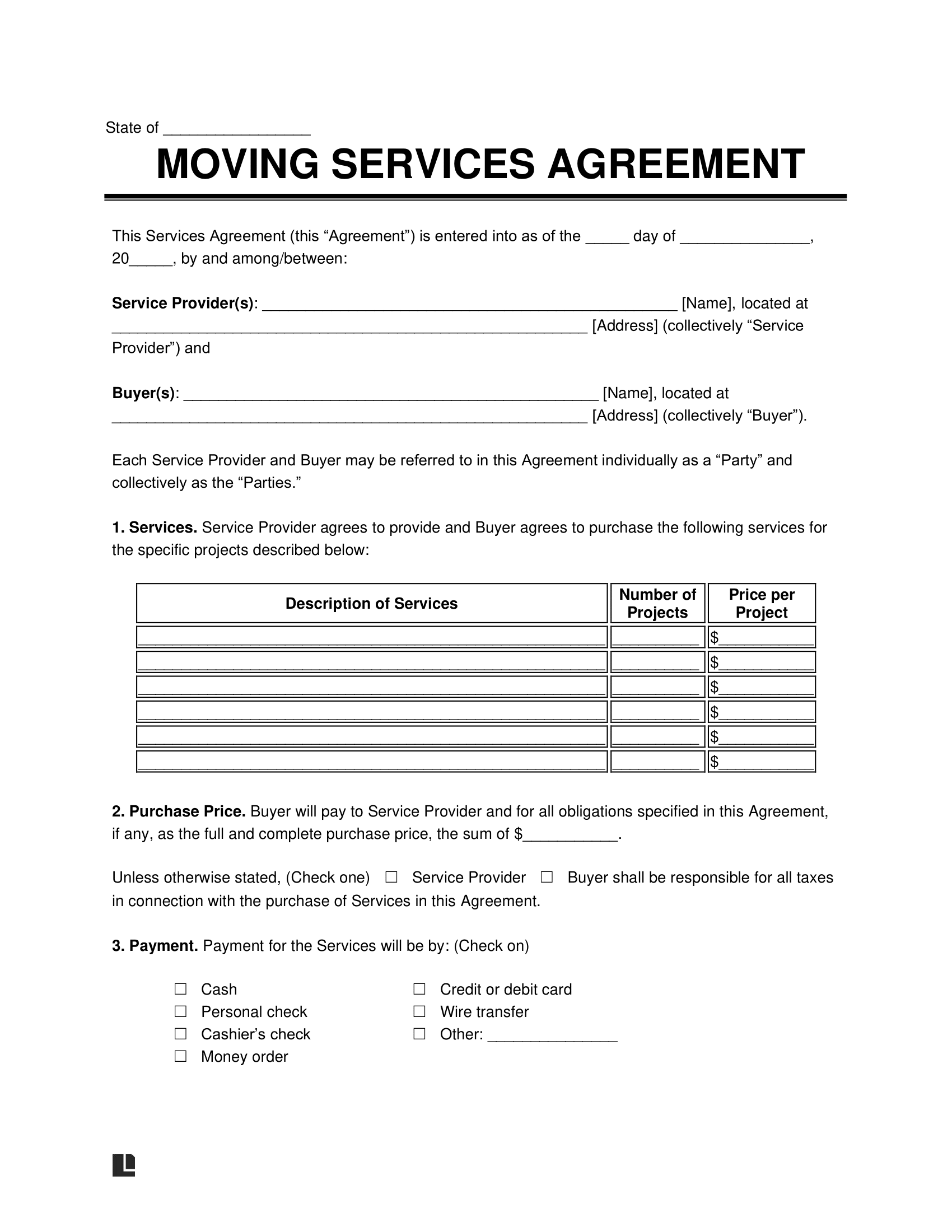
This sample moving contract gives a clear example of how to structure an agreement for a move. Review it, then customize and download the template in Word or PDF.