What Is a Snow Removal Contract?
A snow removal contract is a written agreement for snow and ice services. It explains what work will be done, such as plowing, clearing snow, and spreading salt or de-icer.
The contract also lists the areas covered, like driveways, parking lots, and walkways. It may note what is not included, such as certain surfaces or snowfall limits, so both sides understand the scope of work even as weather conditions change.
When to Use a Snow Removal Contract
A snow removal contract helps when snow starts affecting safety or access on a property. Rental properties, Homeowners Associations (HOAs), and commercial buildings often rely on one once winter hits. A written agreement sets responsibility before the first snowfall and explains when service begins.
It also sets response timing, which becomes important during heavy or repeated storms. Over the season, that structure helps property owners manage risk when injuries, blocked access, or vehicle damage occur.
If the snow removal provider works independently rather than as an employee, a separate independent contractor agreement may also be needed.
How Long Does the Contract Last and How Can It End?
Snow removal contracts are usually seasonal and often run for two to three years. This setup is typical for ongoing service, especially for commercial properties that need consistent coverage each winter.
End dates usually follow the winter season instead of a set calendar date, so service ends when the risk of snow is low. The contract should also explain how early termination works, including any required notice and fees, in case the property is sold or service needs change during the term.
How Do You Write a Snow Removal Contract?
A snow removal contract should cover the practical details that crews and property owners actually deal with during the winter. Start by covering the points below:
- State exactly what services are included. List tasks like plowing, salting, or de-icing, and specify the areas being cleared, such as driveways, parking lots, sidewalks, or walkways.
- Identify who will handle the work. Enter the snow removal provider’s legal name and note whether additional crews may be used during busy periods.
- Address liability and responsibility. Make it clear who is responsible for injuries, vehicle damage, or property damage caused by snow and ice. Many agreements limit the provider’s responsibility to the work they perform and require the property owner to keep conditions safe between visits. The contract may also include insurance requirements and indemnification terms to protect both sides.
- Name the property owner or manager. This shows who can approve the work and who is responsible for payment.
- Define when service is triggered. Note whether service starts after each snowfall, once snow reaches a certain depth, or under a seasonal plan, such as plowing when snow reaches two inches.
- Explain how follow-ups work. Say whether the property is checked after every visit or only after larger or ongoing storms. For example, a final check after an overnight snowfall.
- Set pricing and tax responsibility. Include the service cost and clarify whether taxes are included and if a deposit is required before the season starts.
- Decide when and how payment happens. State whether payment is due after each snow event, on a monthly schedule, or at the end of the season, and how payment will be made.
- Address early termination and assignment. Explain whether either side can end the contract early or transfer it to another provider.
- Include response time expectations. Note how quickly crews are expected to arrive once service is triggered, especially during heavy snowfall.
- List the service and provider addresses. Make it clear which property is covered and where the provider operates from. For properties with assigned or rented parking areas, snow duties might also appear in a parking space lease agreement.
- Choose how issues are handled. Outline what happens if service is missed or there’s a disagreement during the season.
Legal Templates simplifies the process. A short questionnaire helps you build a snow removal contract that matches your property and service setup.
If you’re bringing in rented machinery or tools for the season, a separate equipment lease agreement may be needed.
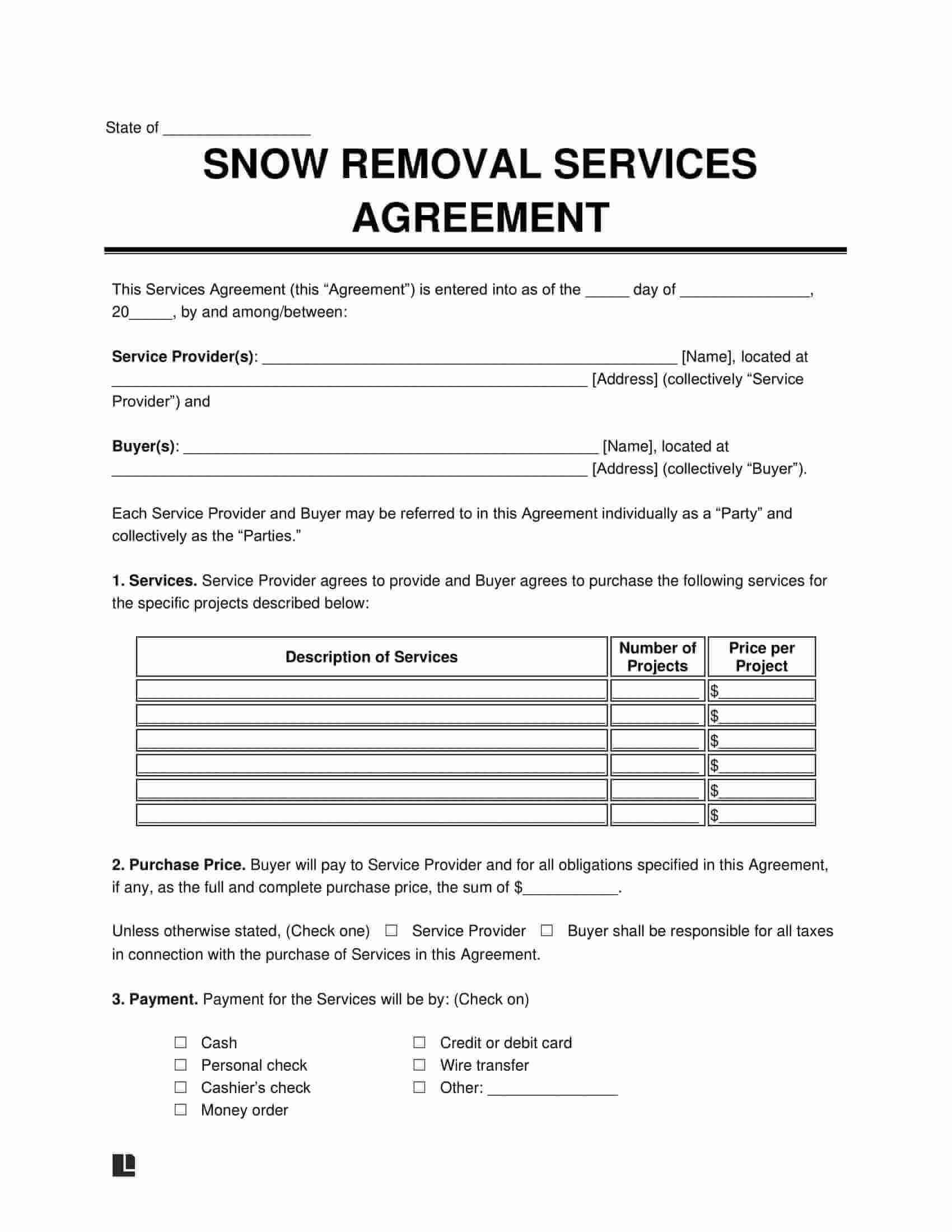
Sample Snow Removal Contract
Look through a sample snow removal contract to understand how snow services and payments are handled. When ready, customize our template to fit your property and service needs, then download it in Word or PDF.
When Is Snow Removal Required?
Snow removal deadlines usually begin after snowfall ends, not when it starts. Property owners then have a limited amount of time to clear snow. The exact deadline depends on local rules and can vary by city, state, and property type.
Some cities require sidewalks to be fully cleared, while others allow a cleared walking path. Missing the deadline can lead to fines, and the city may step in and charge the owner for the removal.
Snow Removal Laws by State
Snow removal laws set general expectations around when snow needs to be cleared and what penalties may apply. Many places require sidewalks to be cleared within 24 to 48 hours after snowfall ends, while some allow much less time.
The table below breaks down statewide snow removal rules, but it’s important to keep in mind that local laws may add stricter deadlines or additional requirements.
| State | Is Snow Removal Required? | Who Is Responsible? | What to Know |
|---|---|---|---|
| Alabama | No statewide law | Varies locally | Cities may set their own rules |
| Alaska | Yes (common areas) | Landlord; tenant by lease | Leases may assign private areas |
| Arizona | Local ordinances only | Owner, tenant, occupant, or operator (varies by city) | Some cities require clearing in 24 hours |
| Arizona | Local ordinances only | Owner, tenant, occupant, or operator (varies by city) | Some cities require clearing in 24 hours |
| California | Yes (restrictions) | Property owner | Snow cannot be placed on roads |
Who’s Responsible for Injuries or Damage?
Responsibility for snow-related injuries or damage depends on state and local law. In some areas, property owners are expected to keep walkways and entrances safe. In others, leases can shift that duty to tenants or split it between both parties.
For multifamily buildings, landlords usually handle common areas like parking lots, sidewalks, and stairways. In single-family rentals, snow removal is often assigned to the tenant, which should be clearly stated in writing in case someone slips or property is damaged.
Some property owners also ask contractors or tenants to sign a liability release to help limit risk from winter conditions.