What Is an Office Space Lease Agreement?
An office space lease agreement is a legal contract that outlines the terms under which a tenant can occupy an office. It defines the rules for the use of a non-retail space intended for administrative purposes. Landlords use an office rental agreement to rent the following types of offices:
- Single-tenant office buildings
- Multi-tenant office buildings
- Executive suites
This document helps businesses looking for professional spaces to operate in. They may enter into short- or long-term contracts, depending on their needs and the landlord’s availability. The parties refer to a business office lease agreement for the rental rate, permitted uses, and maintenance duties.
An office lease contract also explains whether the landlord will build out the space to suit the tenant’s floor plan. Otherwise, they will deliver the space “as-is” and allow the tenant to add their furniture and furnishings.
Want to Lease a Shared Space?
Legal Templates’s coworking space lease agreement is better suited for leasing shared spaces, desks, and workstations.
What to Include in a Commercial Office Space Lease Agreement
A lease agreement for renting office space details the party information, acceptable use of the space, and payment terms. Review the key elements of an office space rental contract to create a comprehensive agreement.
1. Parties’ Details
Name the business tenant and the landlord. Identify whether each party is an individual or a company. Before signing an office rental contract with a tenant, have them complete a commercial rental application to learn if they’re a good fit.
2. Office Location
Record the office’s address. Include the following details to further identify the space:
- A map of the space
- The name of the commercial building where the office resides
- The amount of usable square footage in the office
A commercial office space rental agreement typically allows for a more private experience, but there may be shared spaces or common areas. If applicable, identify these so tenants know which spaces aren’t explicitly reserved for their use.
You may also identify parking and storage that comes with the lease of the office space. If needed, create separate written agreements using a parking space agreement or a storage rental agreement.
3. Rent Payment
Establish the security deposit, late rent fees, and rent amount. Structure your office space rental agreement into one of these types so you can determine who pays what costs associated with the rental:
- Gross lease: The tenant pays a set monthly rent. The landlord handles all building taxes, insurance, and maintenance.
- Triple-net lease (NNN): The tenant pays a lower base rent but is responsible for their share of property taxes, insurance, and common area maintenance.
- Modified gross lease: The tenant pays a fixed base rent, and the landlord and tenant negotiate how operating expenses are shared.
4. Miscellaneous Lease Terms
Decide on the lease duration for the office space. It can be month-to-month, year-to-year, or fixed-term, depending on the tenant’s needs and the landlord’s plans for the space. Most commercial leases have a fixed term duration of longer than one year.
Also, determine under what conditions either party can renew or extend the lease. If these instances arise later on, you may use Legal Templates’s commercial lease renewal addendum or commercial lease extension addendum.
5. Permitted Uses
Your lease agreement for an office space should outline how the tenant is allowed to use the office. It should be restricted to tasks like corporate communications, meetings, and other administrative work. Retail tasks should not be included. Also, establish rules for smoking and noise to respect the property and neighboring tenants, if applicable.
Discuss how the tenant may alter the property, including whether they can install their own fixtures or make other property improvements. Cover the landlord’s and tenant’s duties for repairs, maintenance, and utilities.
Also, highlight how the landlord should deliver the space to the tenant:
- As-is: Tenant accepts the space in its current condition.
- Vanilla box: Space is delivered with basic finishes, such as white paint, and is ready for move-in.
- Custom build-out: Landlord completes the space according to the tenant’s specifications.
Using Commercial Property for Other Purposes
If you operate in the food industry, a commercial office lease agreement won’t fit your needs. Instead, use our restaurant lease agreement or kitchen lease agreement to set up a space for food preparation.
6. Insurance Clauses
Detail the tenant’s responsibility to buy public liability and property damage insurance. This coverage protects them if a client, supplier, or other third party gets hurt while visiting the office.
7. Disputes & Termination Terms
Cover areas that may result in disputes if otherwise left unaddressed, including the following:
- Assignment and subleasing
- Termination of the office lease document
- Procedures for substantial and partial damages
- Condemnation of the premises
- Default on the lease
8. Final Details
Record the following final details in your office lease document:
- Disclaimers about hazardous materials, risk and loss for personal property, and insolvency and bankruptcy
- Governing law
- Dispute resolution method
- The effective date of the contract
Office Lease Agreement Sample
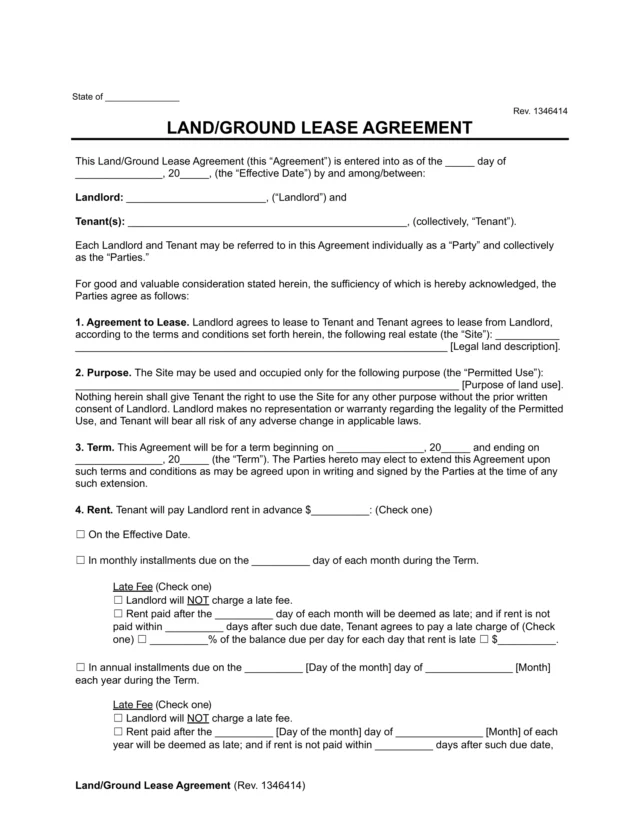
View our sample lease agreement for an office space to learn how to rent an office and detail the rent amount, space description, and permitted uses. Use Legal Templates’s guided form to create your own document with an attorney-approved office lease agreement format. Download your final agreement in PDF or Word.