What Is a Month-to-Month Lease Agreement?
A month-to-month rental agreement is a flexible rental contract that renews automatically each month and does not have a fixed end date. Unlike a long-term lease or standard lease, this type of short-term lease allows either the landlord or tenant to end the agreement with proper notice. Rent is paid as monthly rent, usually on the same day each month, which keeps rent payments consistent.
This type of month-to-month arrangement often begins after a fixed-term lease expires or when a landlord and tenant agree to rent on a month-to-month basis from the start. The tenant may remain in the rental property as long as they follow the rules and make timely rent payments. The landlord collects rent during the agreement and regains full control of the property once proper notice is given and the tenancy ends.
A month-to-month rental agreement is commonly used in transitional living situations, during renovations, or in fast-moving areas of the rental market where flexibility is a priority. Both independent landlords and professional property management companies use them. They offer flexibility but require closer oversight of tenant occupancy, screening, and rent adjustments compared to long-term leases.
Good for Landlords Who...
- Want rent flexibility
- Prefer no long-term commitment
- Need easier tenant turnover
- Are planning renovations or selling
- Want to attract short-term renters
Not Ideal for Landlords Who...
- Rely on steady rental income
- Want long-term tenants
- Prefer predictable planning
- Don’t have time to screen often
- Need a stable tenant pool
Month-to-Month Lease Agreements by State
Month-to-month lease agreement rules vary across states. Even if you’re using a rental agreement, month-to-month, local laws still set the ground rules. Check what your state requires before making changes.
- Alabama
- Alaska
- Arizona
- Arkansas
- California
- Colorado
- Connecticut
- Delaware
- District of Columbia
- Florida
- Georgia
- Hawaii
- Idaho
- Illinois
- Indiana
- Iowa
- Kansas
- Kentucky
- Louisiana
- Maine
- Maryland
- Massachusetts
- Michigan
- Minnesota
- Mississippi
- Missouri
- Montana
- Nebraska
- Nevada
- New Hampshire
- New Jersey
- New Mexico
- New York
- North Carolina
- North Dakota
- Ohio
- Oklahoma
- Oregon
- Pennsylvania
- Rhode Island
- South Carolina
- South Dakota
- Tennessee
- Texas
- Utah
- Vermont
- Virginia
- Washington
- West Virginia
- Wisconsin
- Wyoming
Where Month-to-Month Leases Are Most Common
According to the Bureau of Labor Statistics (BLS), California (62.7%), D.C. (58.4%), and Arkansas (57.1%) top the charts, with Washington and West Virginia close behind.
How to Write a Month-to-Month Lease Agreement
Month-to-month lease agreements offer flexibility, but they also require tighter terms. Since tenants can leave anytime with proper notice, your agreement should clearly define rent, timelines, and exit rules. Here’s how to write one that protects both sides:
1. Download and Fill Out a Free Template
You don’t need to write the lease yourself. Legal Templates offers a free, customizable month-to-month rental agreement in Word and PDF. Just answer a few questions to create a document that meets your state’s legal requirements.
2. Use a Clear Title and Start Date
Clearly label the document as a month-to-month rental agreement and include the official start date of the tenancy. This helps distinguish it from a long-term lease or standard lease.
3. Set Rent, Fees, and Payment Rules
List the monthly rent, accepted rent payment methods, any required first month’s rent at move-in, and whether a late fee applies. Month-to-month leases often carry higher rent than long-term leases due to added flexibility.
4. Add Rules for Rent Increases and Changes
Include how and when a rent increase may occur and define the required notice period before any pricing changes take effect. This protects both landlords and tenants from sudden adjustments.
5. Outline the Notice Period and Move-Out Terms
Most agreements require a 30-day notice, but the exact notice period depends on state law. Clarify whether tenants may leave mid-cycle and how rent is calculated at move-out.
6. Address Screening, Subletting, and Extra Terms
State whether a background check is required for new tenants, whether tenants may sublet, and any additional terms related to pets, utilities, parking, or maintenance.
How Much Notice Do Landlords Need to Give to End a Month-to-Month Lease Agreement?
In most states, landlords need to give 30 to 90 days’ written notice to end a month-to-month lease agreement. But the rules vary depending on where you live:
- Some states, like Florida, only require 15 days’ notice prior to the end of any monthly period.
- Rent-controlled areas may require just cause, like missed rent or damage
- California is one example, where the Tenant Protection Act of 2019 requires just cause statewide before ending a month-to-month tenancy
The notice should match the rental period, which usually means ending on the last day of the month.
What If I Want to Convert a Fixed-Term Lease into a Month-to-Month Lease?
A fixed-term lease can convert to a month-to-month lease in a few situations:
- Option 1: The lease says it will automatically become month-to-month when it ends.
- Option 2: The lease says it will convert if both sides don’t sign a new fixed-term lease.
- Option 3: The tenant stays after the lease ends, the landlord accepts rent, and no new lease is signed.
- Option 4: The landlord and tenant both agree to switch and sign a month-to-month lease addendum.
Each option depends on the terms of the original lease and how both parties act once it ends. And you’re not alone if you’re leaning toward a more flexible setup. The most recent BLS data shows that 31.8% of US renters are on a month-to-month lease, so it’s far from unusual.
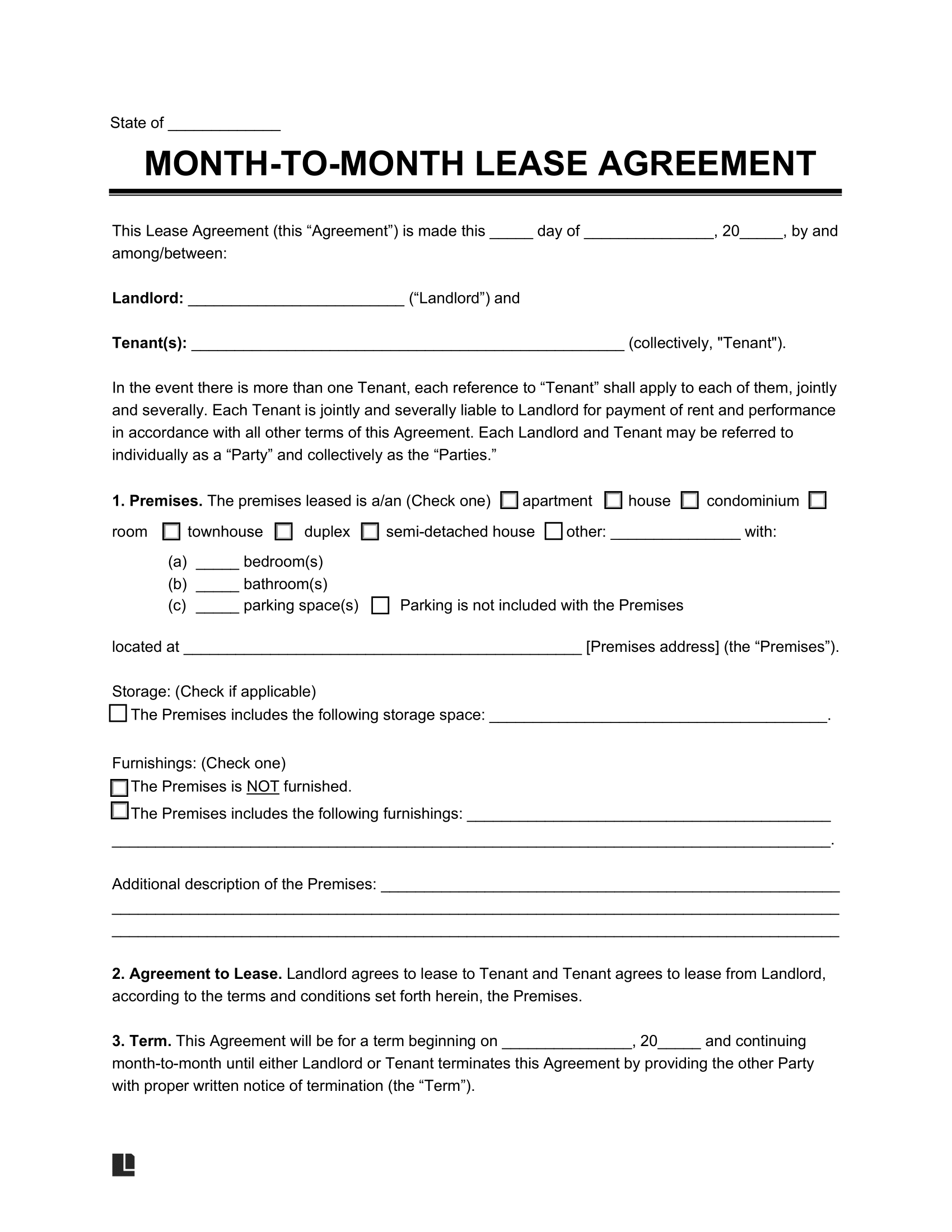
Free Month-to-Month Lease Agreement Template
This sample lays out the key terms of a month-to-month lease agreement in a clear, easy-to-follow format. It’s a helpful starting point if you’re writing your own. When you’re ready, download our free month-to-month lease agreement in Word or PDF.