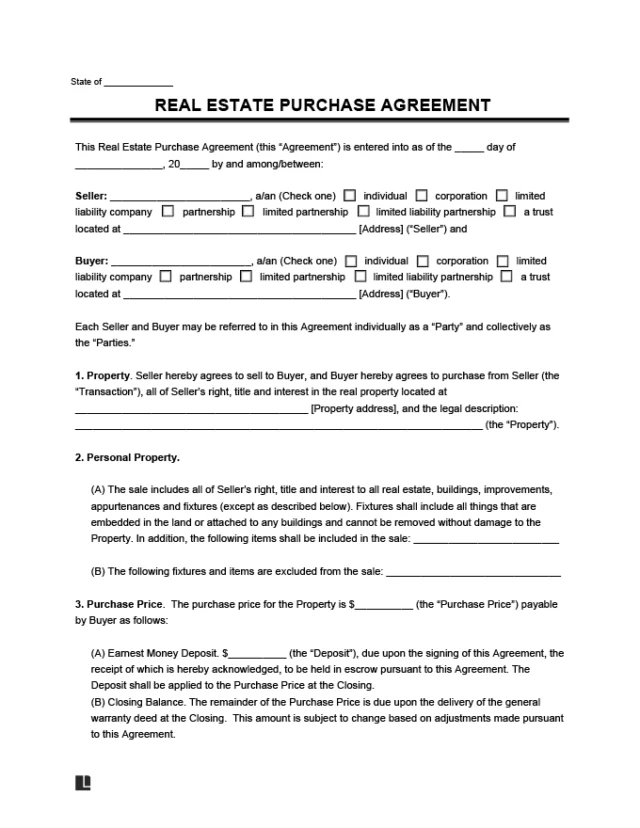
What Is a Real Estate Non-Disclosure Agreement (NDA)?
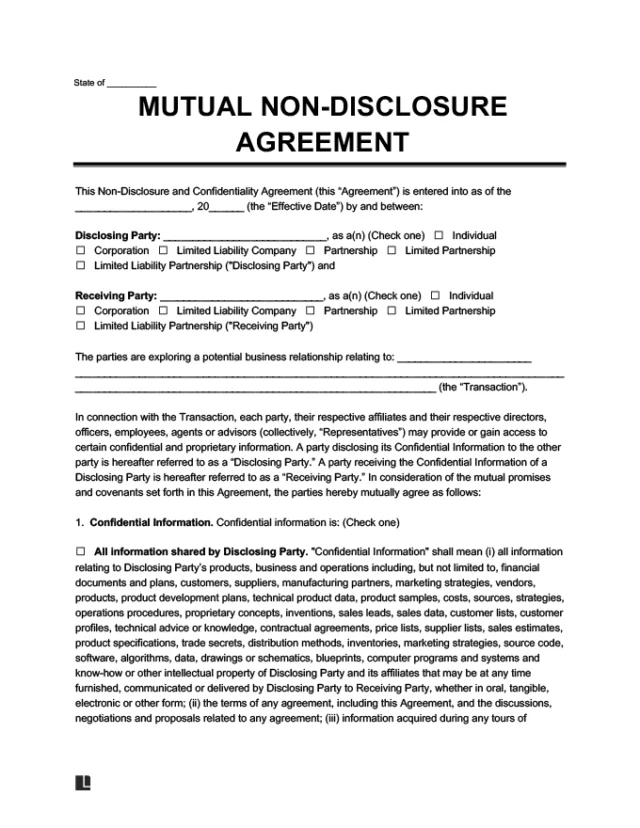
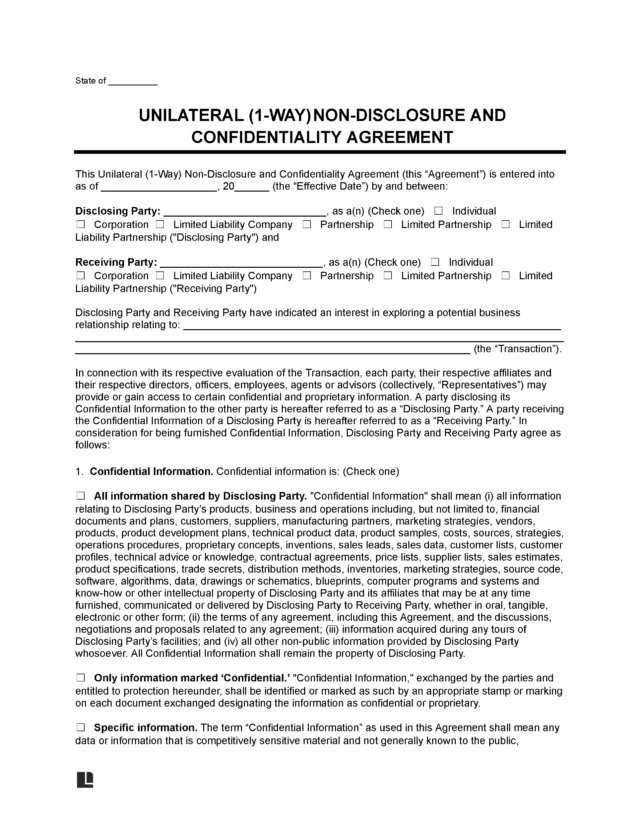
A real estate non-disclosure agreement (NDA) protects information you share about a property. It’s mainly used to safeguard a seller who shares details about a property with a buyer to facilitate a potential sale.
They can convey the necessary property information, but gain peace of mind knowing the other party can’t freely disclose it to others. When this contract is in place before sharing sensitive details, it can prevent misuse or unwanted disclosure.
A real estate NDA cannot be used to hide information that would violate Fair Housing Act (FHA) protections. An NDA for real estate should only focus on protecting financial or proprietary details.
When to Use a Real Estate NDA
Whether you want to sell residential or commercial real estate or lease property, a real estate NDA can establish key protections. Here are some instances when a real estate NDA would be useful:
1. Selling Property
A real estate buyer NDA protects sensitive information disclosed during the home-selling process. For example, the seller may reveal their asking strategy or minimum acceptable price. These facts can help a buyer determine whether the property is within their price range.
Other details a buyer can use to evaluate the purchase include the following:
- Appraisal reports or inspection findings
- Lockbox codes given during private showings
- Repair estimates or contractor bids provided to serious buyers
When this information is protected by a real estate NDA, the seller has recourse if the buyer improperly shares it with neighbors or other buyers.
2. Leasing Property
A landlord may ask a prospective tenant to sign a landlord-tenant NDA during the rental application or negotiation process. This document can help the tenant understand that they should only use the shared information for rental evaluation purposes:
- The landlord’s personal financial details, such as mortgage information or tax records
- Tenant application information, including income verification and credit reports
- Private details about the property’s occupancy or internal layouts
- Lease terms or concessions before a final lease is signed
3. Transacting Commercial Property
Commercial properties may be tied to ongoing businesses or investments. Sharing strategies or other details without protection could jeopardize the owner’s operations or negotiating position.
With a commercial real estate NDA in place, a seller can ensure that a potential buyer uses private details only to evaluate a deal. Here are some details a commercial real estate NDA can protect:
- Financial records, such as rent rolls and operating expenses
- Business plans tied to the property, like expansion or redevelopment ideas
- Zoning strategies or planned changes to property use
- Marketing strategies or pricing discussions before a deal is finalized
How to Write a Real Estate NDA
Follow these steps to write an effective real estate NDA for a potential transaction:
- Name the parties. Identify the disclosing party (often the seller or landlord) and the receiving party (often the buyer or tenant).
- Identify the property. Write the address of the property to which the confidential information pertains.
- Clarify if it’s for leasing or buying. Specify if the information pertains to a potential lease or sale of the named property.
- Describe the confidential information. You have the option to describe what information should remain confidential. Otherwise, it will be implied that all property-related details you share should be kept private.
- Explain the agreement’s termination. State when the agreement will terminate. It may be at the property’s sale, at the signing of a lease, after a set period of time, or after the parties mutually agree to terminate it.
- Provide the final details. Record the governing law and the effective date of the agreement. Include any legal remedies or penalties that may be sought if the agreement is violated.
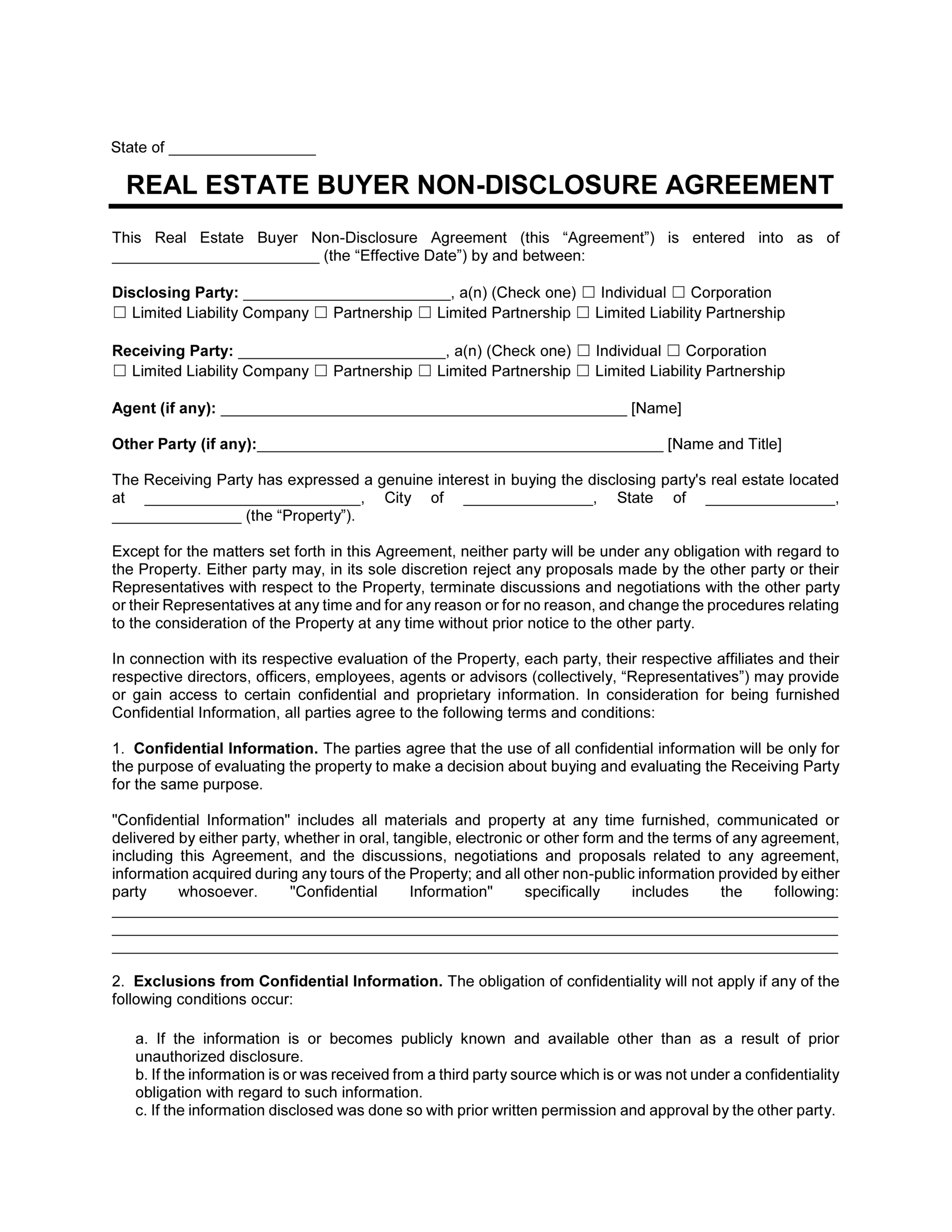
Real Estate NDA Sample
View an example of a real estate NDA to better understand how to protect your sensitive property-related details. Create your own using Legal Templates’s guided questionnaire, then download it in PDF or Word format.