

What Is a Collaboration Agreement?
A collaboration agreement is a contract for two or more parties working together on one project without forming a new business entity. It keeps each party independent and sets the basic rules for how they’ll work together.
You may also hear it described as a contractual or unincorporated joint venture, since the setup looks similar but doesn’t create a new entity. The agreement outlines the project, the work involved, and how both parties plan to cooperate from start to finish.
When Do You Need a Collaboration Agreement?
You need a collaboration agreement when people or organizations work together on a project, and each side offers something valuable. It fits short-term projects or one-off collaborations because it adds structure without creating a new business entity or long-term partnership. Use one when:
- Each side brings money, skills, equipment, or intellectual property (IP).
- Ownership isn’t clear without a contract.
- Roles, revenue splits, or shared decisions need structure.
- Creative or technical work requires clear rights.
- Sensitive information will be exchanged.
- The project needs milestones, an end date, or a plan for who owns the final work.
Common examples include a business and a designer creating a product line, two researchers preparing a joint study, or a startup and a contractor building an early prototype together.
86% of executives say poor collaboration causes major failures. A collaboration agreement helps prevent that by giving your team clear roles and communication.
Is a Collaboration Agreement Legally Binding?
A collaboration agreement is legally binding once both parties sign it. The signatures show that each side agrees to the terms and intends to follow them. If someone doesn’t hold up their end, the agreement can be enforced.
Our template also allows you to choose which state’s laws apply, which determines how any dispute will be handled. The parties to a collaboration agreement may also specify whether disputes will be resolved with mediation, arbitration, or a formal court process.
Avoid relying on verbal agreements. They’re hard to prove and often lead to disputes. For more on the risks, see our guide: Are Verbal Contracts Legally Binding?
How to Write a Collaboration Agreement
A collaboration agreement needs project details, not broad promises. This section explains the specific information you should include so the project can move forward.
- Name each collaborator in full. Enter the exact legal names of everyone taking part in the project.
- State the project you’re teaming up on. Add a short description of the specific collaboration so both sides agree on the same scope and outcome.
- List the tasks each collaborator will handle. Write out the actual duties assigned to each side so the work doesn’t overlap.
- Detail what each collaborator is contributing. Record the specific funding, tools, research, creative work, or IP each party is bringing in.
- Add the payment structure if one exists. Show the amount, timing, and method for any payments between the parties.
- Set how long the collaboration runs. Choose if it ends at project completion, on a set date, or when a party decides to end it.
- Include project protections. Add confidentiality, non-compete, or non-solicit terms if you’re sharing drafts, client lists, prototypes, or sensitive material.
- Define ownership of the finished work. Decide who will own the final deliverables and how those rights can be used.
- Pick how disputes will be handled. Choose court, mediation, or arbitration so the process is clear before any conflict arises.
- Choose the state law that applies. Select the governing law that the agreement will follow.
- Enter the official start date. Mark the date the collaboration begins.
- Include end dates. State the date or the event that will end the agreement.
After you fill out the agreement, walk through the responsibilities and deadlines with the other party. This helps both sides stay aligned as the project moves forward.
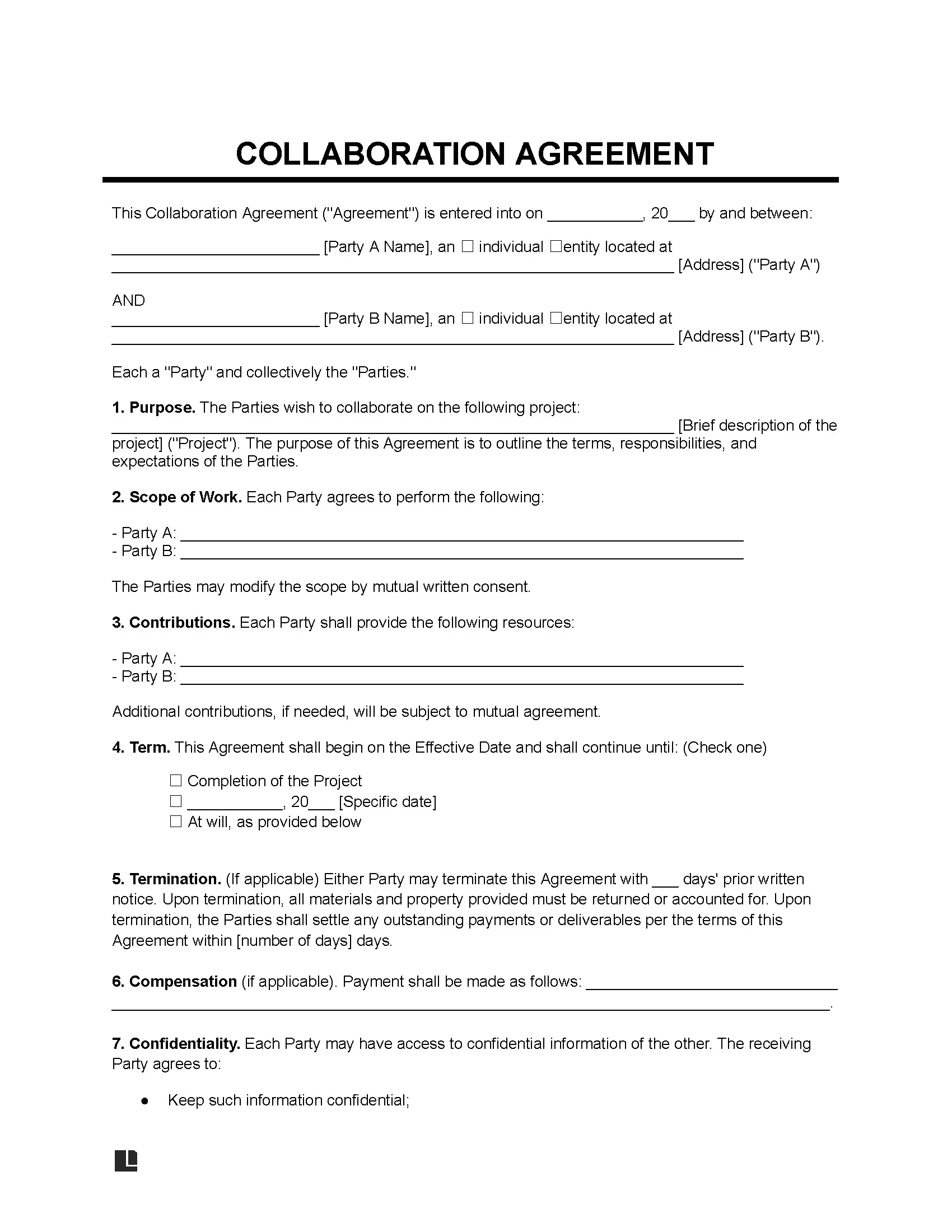
Collaboration Agreement Sample
This collaboration agreement sample highlights how the details come together in a final document. Customize the agreement and then download it in Word or PDF format.