What Is an Attorney-Client Agreement?
An attorney-client agreement is a contract that outlines the terms of the lawyer’s representation. It establishes the professional relationship between the attorney and the client. Under this contract, the attorney is an independent contractor, not an employee.
An attorney representation agreement defines the legal services to be performed. It’s often used for small or one-time legal tasks. Because of this structure, the attorney is free to work with multiple clients and choose which tasks to accept.
With an attorney-client contract, the parties can highlight expectations and minimize disputes. When you use Legal Templates’s contract, there is no attorney-client privilege established. This means a lawyer could be required to reveal sensitive details in court proceedings.
Under this contract, the lawyer is bound by their bar association’s rules of professional conduct. They have a general duty to maintain confidentiality, but may need to break it if disclosure is legally required.
What to Include in an Attorney-Client Contract
Create a comprehensive attorney-client contract to establish the terms for clear representation. Here are the key details to include:
- Lawyer’s information: Provide the lawyer’s name and address. Include the state where they practice, the bar association they belong to, and their bar card number. This information verifies that they are allowed to represent the client.
- Client’s details: State who is hiring the attorney, whether they are a company or a law firm. Name the representative who will sign the legal representation agreement on behalf of the client.
- Clarification of relationship: State whether the attorney will represent the client or the attorney will assist the client with legal tasks.
-
Scope of services: State the services that the attorney will provide, which can include the following:
- Legal document preparation
- Document reviews
- Conflict resolution through mediation or arbitration
- Legal consultations and advice
- Representation in legal proceedings
- Legal research, analysis, and interpretation
- Communication with others involved in a legal case
- Limitations of the services: Indicate services not included in the agreement. For instance, if the agreement is for a contract review only, you may indicate that it does not include representation in court. Writing exclusions will help avoid confusion about the services rendered.
- Payment: Use your attorney-client fee agreement to state the payment that the lawyer will receive for their legal services. It may be a flat rate or an hourly fee. The lawyer may also work under a retainer agreement, meaning they’ll remain available for a fee. Submit an attorney invoice once work is complete to collect payment.
- Termination: Indicate the terms under which each party can end the lawyer agreement. Note how any existing matters will be handled and whether notice should be given verbally or in writing.
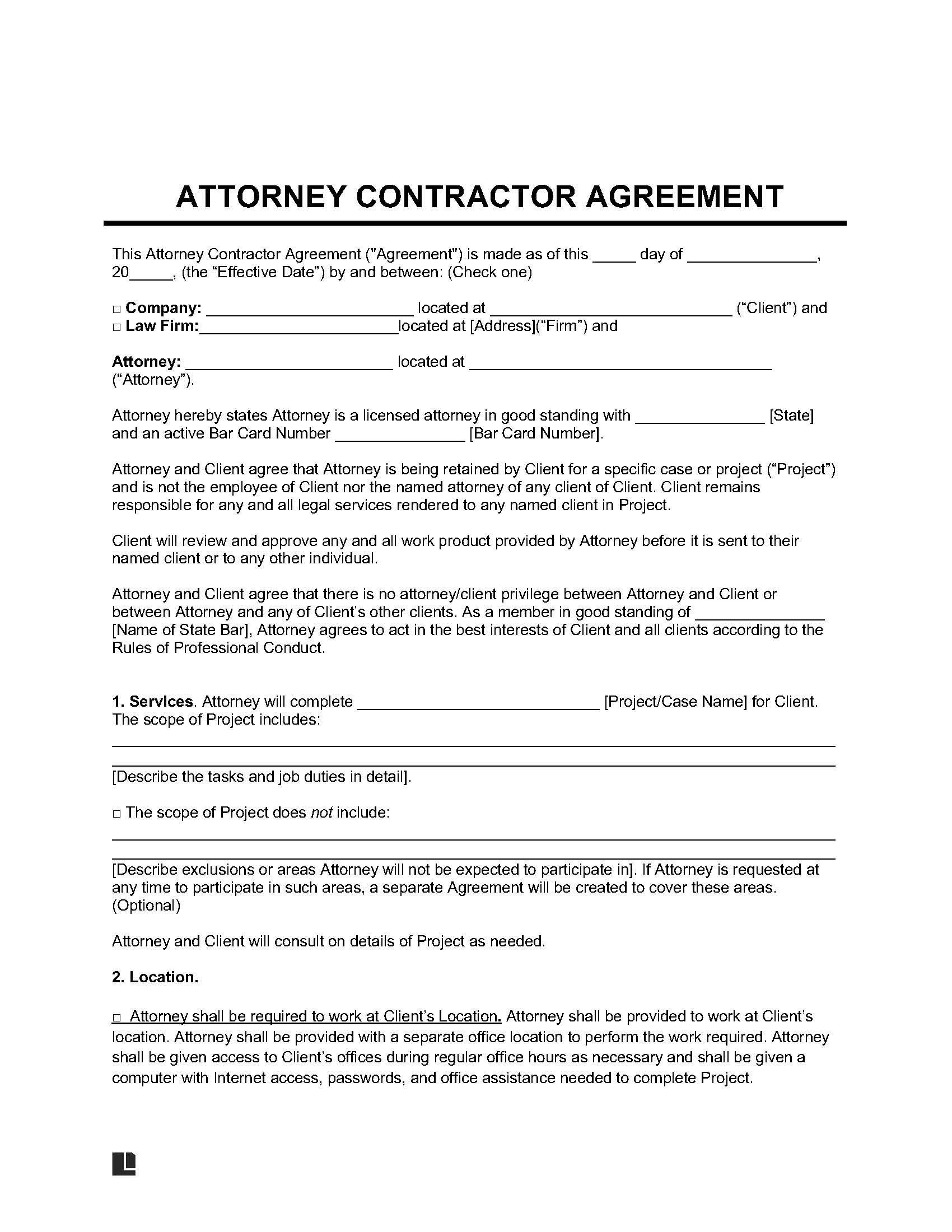
Attorney-Client Agreement Sample
View an example of an attorney contract to see how to structure your own. Then, create your own attorney-client agreement with Legal Templates’s guided form. A final version will be ready to download, available in PDF or Word format.