What Is a Concrete Subcontractor Agreement?
A concrete subcontractor agreement is a contract between a construction contractor and a concrete specialist. It explains the specific services the concrete specialist will provide to aid in the larger construction project.
It ensures safe, efficient work by detailing the scope of services, the materials, and the timelines. Contractors and subcontractors enter into it to prevent disputes over the final product. They also use it to set quality standards and ensure the contractor’s satisfaction.
What to Include in a Concrete Subcontractor Agreement
When writing a concrete contract between a contractor and a subcontractor, it’s essential to include all the details to keep the parties aligned. Here are the key elements to incorporate into your concrete subcontractor agreement.
1. Type of Concrete Project
Specify the type of concrete contract, whether it’s a residential concrete contract or a commercial contract. This detail clarifies the applicable standards, project expectations, and scope of work.
Record the location of the project, noting the street address and a description of the project site.
2. Scope of Services
The scope of services will depend on what you want to accomplish and how they will complement an existing construction project. For example, if you want to add a new driveway as part of a landscaping project, you can write a simple driveway paving contract. More complicated projects may require you to detail other concrete services, including the following:
- New construction (foundations, slabs, and patios)
- Concrete floor installation
- Maintenance or repair (crack repair or patching)
- Concrete staining
- Concrete polishing
- Concrete resurfacing or overlays
For any service you record, be sure to detail the steps involved. This way, the subcontractor understands the work to perform. You’ll also have a reference for the work being completed on-site. Some steps you may need to mention include the following:
- Planning and design
- Site preparation
- Reinforcement installation
- Mixing concrete
- Pouring/placing
- Consolidation/compaction
- Leveling/screeding
- Finishing
- Curing
Amending a Concrete Contract
If you write your concrete contract and later want to amend the services provided, you can use a change order form to document the adjustments.
3. Concrete Materials
Document the materials that the subcontractor will use to render their concrete services. Clarify who will provide them and their type:
- Normal-strength concrete for residential use and pavements
- Reinforced concrete for beams and foundations
- Lightweight concrete for roofs and insulation
- High-strength concrete for bridges and skyscrapers
Consider the following technical aspects of the concrete materials used, such as:
- Concrete strength (2,500 PSI vs. 10,000 PSI)
- Durability
- Special properties (such as rapid-set and self-compacting)
These details will help you determine the right material and ensure the subcontractor has what they need to get the job done right.
4. Project Standards
Dictate the project standards that will guide the concrete contract. The American Concrete Institute has codes covering various topics:
- Structural concrete design
- Seismic analysis
- Precast concrete
- Concrete repair
When your contract follows the applicable codes, you can ensure public safety and regulate work quality.
Establish an inspection process you will follow to ensure the subcontractor completes the work per the benchmarks. Some aspects to include in the inspection are:
- A visual inspection (for large cracks, honeycombing, and uneven finishes)
- An assessment of the concrete’s slope, thickness, and dimensions per design
- A determination of the proper placement of expansion and control joints
- A verification of the concrete’s strength
- An assessment of the project’s compliance with building codes
5. Other Terms
Other terms to record in your concrete subcontractor agreement include the following:
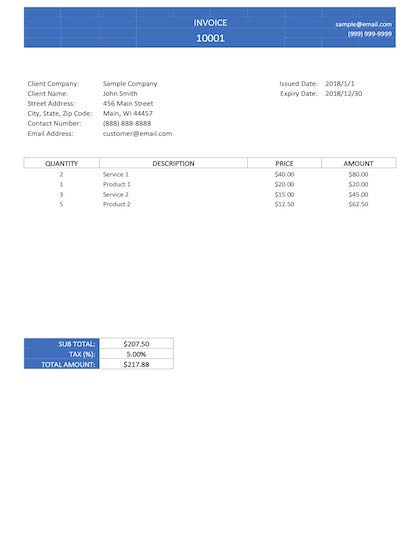
- Payment: Discuss how the contractor will pay the subcontractor for their services. They may establish an hourly rate or offer a flat fee. Use a construction invoice to record the payment details. Have the subcontractor sign a lien waiver after receiving payment in order to ensure that they cannot place a lien against the property after completion and payment.
- Timeline: Provide a timeline for completing all concrete services. You can also include dates when you expect the completion of certain milestones, such as mixing, pouring, and finishing.
- Liability/insurance: Your contract for concrete work should hold the subcontractor liable for their actions and their employees’ actions. Without it, you may be responsible for any issues they cause, such as service defects and property damage.
- Force de majeure: Describe how you and the subcontractor will handle a delay in progress caused by adverse weather.
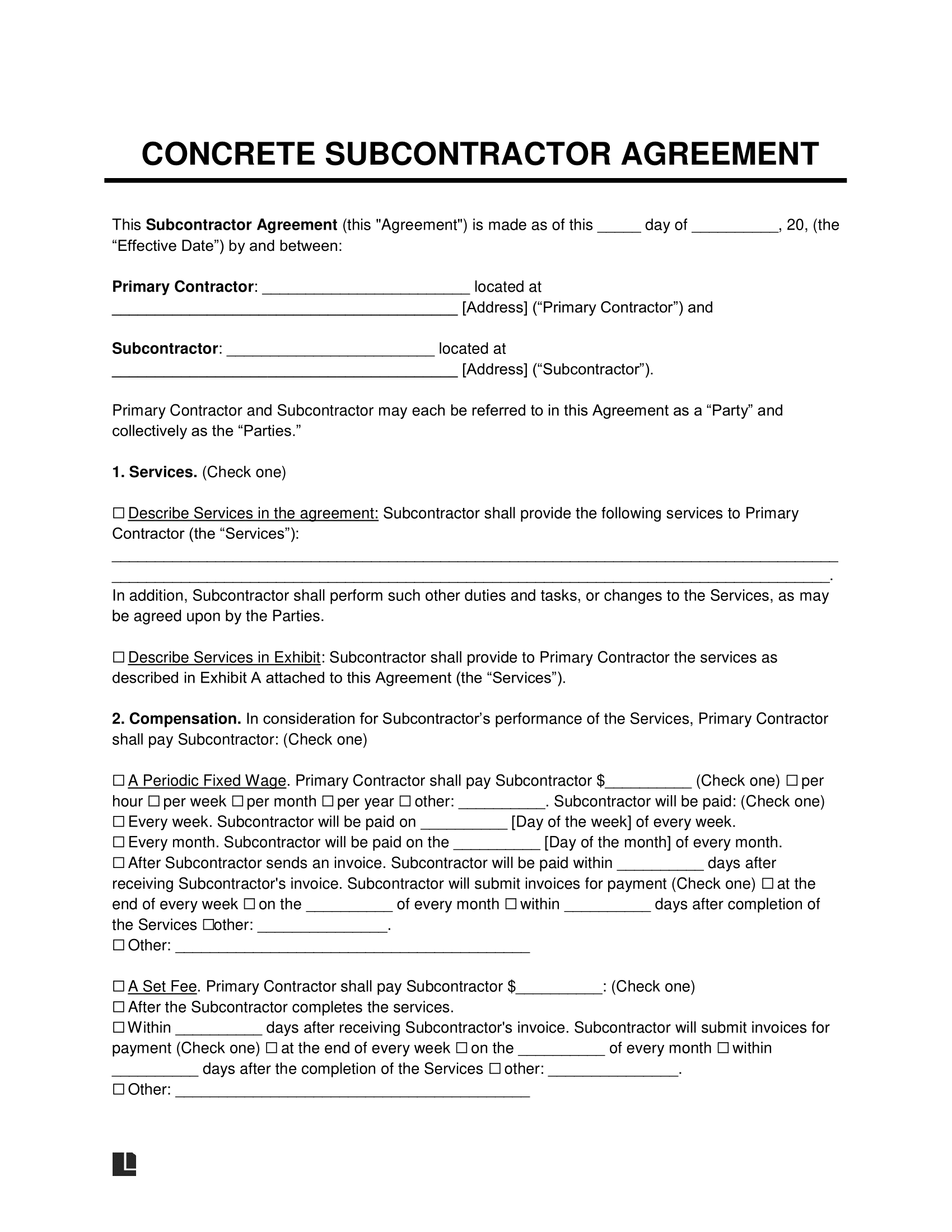
Sample Concrete Contract
View a simple concrete contract template to see how to outline a concrete specialist’s services. When you’re ready, you can use Legal Templates’s guided questionnaire to complete your own. We provide you with a printable copy that you can download in PDF or Word format.