What Is a Painting Subcontractor Agreement?
A painting subcontractor agreement sets the terms between a general contractor and another party providing painting services. This agreement is often used in construction, remodeling, or design projects. The agreement defines the service period, compensation methods, and each party’s obligations.
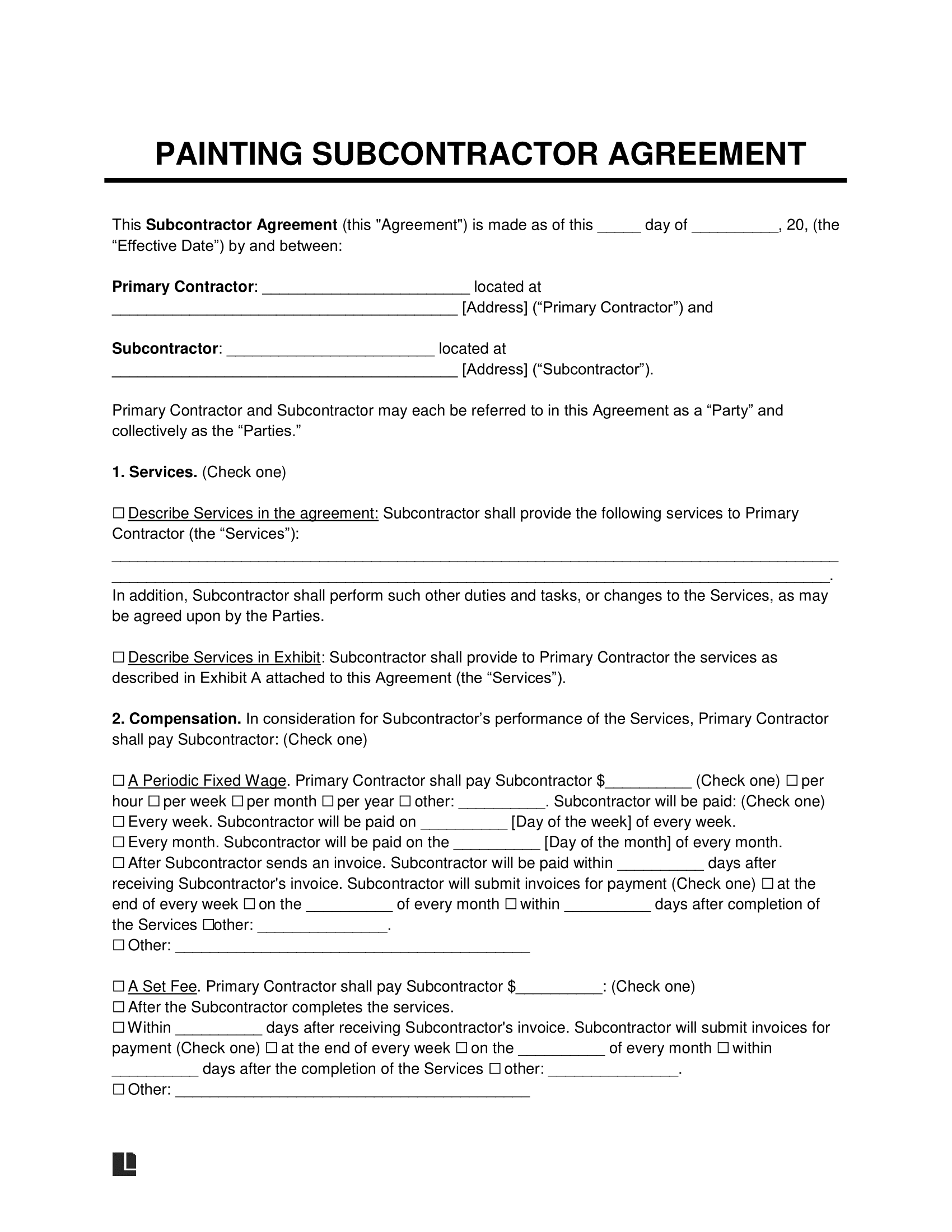
Legal Templates’s free painting subcontractor agreement has the necessary formatting and information. Use our forms to create an effective contract that meets your needs.
How to Write a Subcontractor Agreement for Painters
Writing a painting subcontractor agreement requires careful consideration of the services and terms. Create a binding contract with the following steps.
1. Identify the Parties Involved
A subcontractor agreement outlines the relationship between a general contractor and a subcontractor. Include the full legal name of each party, and note if either party works as a business entity rather than an individual. Also include each party’s address or business location.
2. Describe the Expected Services
Outline the services the painter will provide. Define each area or design that needs painting, including specific rooms, walls, exteriors, and ceilings. Note any trimming, detailing, sealing, coating, or decorative finishing. Also include information about cleaning, prep work, maintenance, or post-painting cleanup procedures.
3. Set Compensation Methods
Establish the subcontractor’s compensation amounts and methods. Note whether their pay will be hourly, fixed-rate, or project-based. Also include whether payment is made in cash, check, or direct deposit. Include any expected reimbursement for materials, travel, or equipment. State whether payment will be made upon completion of the project, or whether it is based on milestones or some other measurement.
Consider using a painting invoice to track and record payments.
4. Define the Service Period
Set the expected service period for the painter’s work. Include the start and end dates and note whether the project timeline can be extended or changed. A subcontractor agreement can be made effective at the time of signing, or you can establish a start date for a later time.
5. Include Extra Provisions
Once you’ve established the service expectations and timeline, add any other provisions needed. Include any insurance, non-compete, non-disclosure, or indemnity requirements. Generally, paint projects require subcontractors to have insurance coverage for injuries or property damage. Non-disclosures or non-competes are also frequently used for high-profile projects.
6. Establish Legal Terms
Set the legal terms for the painting subcontractor agreement to ensure validity and handle potential disputes. Note whether you will resolve conflicts via arbitration, mediation, litigation, or a combination. Also, determine which state’s laws will govern the agreement and set the effective date.
Additional Requirements for Painter Subcontractors
In addition to the terms outlined in a painting subcontractor agreement, general contractors may also have licensing and insurance requirements. Consider the following factors to determine your needs.
Licensing
In many states, professional painters can obtain a license to verify their qualifications. While not always required, many contractors or clients favor individuals who hold this license. For large-scale, government, or high-profile projects, a license can provide a competitive advantage. View the table below for an overview of licensing processes and requirements in each state.
| State | Fees | Education | Experience | Exams | Min. Age |
|---|---|---|---|---|---|
| Alabama | $350 | None | None | 0 | 0 |
| Alaska | $350 | None | None | 0 | 0 |
| Arizona | $596 | None | 2 years | 2 | 18 |
| Arkansas | $50 | None | None | 0 | 0 |
| California | $579 | None | 4 years | 3 | 18 |
Insurance
When a general contractor hires a painting subcontractor, they may require the subcontractor to have insurance. Workers’ compensation coverage is sometimes required for subcontractors who receive 1099-NEC forms. Depending on the project and hiring company, the subcontractor may be held responsible for having this coverage.
In addition, if a business entity serves as a subcontractor, they may consider a business insurance policy. Business insurance can protect against claims from clients, general contractors, or employees. These policies may also cover injuries, incidents, or property damage.
Sample Painting Subcontractor Agreement
Use Legal Templates’s free painting subcontractor agreement for customizable terms when hiring painters. Our downloadable form is available in PDF and Word format.