What Is an Electrical Subcontractor Agreement?
An electrical subcontractor agreement is a contract between a contractor and an electrician hired to complete part of a larger construction project. The contractor may be a general contractor or an electrical company. In this agreement, the electrician performs work for the contractor, not directly for the property owner. This is common on construction jobs where different trades handle different parts of the work.
This document outlines:
- What electrical work the subcontractor will do
- How much and when they will bepaid
- When the work must be completed
These terms help both parties understand their responsibilities and avoid disputes.
If an electrician is hired directly by a property owner or a client, consider using an electrical contract to document the terms instead.
What Should an Electrical Subcontractor Agreement Include?
Your agreement should clearly explain how the electrician will work under a contractor on a larger project. It should include key details such as:
Contractor and Subcontractor Information
Identify both parties in your agreement. Include:
- The full legal name or business name for both the contractor and the electrical subcontractor.
- The contact information for both parties.
This helps clarify who the hiring party is and which party is responsible for completing the job.
Scope of Electrical Work
Describe the specific part of the project the electrical subcontractor will handle. Subcontractors usually complete one part of the job, not all electrical work. Clearly state what is included, what is not, and any limits.
Compensation Terms
Explain how the subcontractor will be paid. Since a subcontractor works as a part of a larger project, payment is often tied to the contractor’s schedule and progress on the job. Payment may be:
- Fixed price
- Hourly
- Based on project milestones.
If payment issues arise, subcontractors may need to use a mechanic’s lien form to secure payment.
Project Timeline and Termination
State when the subcontractor’s work begins and when it must be completed. Include when either party can end the agreement and what happens if the work is delayed. Adding a clear timeline and exit terms can keep the project on track and prevent confusion.
Additional Legal Provisions
You may include extra terms within your agreement to protect both parties. These may include:
- Confidentiality clause: Prevents the subcontractor from sharing project plans, pricing, or client details.
- Indemnification clause: Explains who is responsible if the subcontractor’s work causes damage or injury.
- Non-compete clause: May limit subcontractors from working with competitors for a set period.
- Non-solicitation clause: May prevent the subcontractor from contacting or working with the contractor’s clients after the project ends.
Electrical subcontractors may need a license depending on the state. Many areas require work to follow the local version of the National Electrical Code (NEC). This code is published by the National Fire Protection Association. Contractors should check licenses, permits, and code requirements before work begins.
Sample Electrical Subcontractor Agreement
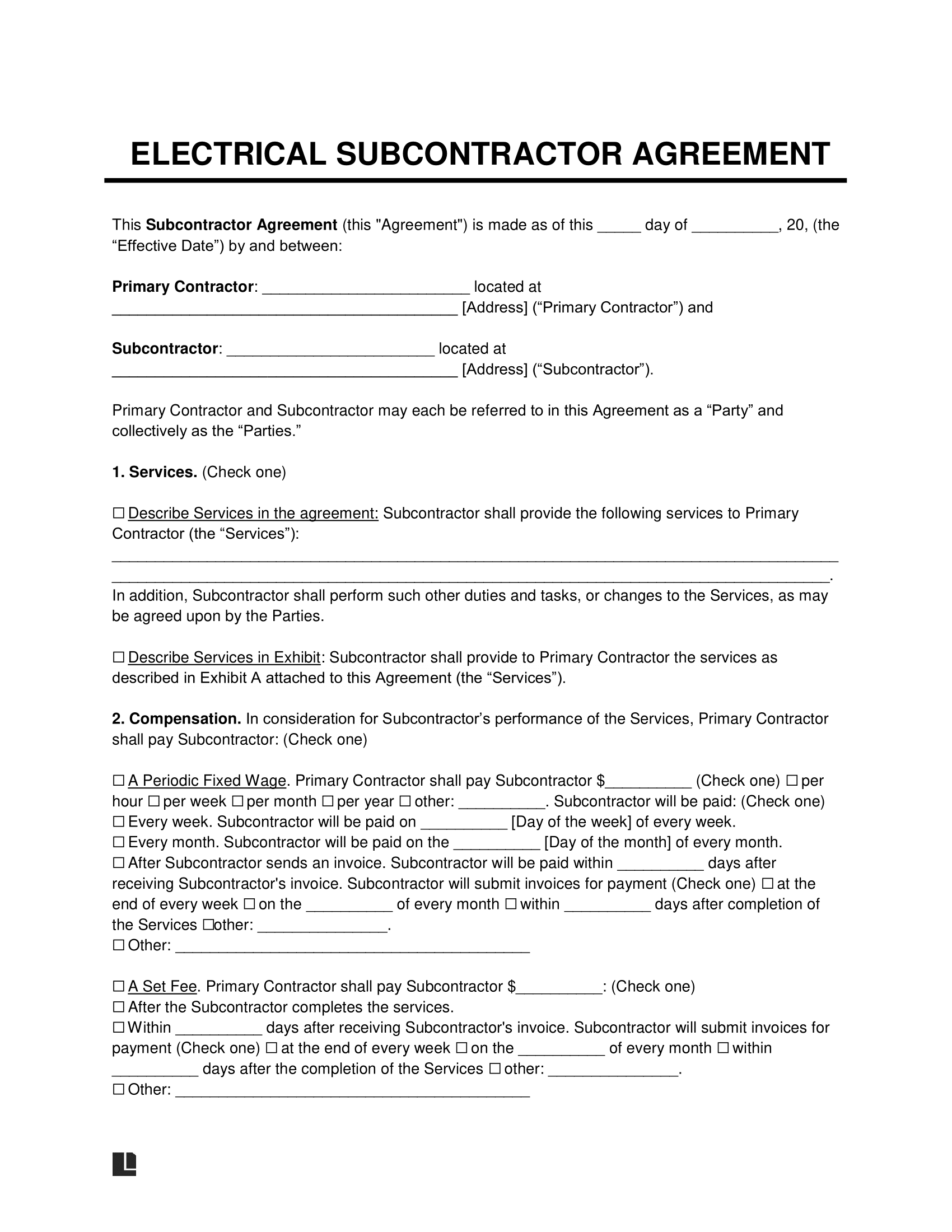
View a sample electrical subcontractor agreement template below to see all the details you should include in yours. Once you’re ready, use Legal Templates’s step-by-step questionnaire to complete and download yours in PDF or Word format.