What Is a Drywall Contract?
A drywall contract is an agreement between an independent contractor (the “drywaller”) and a client for drywall services. It outlines how the drywaller will install or repair drywall to create paint-ready surfaces.
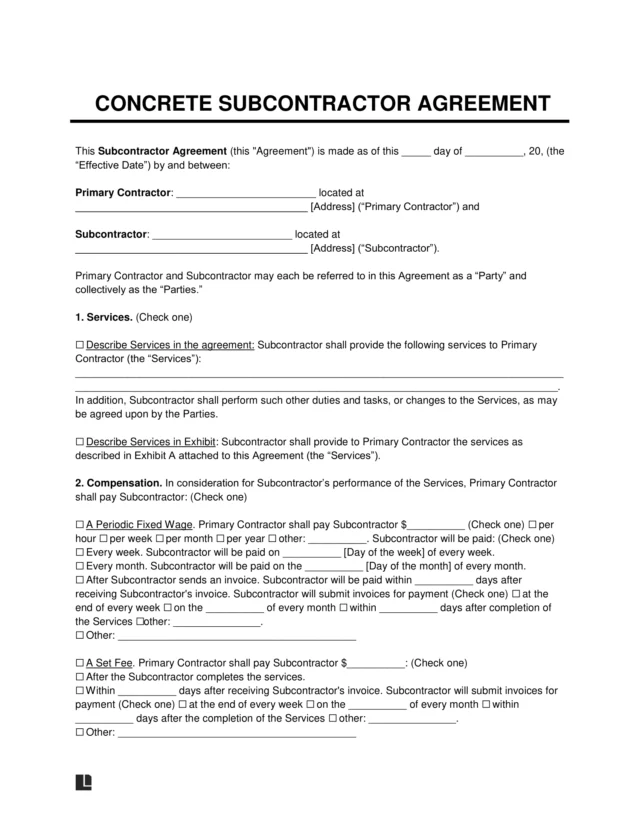
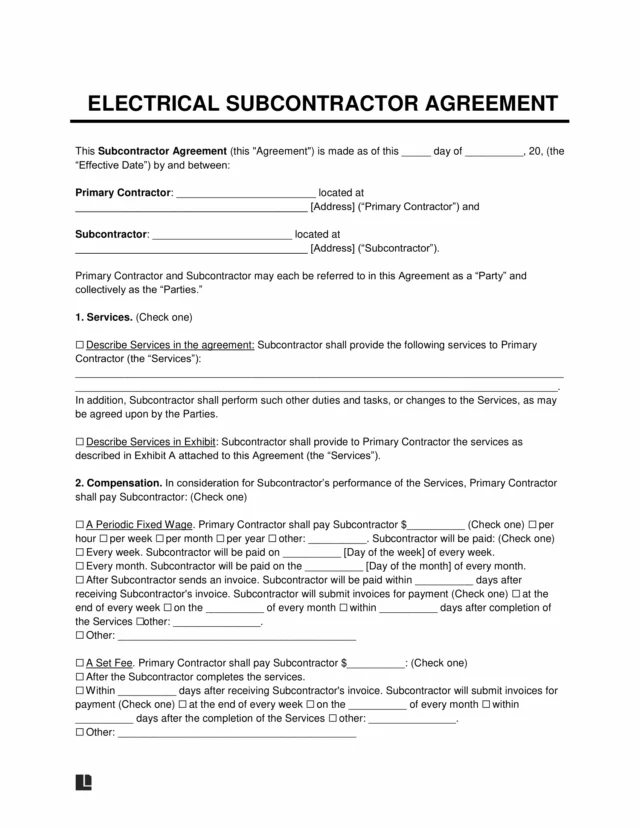
In some cases, an independent contractor and a drywall subcontractor can enter into a drywall contract. This allows the contractor to hire someone with special skills to complete drywall tasks in a construction project.
Regardless of the involved parties, a drywall contract sets expectations for the work to be completed. It clarifies the contractor’s duties, payment, and timeline. The parties can use it to coordinate installation and keep a construction project on schedule.
How to Write a Drywall Contract
Writing a drywall contract involves clarifying the scope of work and other terms to minimize disputes. Here’s how to write your drywall contract to arrange drywall services and ensure a smooth arrangement for procuring ready-to-paint walls and ceilings.
1. Outline the Scope of Work
Begin by outlining the scope of work you, as the contractor or subcontractor, will follow. The work you will perform depends on the specific project, but it may include the following services:
- Hanging new drywall panels on walls and ceilings
- Fixing holes, cracks, or dents in existing drywall and treating mold
- Applying textures like knockdown or orange peel to ceilings or walls
- Stripping away old popcorn ceilings and refinishing the surface
- Removing damaged sections of drywall and replacing them with new panels
- Enhancing walls with specialized drywall or materials to reduce noise transmission
- Using special drywall types designed to resist fire
Consider first submitting a bid proposal with your action plan. This way, the client can understand what’s needed to complete the project effectively, avoiding surprises along the way.
2. Establish the Quality Standards
Establish the project’s expected workmanship. Explain the standards for installation, taping, mudding, sanding, and surface smoothness.
For the client’s peace of mind, you can record the inspection process and certify that you will confirm the project meets the agreed-upon standards. Setting these expectations beforehand can prevent disputes over the durability and appearance of walls and ceilings once the project is complete.
3. Mention Materials Used
Mention the materials you will use in the project, such as the following types of drywall:
- Standard or regular drywall
- Water-resistant (green board) drywall
- Fire-resistant (type X) drywall
- Moisture and mold-resistant (purple)drywall
- Blue board drywall
Sometimes, drywall projects can involve hazardous materials. Silica dust, legacy asbestos in older structures, and toxic sulfur compounds in imported drywall can cause health risks. Use your drywall contract to outline the precautions you’ll take, including personal protective equipment (PPE) and remediation methods.
Warranties in Your Drywall Contract
Discuss whether the materials used and labor provided come with warranties for the client.
4. Provide a Timeline
Provide a timeline for completing the assigned work. You can detail the timeline in terms of milestones or the entire project. Address the possibility of delays caused by other contractors for different steps in the construction project, and ways you can handle these interruptions.
5. Highlight the Payment Structure
Detail how the client will provide payment. You may elect to be paid on a per-project or per-project-milestone basis, with the client distributing payment when you complete certain steps.
If you choose an hourly rate, set a competitive rate. The national average hourly rate for drywallers is $28.27, but a fair rate may vary by location and expertise.
6. Explain the Contractor’s Responsibilities
Document additional duties you’re expected to perform beyond the standard installation of drywall. Examples include:
- Notifying residents or occupants before starting work
- Asking them to temporarily vacate the area for safety (if necessary)
- Preparing the work area, including protecting furniture and installing dust barriers
- Measuring and cutting drywall panels to fit walls and ceilings
- Handling the cleanup of debris
- Coordinating with other contractors on-site to minimize conflicts or delays
7. List Insurance & Liability Provisions
Specify any required insurance (like liability insurance) that you must maintain according to legal requirements and the client’s preferences. Include a clause where you agree to indemnify the client against any damage or claims resulting from your work, and state whether you will offer any warranties for the work.
8. Clarify the Use of Subcontractors
Clarify if you will use subcontractors for any aspect of the work. If the project is particularly complicated or requires techniques like soundproofing, curved walls, high ceilings, or decorative finishes, you may benefit from bringing in someone with special skills.
Other Contracts to Facilitate Your Project
Once drywall installation is completed according to the terms of your drywall contract, you may need to coordinate other services. Here are some other contracts that can help get your property in better condition:
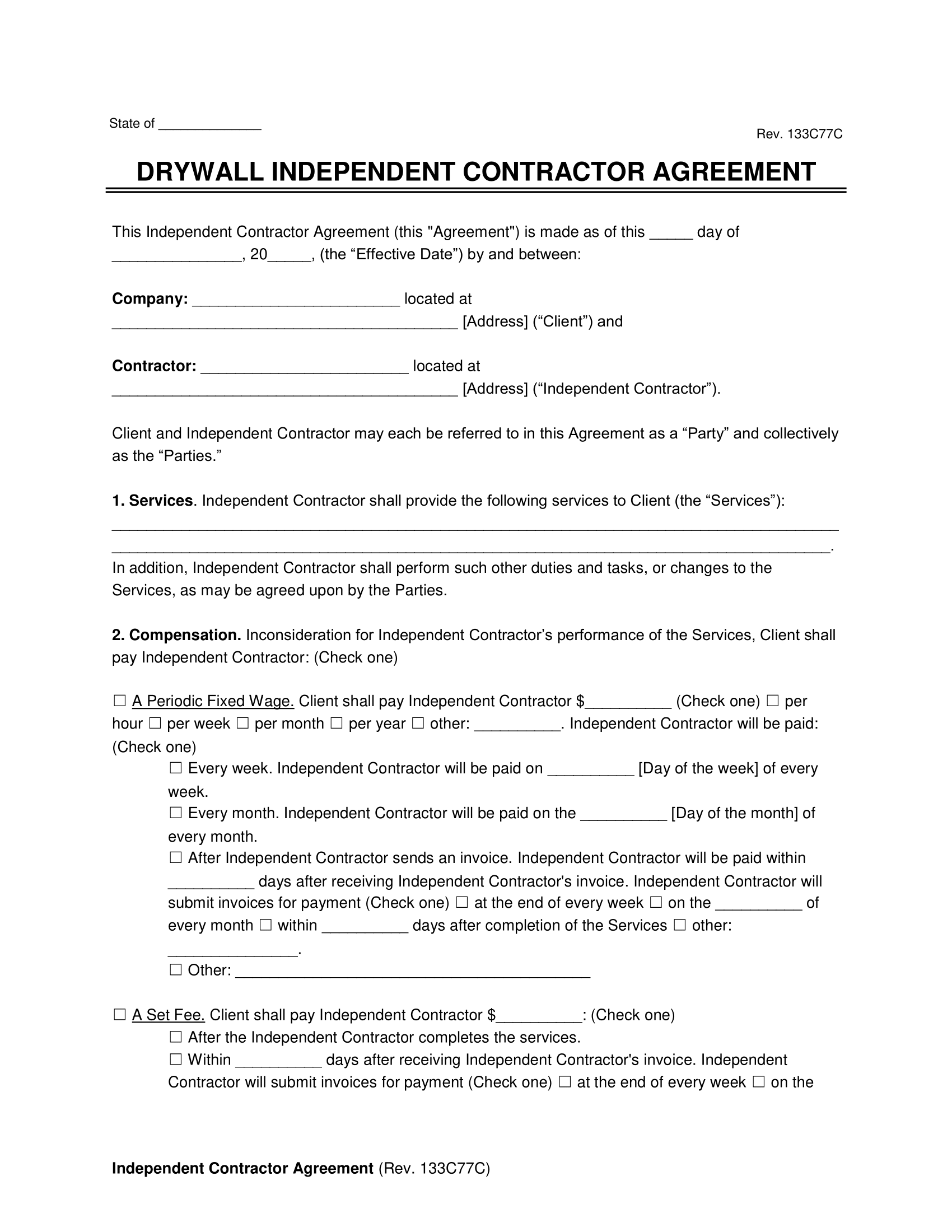
Sample Drywall Contract
View an example of our drywall contract template to see how to organize the provision of your services. Then, create your own with custom terms using our guided form. Once you fill it out, it will be ready to download as a PDF or Word document. You can keep digital copies or print out paper ones for your and your client’s records.