What Is a Studio Rental Agreement?
A studio rental agreement is a legal document specifying the terms and conditions for a tenant renting a studio space from a commercial landlord. It protects both parties by outlining their duties, rental fees, and rules for them to follow for a specified period.
Depending on the terms outlined in the studio lease agreement and the space available, the tenant may use the studio to host classes or workshops in activities such as:
- Fitness
- Dance
- Martial arts
- Yoga
- Podcast recording
- Visual art
- Culinary arts
- Music recording or production
- Photography
What to Include in a Studio Rental Agreement
Here are the key elements of a studio rental agreement:
- Party Information: The name, address, and contact information for the studio owner (the landlord) and the tenant.
- Rental Duration: The length for each rental period (30 minutes, 1 hour, etc.).
- Rental Frequency: How often the tenant will rent the space (once a week, twice a week, etc.).
- Payment Amount: The amount the landlord will charge the tenant for the use of the space.
- Payment Method: Acceptable payment methods (including cash, credit cards, checks, etc.).
- Late Fees: How much extra the tenant must pay if they’re late on their rental payments.
- Amenities and Services: Whether the studio rental comes with equipment or services like stereos, TVs, workout equipment, electricity, water, gas, or access to the bathroom and kitchen.
- Proposed Use: How the tenant plans to use the studio space.
- Emergency Protocols: Action items to follow in case of an emergency.
- Damages: A statement confirming that the tenant is responsible for paying for all damages they cause within a certain period.
- Liability: A statement confirming that the tenant will assume responsibility for injuries to themselves, clients, employees, contractors, and other involved parties.
- Access: How the tenant will have access to the studio (a physical key, electronic access, etc.).
- Cancellation Policy: The amount of time a tenant has to cancel a scheduled slot without incurring a cancellation fee.
- Housekeeping: The measures the tenant must take to maintain the condition of the studio and ensure it’s in good shape for other potential tenants.
- Signatures: Signatures from both parties to prove their acknowledgment of the proposed terms.
Factors to Consider When Renting a Studio Space
If you’re a tenant looking to conduct a class, host a workshop, or otherwise gather clients in a space, you shouldn’t just rent the first studio space you find. Here are some important factors to consider before signing a studio rental contract to lease a studio space:
- Usage Frequency: If you’re just starting to offer your services, look for a studio that will let you rent space once or twice a week for times that work for you. If you have a large client base, you can look for a studio with more open availability.
- Equipment Needs: Determine your equipment needs. Figure out if you can provide the equipment yourself or if you’d prefer to find a studio that offers the equipment for you.
- Rule Considerations: Think about how you want to use your space. For example, suppose you conduct yoga classes and would like to use incense. In this case, you should focus on finding a studio that allows for the use of incense, as some studios may have anti-smoke policies.
- Storage Needs: Consider if you will have a designated spot to store your items within the studio.
- Location: Choose a location that’s easy for you and your clients to access.
- Size and Layout: Consider how much space you’ll need to conduct your lessons or sessions. Determine if the layout is sufficient. You can also consider whether the space is big enough to accommodate the expansion of your business.
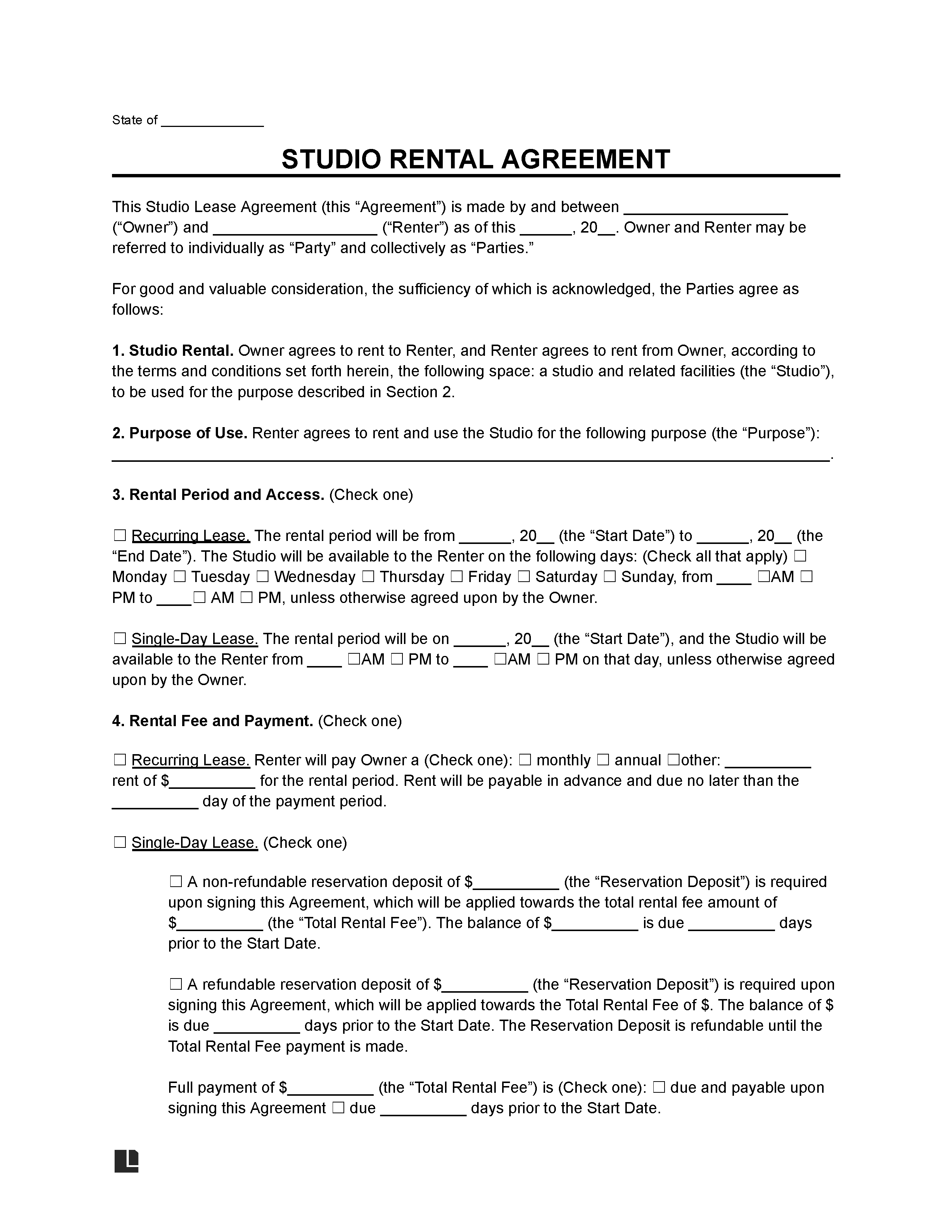
Studio Rental Agreement Sample
View an example contract for leasing a studio space to see how to structure yours. Legal Templates’s studio rental agreement template makes it easy to customize your document for your studio rental situation. When you are finished, you can download it as a PDF or Word document and store it in your records.