What Is a Commercial Real Estate Purchase Agreement?
A commercial real estate purchase agreement is a written contract between a seller and a buyer for a commercial property. The buyer typically initiates the agreement, and it becomes legally binding once both parties have signed it.
This type of agreement is used for commercial properties, such as office buildings, retail stores, warehouses, and apartment complexes. Because these properties are used for business purposes, the contract must address issues that don’t come up in residential deals. A commercial real estate purchase agreement usually includes:
- The purchase price and how the buyer will pay it
- An “as-is” clause, explaining that the commercial property is sold in its current condition unless the contract says otherwise
- A thorough property description, including the building size, land area, zoning, and permitted uses
- A list of equipment, fixtures, and building systems included in the sale (such as signage, loading docks, HVAC systems, or built-in shelving)
- Information about existing tenants and leases (if the property is occupied)
- Important dates, such as the deadline for the earnest money deposit or the inspection window
- Each party’s responsibilities before closing, like delivering financial records
- Conditions that must be met before the deal closes, such as passing inspections or clearing title issues
How to Buy Commercial Property
Before you write a commercial property purchase agreement, it’s important to understand the process of buying commercial property. This way, you can allocate your time, energy, and resources more effectively. Follow these steps to approach the purchase of commercial real estate thoughtfully.
Step 1 – Define Your Goals
Before you start the commercial property buying process, take time to define your goals. Some buyers want steady cash flow, while others are looking for long-term appreciation, a place to run their business, a property they can improve, or certain tax benefits.
Refer to your business plan to get a better idea of what you want for your company’s future. Once you know the intended goal of your commercial property, you’ll have a better idea of what you want for your property in terms of:
- Property type (office, land, mixed-use, industrial, multifamily, self-storage, etc.)
- Purchase price range
- Size (square footage, lot size, unit count, etc.)
- Geography (zoning types and city/neighborhood location)
- Hold period (can help you decide between buying, refinancing, and participating in a like-kind exchange)
Step 2 – Get Your Finances in Order
Ensure you have enough capital to proceed with a commercial purchase:
- Down payment: An ideal down payment for a commercial property is 20-35% of the purchase price. Some sellers may require a higher down payment if it’s a riskier deal.
- Closing costs: Closing costs typically range from 1.5% to 4% of the purchase price.
- Immediate repairs: Have some funds on hand to address property repairs; this is especially important if the property comes “as-is.”
- Operating reserves: Confirm that you have between 6-12 months’ worth of operating reserves to keep your business operating.
If you’re buying via an entity (and not as an individual), pull credit reports and financial statements for your business to get an idea of what kinds of commercial loans you’d be approved for. You may also consider getting pre-qualified with a lender to show sellers you’re serious.
Step 3 – Assemble a Support Team
In addition to a lender, you’ll likely need the following individuals to support you during the process of buying commercial property:
- Commercial real estate broker: They should have experience in your industry and have made sales with your property type before. If you’re selling commercial property instead, a real estate listing agreement can define the broker’s marketing role, commission, and authority to represent the sale.
- Real estate attorney: They can review leases (if the purchase comes with leases) and the terms of your commercial closing.
- Certified public accountant (CPA): They can help you optimize tax benefits with your purchase and assist with entity structuring.
- Inspector: They can ensure the property doesn’t have serious environmental or structural issues.
- Appraiser: You can seek an independent appraisal from an appraiser to get an idea of the commercial property’s true value.
Step 4 – Conduct Market Research
Conduct market research to ensure that you get an optimal return and that the price you pay reflects market realities. Start with a comparable analysis for similar properties in the same submarket that you want to enter.
Research what their sales and capitalization rates were to get an idea of their income-producing potential. While you won’t be promised similar results, you can better understand what’s possible as a similar business operating in your area.
Step 5 – Locate Potential Commercial Properties & Communicate Your Intent
Use various resources to find properties that match your criteria. Websites such as LoopNet and Property Shark offer extensive listings of commercial properties for sale. Get in touch with the sellers to ask clarifying questions or get more details.
Send a letter of intent to purchase commercial property to the main properties you’re interested in. This letter is non-binding but communicates your commitment to engage in negotiations. It’s a good idea to send at least two or three letters to different properties, as you may not be able to follow through with some deals due to substandard conditions.
Step 6 – Conduct Due Diligence
Once you send your letters of intent, you should fulfill your duty as a buyer to conduct due diligence. Participating in this step helps you mitigate unforeseen legal problems and ensure you know every detail about the property and its potential flaws.
Due diligence includes these key tasks, some of which require the assistance of an inspector or other professional:
- Reviewing existing leases associated with the property and options to renew/cancel
- Conducting physical inspections of the roof, HVAC systems, plumbing, electrical components, etc.
- Conducting environmental inspections (Phase I ESA and Phase II, especially for properties with a history of industrial or chemical operations)
- Evaluating zoning and entitlements (permitted uses and limitations on future development)
- Assessing title commitments, easements, and boundary issues
- Auditing utility bills, real estate tax history, and maintenance costs
- Ensuring compliance with current building codes
- Obtaining insurance quotes and noting exclusions
- Getting quotes from contractors on necessary repairs
If repairs can’t be completed before closing, buyers may negotiate an escrow holdback so funds are released once the work is finished.
Step 7 – Finalize Financing
Once you finish your due diligence and are satisfied with the commercial property’s condition, you can finalize financing. Lock in your loan with your lender by settling on key terms, such as the loan’s interest rate, term, and amortization rate. Follow your lender’s requirements and deliver all documentation they need to finalize the arrangement.
Step 8 – Complete a Commercial Purchase Agreement
Prepare for closing by completing a commercial purchase agreement. Fill it out with all the key details relating to the sale. Have the seller review your commercial real estate purchase and sale agreement, ensuring they agree to all terms. Consider making adjustments to satisfy both parties, and sign once the terms are finalized.
Interested in Renting Out Commercial Property?
After you buy commercial property, you may want to rent it out to other entrepreneurs to generate income. If this is a goal of yours, you can read our guide on how to rent out commercial property for information on getting started.
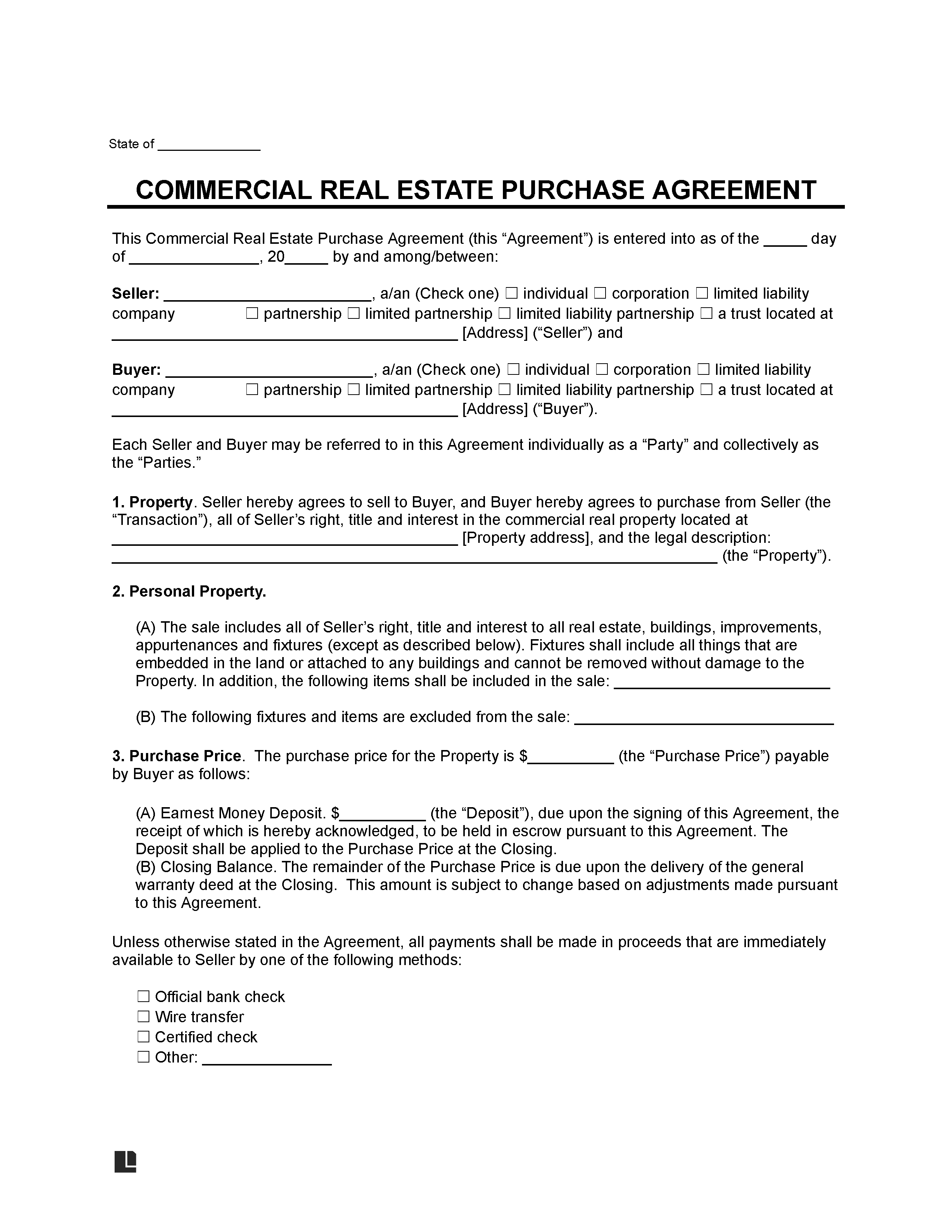
Sample Commercial Real Estate Purchase Agreement
View a free example of a commercial real estate purchase contract below. This template will give you an idea of the key elements to include, from the earnest security deposit to the purchase price and additional property included.
Create your own contract to purchase commercial real estate using Legal Templates’s guided form. Then, download a copy as a PDF or Word document for storage in your records.