

Blended families are more common than many people expect. More than half of Americans are part of a blended family, including about 1 in 5 married couples. If you’re part of this type of family unit, estate planning can get a little more nuanced.
More people and relationships mean more to think through. You might want to take care of your spouse while also making sure your children from a previous relationship are protected. Remarriage can shift how assets are handled and who ends up inheriting them. Without a clear plan, things can go in a different direction than you intended or take longer to pass on.
What Is a Blended Family?
A blended family forms when partners bring children from past relationships into one household, sometimes along with children they have together. It often includes stepchildren and half-siblings, and may still involve former partners. In simple terms, it’s a family where a child lives with a parent and a stepparent.
How to Build an Estate Plan for a Blended Family
Even with the best intentions, your loved ones may not inherit the way you expect. An estate plan for a second marriage helps you support your new spouse while still protecting your children. It gives you control over who inherits and what happens next. Here are the steps to help you put that plan in place.
1. Define Your Goals
Start by deciding what you want your plan to achieve before creating any documents. In blended families, that often means balancing two priorities. You may want to support your spouse now while making sure your children from a previous relationship inherit later.
Keep in mind that “equal” and “fair” don’t always mean the same thing. In blended families, fairness often depends on each person’s situation, not just a simple split. Think through a few things:
- What each person brought into the relationship, including assets and debts
- Ongoing obligations like child support or financial support across households
- Differences in income, savings, or financial responsibilities across households
- Any premarital assets or inheritances you want to keep within your side of the family
Being clear on these priorities makes it easier to build a plan that fits your situation. It also helps you stay consistent as you make decisions later on. With your goals set, you’ll be ready to decide how to divide your assets.
What Happens If You Don't Have a Will?
If you don’t have a will, state law decides how your assets are distributed. That often means your spouse inherits most or all of your estate, with little say in how your assets are divided. Learn more in our guide on dying without a will.
2. Decide Who Gets What and When
Once your goals are clear, the next step is to decide who should inherit and when. Start by listing your assets, including property, retirement accounts, insurance, digital, and personal assets. Then identify what’s separate and what’s shared. Over time, commingling assets in a second marriage can blur ownership, so it helps to be clear from the start.
Next, list everyone you want to include. That may be your spouse, biological children, and stepchildren. Keep in mind that stepchildren are not automatic heirs in many cases, so you need to name them clearly if you want them to inherit. A few states, like New Jersey and California, may allow limited exceptions in certain situations, but that is not something to rely on. Then decide how you want to divide your assets. Here are a few common ways to do it:
- Support your spouse first, then pass the remaining assets to your children later
- Split assets between your spouse and children from the start
- Set aside specific assets for certain beneficiaries
- Decide when assets should pass, either right away or in stages over time
It’s also important to consider legal limits. In many states, a surviving spouse has a right to a minimum share of the estate, even if your will says otherwise. That can affect plans to leave more to children from a prior relationship.
Your family home needs special attention, too. How it’s titled can override your estate plan and decide who inherits it. For example, joint tenancy usually passes the home straight to your spouse, so your will or trust would not control that transfer. Other setups, like tenancy in common or a life estate, can give you more control over what happens next.
What Happens If Everything Goes to Your Spouse First?
If everything goes to your spouse, they control what happens next. They can update their will, remarry, or redirect assets over time.
That means assets may end up going to their children, a new spouse, or others instead. As a result, your children from a prior relationship may receive less or nothing, and may have to wait years to inherit.
3. Plan for Minor Children
If you have minor children, your plan should cover who will care for them. Start by naming a guardian in your will so the court knows who you trust to step in. This is especially important in blended families, where more than one adult may be involved in a child’s life.
Things can get complicated. A surviving biological parent usually has priority, even if you name someone else. Because of that, your choice may only apply if the other parent can’t take on their expected role.
It also helps to understand where stepparents stand. Even if they help raise the child, they don’t automatically have legal rights. Without legal adoption, a stepparent can’t make decisions or manage anything on the child’s behalf. If both legal parents aren’t available, the court will step in. Your will can give clear direction on who you’d want to care for your child.
4. Choose the Right Estate Planning Tools
Blended families often need more detailed documents to match both the legal setup and family dynamics. Your plan should cover what happens when you pass and what happens after your spouse passes. Here’s a breakdown of the main estate planning tools for your second marriage and how they fit together:
| Estate Planning Tool | What It Does | How It Helps Blended Families |
|---|---|---|
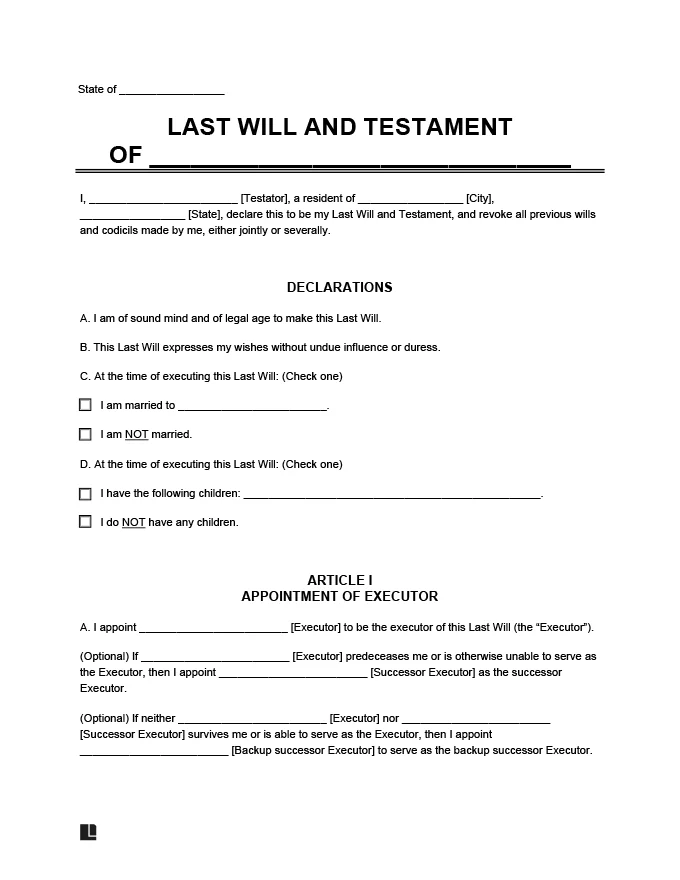
| Last Will and Testament | Covers remaining assets and can name guardians for minor children. | - A last will and testament is often used as a starting point. - Lets you clearly include children from prior relationships and stepchildren. - You can assign specific assets, but a will alone may not prevent everything from passing to a spouse first. |
| Trusts | Holds assets and controls when and how they're distributed. | - A revocable living trust supports a spouse while preserving assets for children from a prior relationship. - Controls how and when assets pass after both spouses die. - Some trusts (e.g., QTIP, AB bypass trusts) can help manage estate taxes. - More complex and often requires a professional setup. |
| Financial Power of Attorney | Gives someone authority to manage your finances if you can't. | - Keeps financial decisions consistent across separate and shared assets. - Helps prevent tension between a spouse and adult children and reduces the chance that one side feels left out. - Use our durable power of attorney form to set this up. |
| Medical Power of Attorney | Gives someone authority to make medical decisions if you can't. | - A medical power of attorney form can help avoid disagreements when multiple people feel responsible for care. - Supports long-term care decisions and helps prevent disagreements between a spouse and adult children |
| Minor Child Care Documents | Covers guardianship and short-term care arrangements for children. | - Helps when children have different parents or may need different guardians. - Tools like temporary guardianship, medical consent, and travel consent forms support real-life situations and day-to-day care. |
| Prenuptial or Postnuptial Agreement | Defines what each spouse owns separately and what is shared | - A prenuptial agreement keeps premarital assets separate - A postnuptial agreement sets ownership during the marriage - Helps provide for children from prior relationships - Makes ownership clear - Supports your will or trust, so everything lines up |
Life insurance can also support your estate plan since it pays out directly to your chosen beneficiaries. In blended families, this can help you provide for your spouse while still setting aside money for your children. For example, you might leave certain assets to your spouse and use a life insurance policy to support your children.
Tax treatment is another piece to consider. It can affect how much your children ultimately receive. The tools you choose can help reduce estate taxes or delay them between spouses, which can make a difference over time. If your estate includes real estate, investments, or higher-value assets, it’s worth factoring this into your plan.
Estate planning costs depend on what you need and how complex your situation is. Our nationwide study of 909 law firms gives you a sense of what people typically pay
5. Check Accounts That Pass Outside Your Estate Plan
Some assets don’t follow the terms of your will or trust. For example, the assets or benefits in your retirement accounts, life insurance, retirement accounts such as IRAs, and transfer-on-death (TOD) accounts go directly to the person listed as the beneficiary.
In blended families, this can easily throw things off. If these accounts aren’t updated, they may end up favoring one side without you even realizing it. For example, naming only your spouse could leave children from a prior relationship with nothing from those assets. Here’s what to keep in mind:
- These accounts go directly to the named beneficiary, even if your will says something different.
- Naming only your spouse can leave out your children from a prior relationship.
- Joint ownership and account titles can override your plan.
To make sure these accounts match your plan, name your spouse as the primary beneficiary and your children as backup (contingent) beneficiaries. You can also split assets across more than one person based on your plan.
After remarriage, beneficiary designations are often missed. Even one outdated account, like an ex-spouse still listed, can override your entire plan due to tax rules.
6. Choose an Executor or Trustee Carefully
Your executor or trustee carries out your plan and decides how and when assets are distributed. In blended families, this choice can feel personal. Naming one side, like your spouse or one of your children, may create tension. That person may also need to make judgment calls along the way, which can impact how your plan plays out.
Naming co-executors from different sides might seem like a fair approach at first. Over time, it can slow things down or lead to disagreements if they don’t see things the same way. For that reason, some people choose a neutral third party or a professional trustee. This can help keep things steady and take pressure off the family.
7. Talk Through the Plan With Your Family
Once your estate plan for your second marriage is in place, it helps to talk it through with your family. It gives everyone a clear picture of who will inherit what and why.
As you talk through your plan, remember you’ve already put thought into what feels fair. Others might see things differently, especially in a blended family. Taking a moment to explain your reasoning can help set expectations and make your decisions easier to understand. It also helps avoid misunderstandings or hurt feelings later on.
Informal promises about inheritance aren’t legally binding. Misunderstandings are common in blended families, especially when expectations aren’t clearly documented. Learn more in our guide on verbal contracts.
8. Review and Update Regularly
Your estate plan shouldn’t stay the same forever. In blended families, things can change quickly, so it’s important to revisit your plan often.
Update your documents after major life changes, like remarriage, divorce, or adding stepchildren. Changes across households, finances, or relationships can also affect how your plan should work. When you review your plan, look at everything together. That includes your will, any trusts, and your beneficiary designations. Keeping these in sync helps make sure your plan works the way you expect.
If you need to make updates, you can use tools like a codicil to update your will or a trust amendment to revise your trust without starting over.
Outdated documents can send assets to the wrong person. Ex-spouses are often still listed after remarriage. Even small oversights can lead to tension between a spouse and children.
Plan for the Realities of a Blended Family
The moment families combine, estate planning starts to look different. More people are involved, and the decisions you make don’t always follow a simple or obvious path. Many of the biggest issues don’t come from what you intended, but from what wasn’t clearly set out. Small gaps, like an outdated beneficiary or an unclear plan for shared assets, can shape what happens years later.
Taking the time to think through your goals, your family dynamics, and how your assets are handled gives you more control over those outcomes. It also helps you make decisions that hold up over time, even as your family changes.
Need to Get Divorced?
If you’re in the process of getting legally divorced, review our guide on how to legally separate and get divorced. Once you finalize the process, you can remarry and get your blended family estate planning in order.