What Is a Rhode Island Vehicle Bill of Sale?
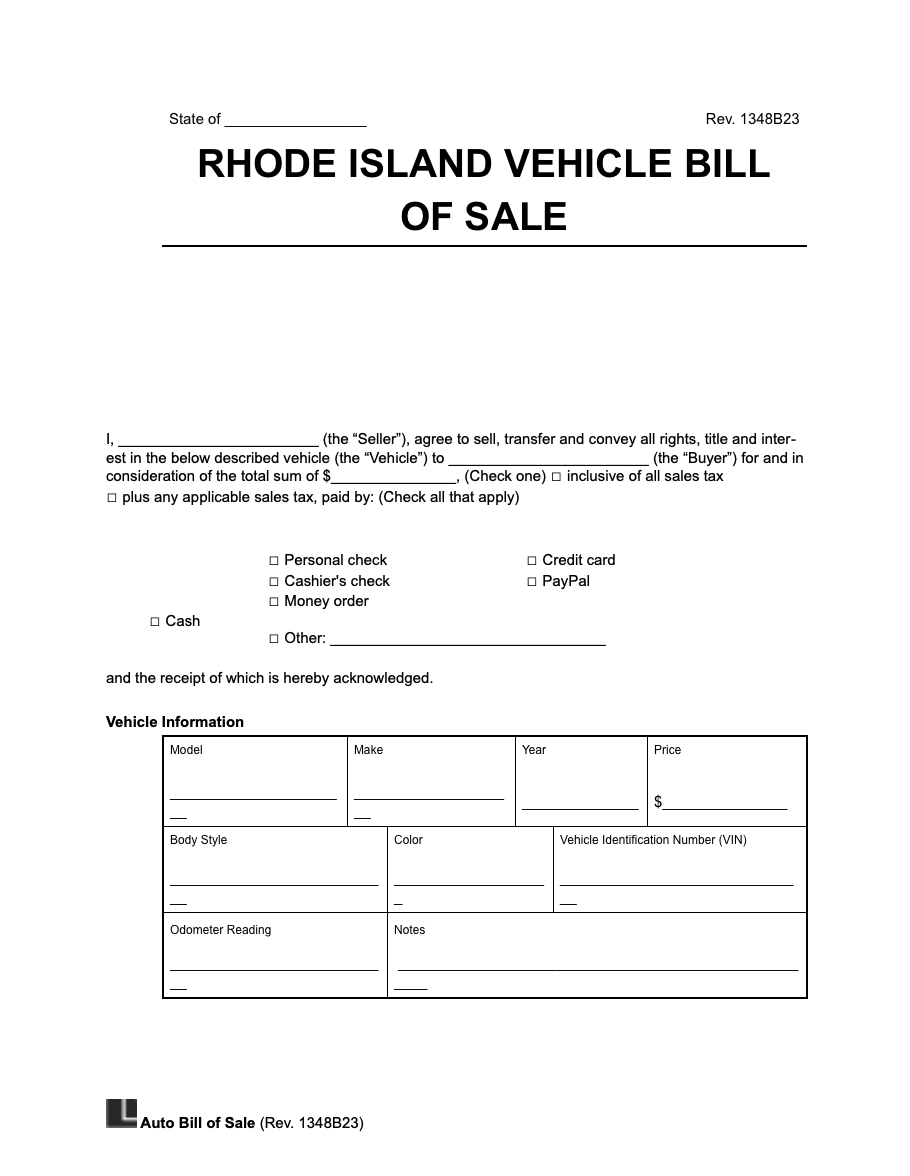
A Rhode Island vehicle bill of sale form records the change in ownership of a car or other motor vehicle. The buyer and seller (and any co-buyers and co-sellers) sign the document to confirm the transfer of ownership and authenticate the sale. Key details that a RI bill of sale must contain include the following:
- Date of sale
- Sale price
- Seller’s name and street address
- Buyer’s name and street address
- Vehicle’s year, make, and model
- A description of the vehicle (e.g., body type, color)
- Odometer disclosure
Do I Need a Motor Vehicle Bill of Sale in Rhode Island?
Yes, you need a vehicle bill of sale in Rhode Island for any private party car sale. This document is essential for registering the vehicle with the Rhode Island Division of Motor Vehicles (DMV). You will need to submit it alongside other forms, including a Sales Tax Form (T-334) and an Application for Registration (TR-1).
Does a Bill of Sale for a Car in Rhode Island Need to Be Notarized?
In most cases, a Rhode Island car bill of sale does not need to be notarized. However, a notary acknowledgment can provide additional protection, as it confirms the identities of the parties. With a notary acknowledgment, the parties can make it clear who owns the vehicle, reducing disputes over liability for tickets and other violations associated with the vehicle.
Note that if the motor vehicle is a gift from a non-immediate family member, the gifter will need to present a notarized gift letter, which is officially Form SU 87-65.
Rhode Island Vehicle Bill of Sale Sample
View our example of a Rhode Island motor vehicle bill of sale to see how to structure it. Then, create your own using our guided form and download a final copy as a PDF or Word file.