What Is a Financial Advisor Independent Contractor Agreement?
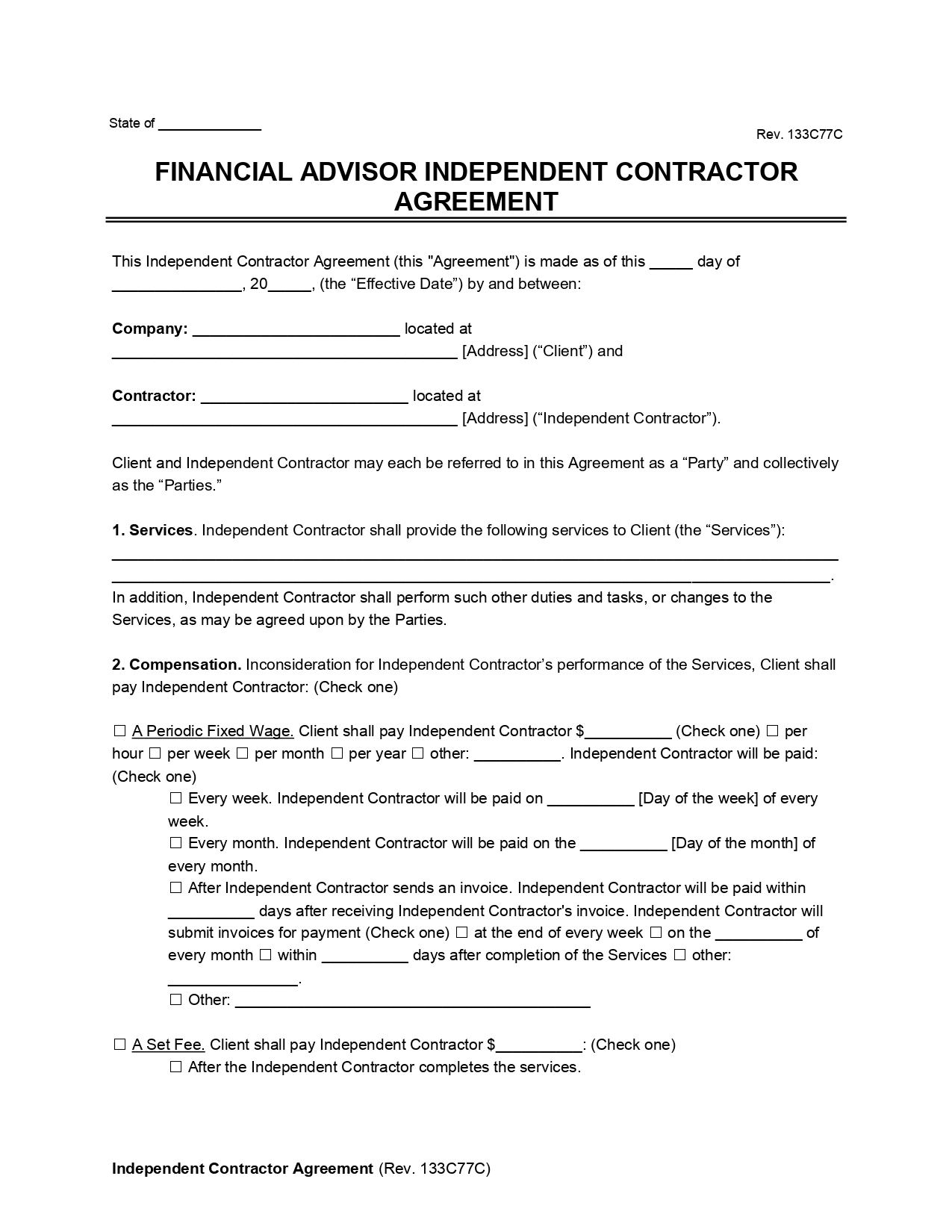
A financial advisor independent contractor agreement is a contract between a financial advisor and a client. The contract outlines how the advisor will help improve their individual or corporate client’s financial situation in exchange for payment.
This contract states that the financial advisor works as an independent contractor, not an employee. Under this arrangement, the advisor handles their own taxes and works according to their methods.
A financial advisory agreement outlines the financial services to be rendered by the advisor. Depending on the client’s needs, it may cover the provision of any of these services:
- Financial advice
- Estate planning
- Investment management
- Risk management and insurance planning
- Tax planning
- Budgeting
- Purchasing of stock and bonds on the client’s behalf (with proper licensing)
This contract establishes expectations for the financial advisor. The advisor sets a predetermined cost, such as a percentage of investment gains, or an hourly billable rate for their services. If the client refuses to pay or either party breaches the agreement, the party at fault can be held liable.
What to Include in a Financial Advisor Agreement
When drafting a financial advisor independent contractor agreement, include key details to ensure all parties clearly understand their expectations. Explore the main elements of a financial advisory agreement below:
- Financial advisor’s information. Include the name of the advisor rendering the financial services. Add details about their credentials, including licenses from the Financial Industry Regulatory Authority (FINRA). For example, a Series 6 license lets advisors sell packaged securities.
- Client’s information. Specify the client in your financial service agreement. It may be an individual or a company.
- Pay structure. Explain how the advisor will be paid, whether at an hourly rate or a fixed fee. Financial advisors earn a national average of $49.11 per hour, so you can use this figure as a starting point. Legal Templates’s consulting invoice can help the advisor submit a request for payment once they complete their services.
- Scope of financial services. Define the services that the advisor will provide. Note any exclusions so the client doesn’t expect more work than the advisor is able to provide.
- Authority of the advisor. Clarify whether the advisor will have discretionary or non-discretionary authority. The former does not require client approval for certain tasks, while the latter does.
- Client responsibilities. State what the client must provide to the advisor for them to properly perform their services. They may need to provide bank statements, expense reports, or policy documents before an advisor can proceed.
- Fiduciary duty. Include a statement that the advisor must act in the client’s best interest.
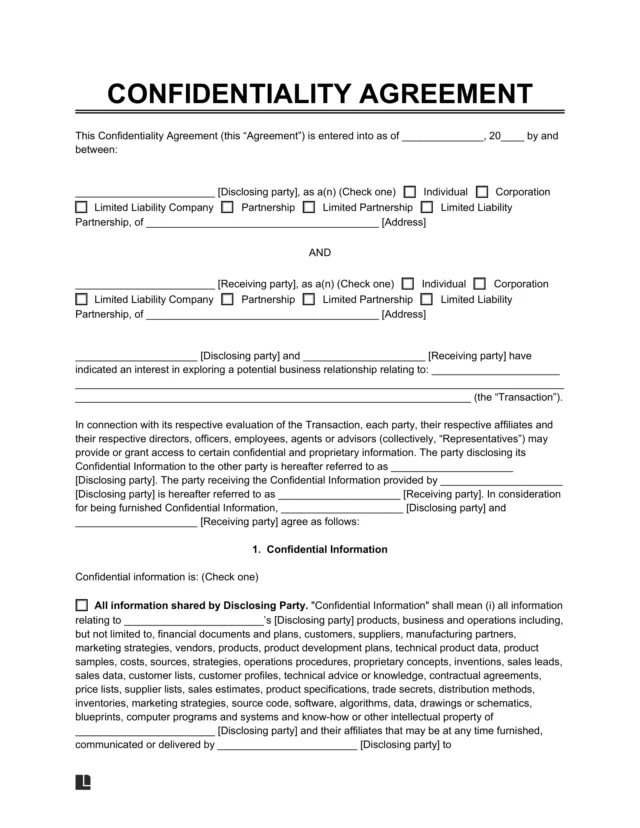
- Confidentiality clause. Include this clause to require the advisor to keep the client’s sensitive financial information private.
- Non-solicitation clause. This clause is applicable if the client is a firm that hires a financial advisor to work with its clients. The firm can require the advisor to refrain from moving the firm’s clients to their own business for a specified period.
- Insurance. Outline the protections in place to safeguard against any mistakes the advisor makes. A financial advisory agreement will often outline errors and omissions (E&O) insurance. This kind of policy protects professionals from financial losses due to claims of negligence, oversights, or failure to perform services.
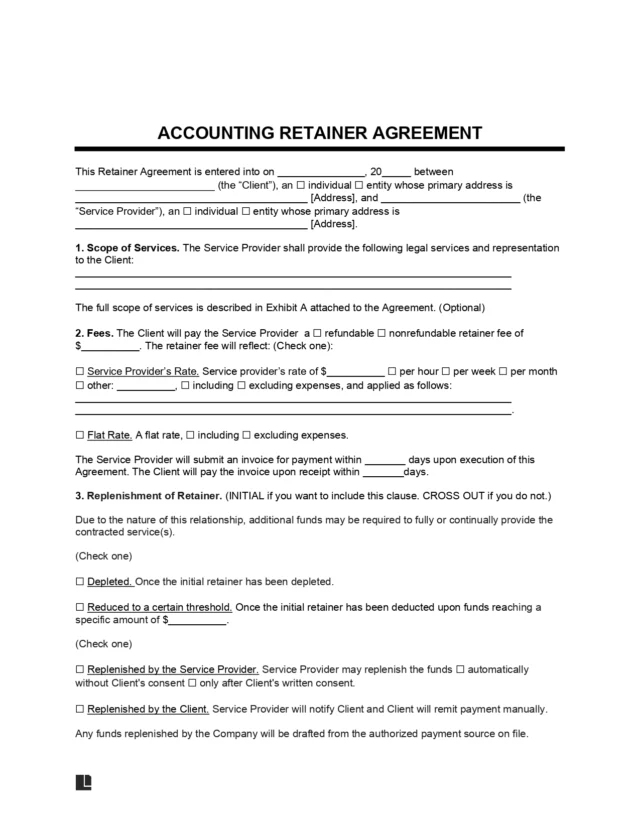
If you want the financial advisor to remain available for their services during a set period, consider completing a retainer agreement.
Financial Advisor Agreement Sample
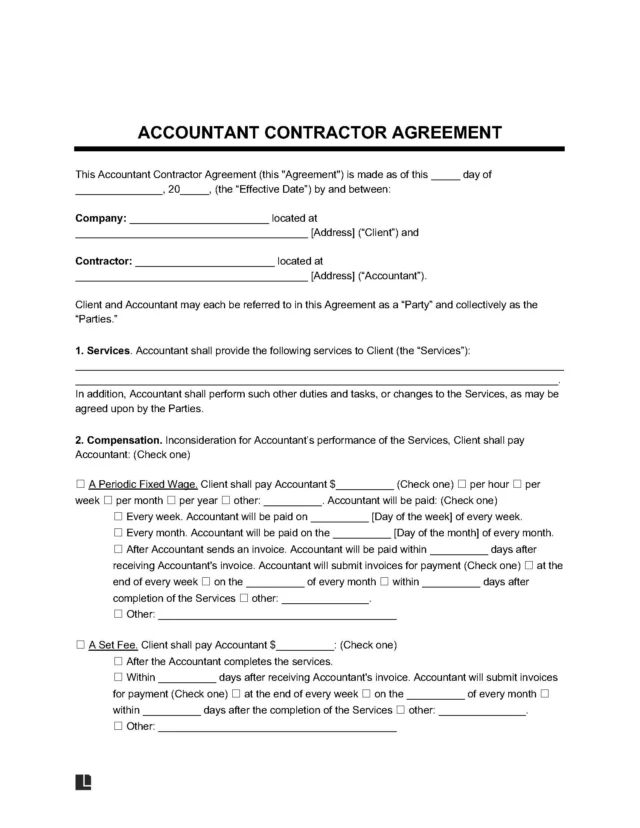
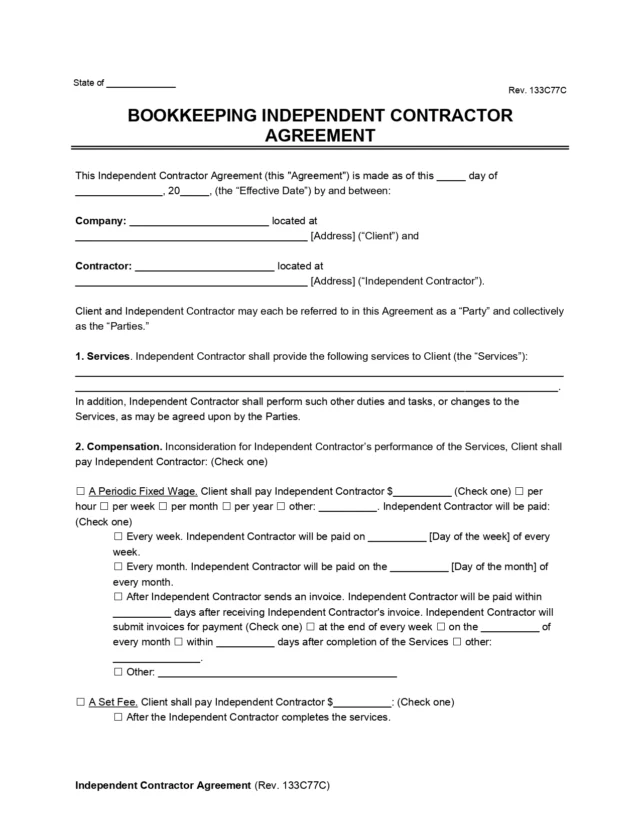
View an example of our financial advisor contract template to see how to create a legally enforceable agreement. Legal Templates’s guided questionnaire will help you through the drafting process. Once you answer all of the questions, you’ll generate a final document that you can download in PDF or Word format.