What Is a Zero-Hour Contract?
A zero-hour contract is a type of employment agreement that allows employers to hire without guaranteeing any minimum number of work hours. The employer does not promise a set schedule. The employee works only when shifts are offered and accepted.
Zero-hour contracts are often used when work demand changes week to week. Some weeks may have more shifts, others may have none, and the employee is only paid for the hours they work. Even without guaranteed hours, zero-hour workers are usually still employees. Employers are still required to follow basic labor laws. This includes paying at least minimum wage and following overtime rules under the Fair Labor Standards Act.
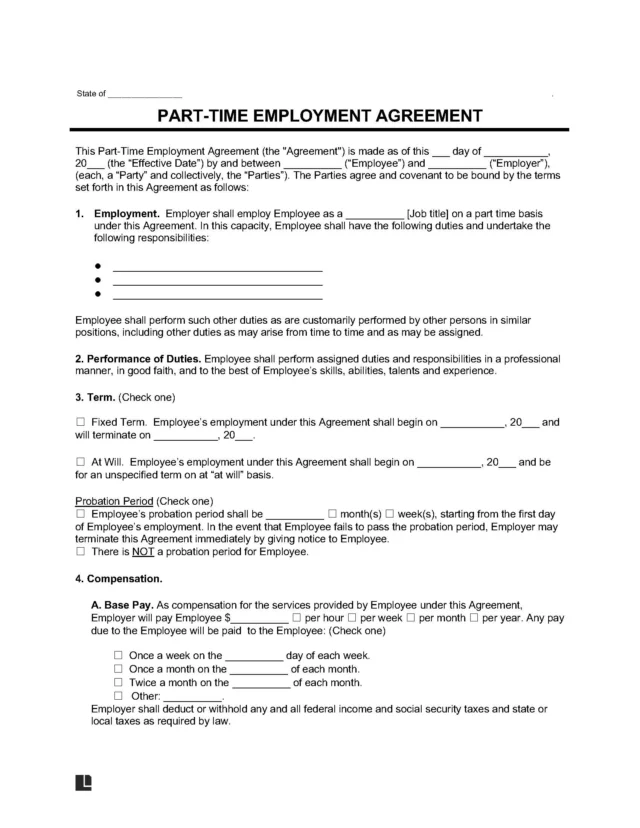
A zero-hour contract is different from a part-time or fixed-term contract. Part-time jobs usually guarantee a set number of hours. Zero-hour employment contracts do not guarantee a minimum number of hours.
When to Use a Zero-Hour Employment Contract
Zero-hour employment is ideal when work hours fluctuate from week to week. It helps employers manage staffing during busy periods without locking in regular weekly hours.
Zero-hour contracts can also be beneficial for workers who desire flexibility. They can choose when to accept shifts instead of following a rigid schedule.
This type of contract may be a good fit if employers are looking for workers who can:
- Cover shifts during busy or unexpected times
- Work on an on-call or as-needed basis
- Fill short-term gaps without a long-term hours commitment
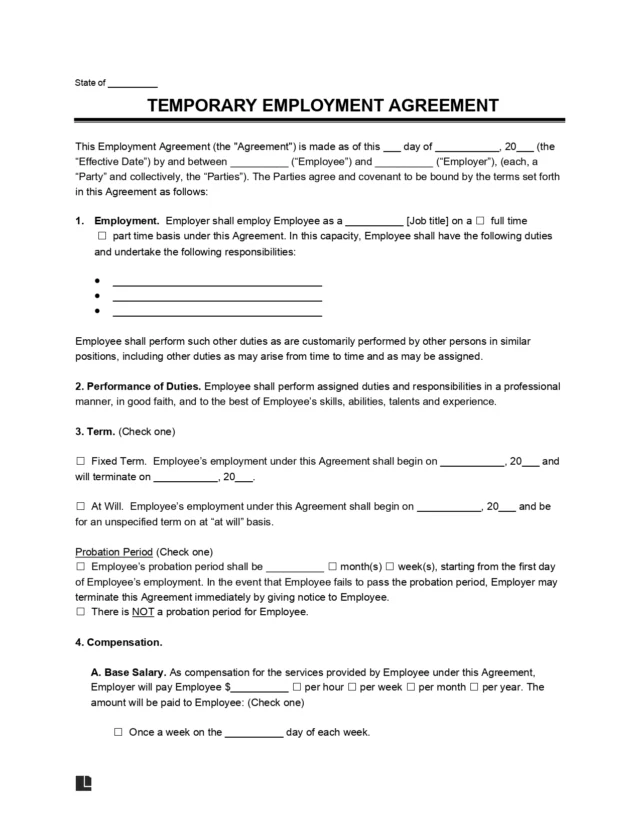
With that said, however, a zero-hour contract may not be the best fit if the role requires a more consistent weekly schedule or long-term stability. In such cases, you may want to consider a permanent employment contract for ongoing full-time roles or a temporary employment contract for shorter-term assignments.
How to Write a Zero-Hour Contract
The goal of a zero-hour contract is to clearly define the working relationship between an employer and an employee while maintaining flexible work hours. Here’s a step-by-step breakdown of how to write a zero-hour contract:
Step 1 – Add Employer and Employee Details
Start by entering the legal names and addresses of both the employer and the employee. This confirms who is entering into the agreement and to whom the contract’s rules apply.
Step 2 – Define the Job Role
List the employee’s job title and a brief description of their duties. Although hours are not guaranteed, it is essential to clearly outline the type of work the employee may be required to perform as part of the contract.
Step 3 – Set Expectations Around Work Hours
Clearly explain that work will be offered as needed and that employees can choose whether to accept or decline available shifts. Be sure to specify whether the zero-hour contract is for a specific time or is indefinite.
Step 4 – Choose How the Employee Will Be Paid
Include the employee’s pay rate, such as an hourly wage. Employers must still follow wage and overtime laws under the Fair Labor Standards Act. They must also comply with anti-discrimination and anti-harassment laws as applicable.
Step 5 – Decide on Benefits and Time Off
Explain if the employee is eligible for benefits or paid time off. This may include paid sick leave, holidays, or other time off offered by the employer. Your contract should also outline policies for overtime and shift work.
Step 6 – Confirm Termination Terms
Even without an end date, your zero-hour employee contract should include terms under which either party may terminate the contract. For example, the business can terminate the contract if the worker fails to meet the expectations outlined in the agreement.
Step 7 – Review and Finalize the Agreement
Review the contract to ensure all details are accurate. Once completed, the employee should sign and date the contract.
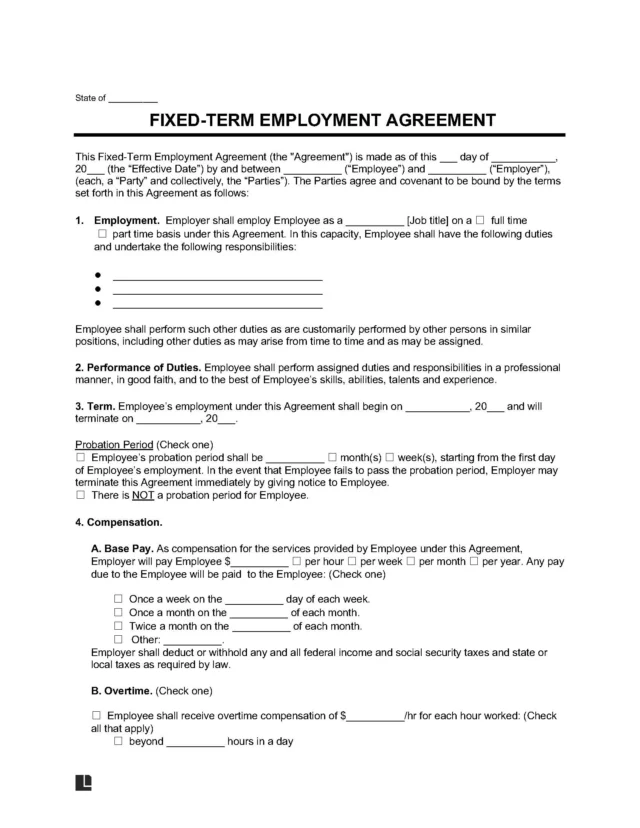
Sample Zero-Hour Contract
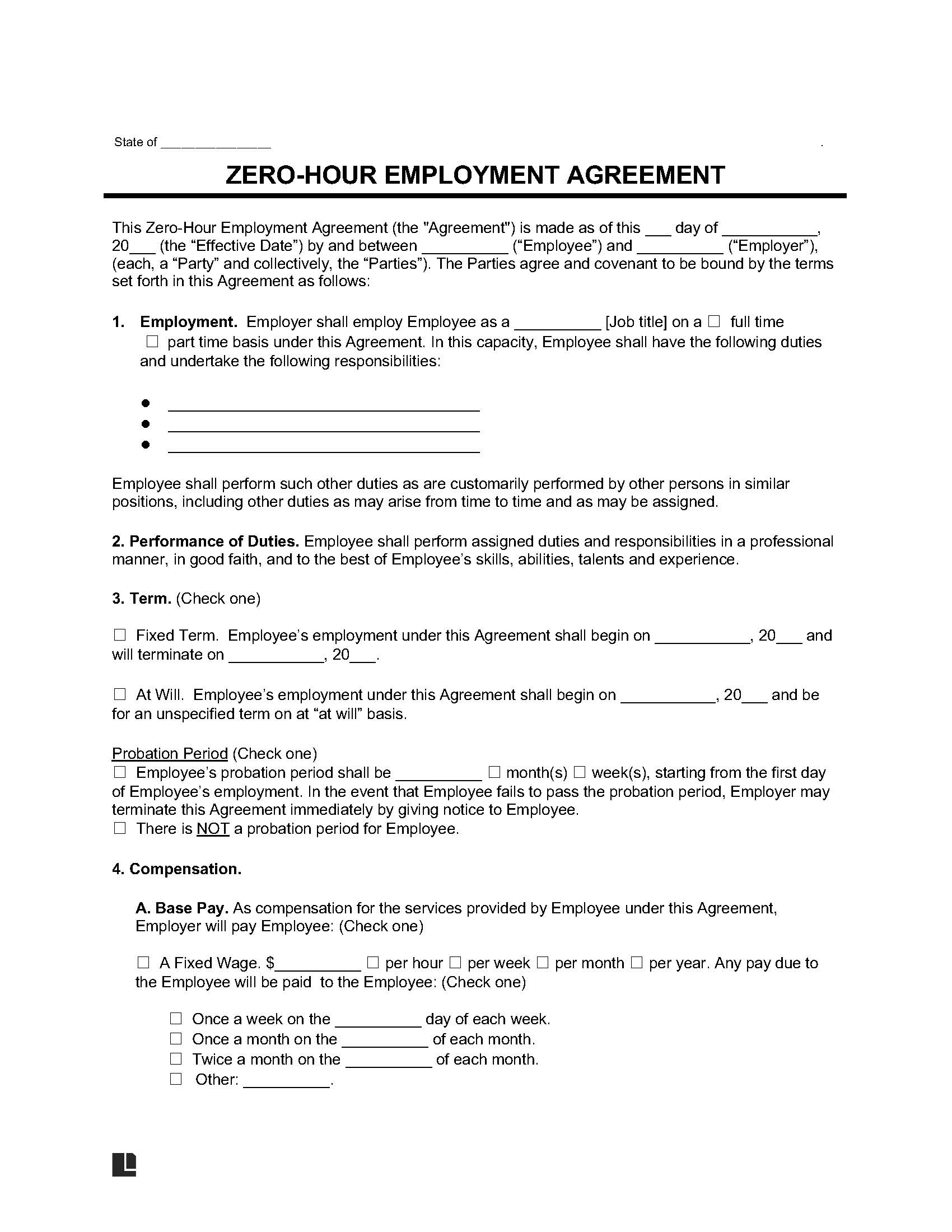
Take a look at the zero-hour contract template below to see how to outline flexible work terms correctly when hours are not guaranteed. Once you’re ready, complete our guided questionnaire to customize the agreement and download your contract in PDF or Word.
Advantages and Disadvantages of Zero-Hour Contracts
Zero-hour contracts offer flexibility, but they also come with certain trade-offs. Here are some advantages and disadvantages to consider to see if a zero-hour contract is the right fit for you.
Advantages
For employers
- Flexible staffing: Employers can adjust staffing levels based on demand without committing to fixed hours.
- Lower labor costs: Employers are only required to pay for hours worked, which can help manage payroll during slower periods.
- Response to change: Zero-hour employment contracts make it easier to manage busy periods, emergencies, and sudden workforce needs.
For employees
- Schedule flexibility: Workers can choose when to accept shifts, which can be helpful if they prefer a more flexible work arrangement.
- Extra income: Zero-hour work can help employees earn more alongside other jobs and pick up shifts when it suits them.
- Balance other priorities: This type of contract can fit around other responsibilities, such as school, caregiving, etc.
Disadvantages
For employers:
- Lower retention: Workers may be less likely to stay long term if hours remain unpredictable.
- Less availability: Employees are not required to accept shifts and may be unavailable when actually needed.
For employees:
- Unpredictable income: Without guaranteed hours, pay can vary significantly from one week to the next.
- Planning challenges: It may be harder to plan finances or personal commitments without a set working schedule.