What Is a No Smoking Lease Addendum?
A no-smoking lease addendum is a written add-on that becomes part of an existing residential lease. Landlords use it to introduce clear, enforceable no-smoking rules without rewriting or replacing the original agreement.
Smoke-free policies already apply in federally funded public housing, but private landlords usually set their own rules. A lease addendum offers a simple way to do that while keeping the rest of the lease intact.
Most no-smoking addenda ban smoking inside individual units and often extend the restriction to common areas. Many also treat vaping, e-cigarettes, and marijuana the same way as tobacco, especially where local rules already limit smoking. The restrictions typically apply not just to tenants, but also to guests and, in some cases, building staff.
Local rules are expanding quickly. As of July 1, 2025, 101 municipalities regulate smoking in private units of multi-unit housing. Most are in California, but the trend is spreading. Williamstown, Massachusetts, became the first community outside the state to pass a smoke-free multi-unit housing law, and more jurisdictions are expected to follow.
When to Use a No Smoking Lease Addendum
Landlords typically rely on a no-smoking lease addendum in a few common situations:
- Multi-unit residential properties with two or more units, such as apartments or condominiums. Most smoke-free housing laws use this threshold.
- Existing leases. Add a smoke-free policy without rewriting the full lease.
- Local compliance. Address new or updated city or municipal smokefree housing rules.
By putting the restriction directly into the lease, the addendum removes gray areas. Tenants see the rule alongside other binding terms, and landlords can enforce it using the same lease provisions if violations occur.
Smoke-free housing laws mainly focus on multi-unit buildings. About 81% apply to private properties with two or more units because smoke doesn’t stay contained. It can travel between units through walls, hallways, ventilation systems, outlets, and small gaps, exposing other residents to secondhand smoke.
How to Fill Out a No Smoking Lease Addendum
A no-smoking lease addendum must match the existing lease. That means each field should reflect the same agreement, property, and parties named in the lease. To complete the addendum, work through the following steps:
- Identify the landlord on the lease. Use the exact name listed in the agreement.
- List every tenant covered. Confirm whether the lease names one tenant or multiple tenants.
- Apply the rule to the correct unit. Enter the property address exactly as it appears in the lease.
- Use the same governing state law. Match the law already stated in the lease.
- State the smoking ban. Indicate whether smoking is prohibited under the agreement.
- Cover smoke-related damage and injury. Specify whether the tenant is responsible for harm caused by smoking.
- Set consequences for violations. Indicate whether violations can lead to termination or security deposit deductions.
- Confirm notice and consent. Acknowledge the required statements to make the addendum binding.
Once finished, the addendum becomes part of the lease itself. That makes the no-smoking rule easier to enforce if issues come up later.
How to Add a No Smoking Lease Addendum to an Existing Lease
Adding a no-smoking lease addendum to an existing lease is simple. Attach the addendum to the original lease and reference it as part of the agreement so it applies alongside the current terms. Share it with tenants before it takes effect and collect a signed acknowledgment. Once signed, the no-smoking rule applies without changing rent, lease length, or other lease terms.
What Happens If a Tenant Violates a No Smoking Lease Addendum?
A no-smoking lease addendum is enforced the same way as other lease rules, such as noise limits or pet policies. Most landlords address the issue early, with the goal of stopping the behavior rather than escalating it. If the problem continues, enforcement usually follows a step-by-step approach:
- Document the issue using dated notes, photos, or a rental inspection checklist
- Send a written warning, such as a warning letter for smoking marijuana
- Issue a notice to comply or vacate if violations continue
Written records help keep everything clear as the situation moves forward. Lease termination is rare and usually only comes up after repeated, documented violations.
Common signs of smoking violations include smoke odors, cigarette waste, ashtrays, burn marks, staff observations, or repeated complaints tied to specific dates and times.
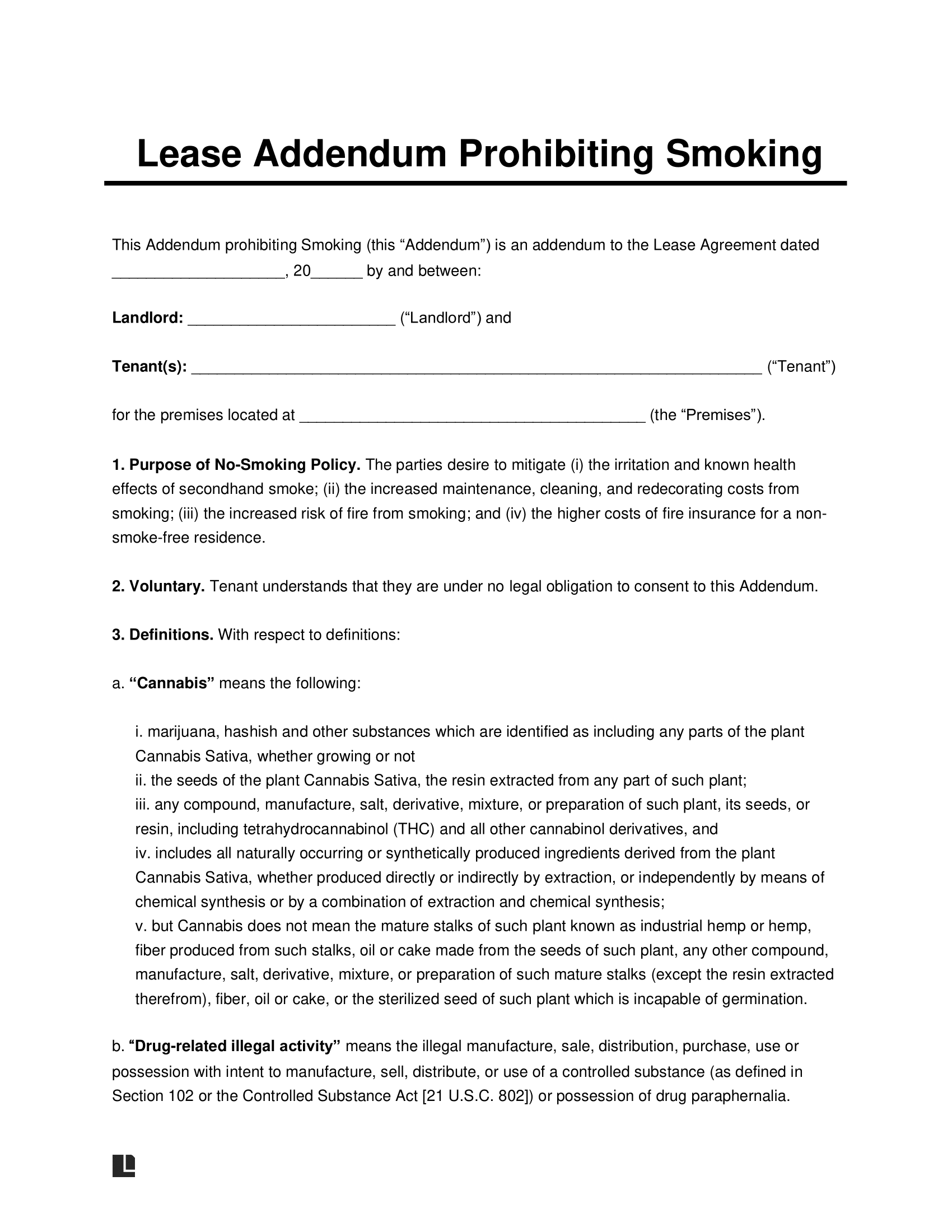
Sample No Smoking Lease Addendum
Use the sample below as a reference. When you’re ready, customize and download our no-smoking lease addendum template in Word or PDF.