What Is a Lease Violation Notice?
A lease violation notice communicates that a tenant has committed a lease breach. It informs the tenant of what they did wrong and provides a timeline for correcting the breach.
This notice, also called a “notice to comply or quit” or a “notice to comply or vacate,” formally starts the eviction process. It provides the required notice before you proceed to file an eviction lawsuit for failure to abide by the terms of an established lease.
Some lease violation notices allow the tenant the opportunity to correct the wrongdoing. Others simply offer notice that the tenant must vacate, leaving the breach incurable. If they don’t comply with the landlord’s notice, the landlord can move on to formal eviction proceedings.
Lease Violation Notices – By State
The notice you provide for noncompliance with the lease depends on where you live. Each state has unique rules for how much notice you must give when a tenant breaches the lease.
Below, you can explore Legal Templates’s state-specific eviction notice forms. When you select your state, click “Create Document,” and choose “Tenant has violated the lease agreement” under “Eviction Terms,” our template will update itself to reflect the notice period required by state law. Select your state below to get started writing an eviction notice for noncompliance with the lease.
- Alabama
- Alaska
- Arizona
- Arkansas
- California
- Colorado
- Connecticut
- Delaware
- District of Columbia
- Florida
- Georgia
- Hawaii
- Idaho
- Illinois
- Indiana
- Iowa
- Kansas
- Kentucky
- Louisiana
- Maine
- Maryland
- Massachusetts
- Michigan
- Minnesota
- Mississippi
- Missouri
- Montana
- Nebraska
- Nevada
- New Hampshire
- New Jersey
- New Mexico
- New York
- North Carolina
- North Dakota
- Ohio
- Oklahoma
- Oregon
- Pennsylvania
- Rhode Island
- South Carolina
- South Dakota
- Tennessee
- Texas
- Utah
- Vermont
- Virginia
- Washington
- West Virginia
- Wisconsin
- Wyoming
Why Serve a Lease Violation Notice?
A landlord serves a lease violation notice when a tenant violates a term in the lease. Here are some lease violation examples that warrant the delivery of this notice:
- The tenant was caught smoking cigarettes or marijuana.
- The tenant has an unauthorized pet.
- The tenant has guests whom they did not get the landlord’s permission to have.
- The tenant has guests who stayed longer than the permitted period.
- The tenant caused property damage and didn’t take steps to repair it.
- The tenant allowed excessive trash to accumulate in their unit.
- The tenant failed to maintain a clean living environment.
- The tenant is creating excessive noise or other disturbances.
- The tenant subleased without getting permission from the landlord.
How to Write a Lease Violation Letter
A lease violation letter helps you inform a tenant of their breach and how they can correct it, if allowed. With a concise notice, you can detail the problem and the expected course of action. Depending on their response, you may not have to proceed with the complicated eviction process. Here’s how to write a lease violation letter:
Step 1 – Check Local Laws
Begin by checking your local laws to ensure the amount of notice you give in your lease violation letter complies with state rules. Some states implement a short notice period, such as three days, while others give up to 30 days. Explore the rules in your jurisdiction to ensure you issue the minimum notice required under state law.
| State | Notice Period for Non-Compliance | Statute |
|---|---|---|
| Alabama | 7 days | AL Code § 35-9A-421 |
| Alaska | 10 days | AK Stat § 34.03.220(a)(2) |
| Arizona | 10 days | AZ Rev Stat § 33-1368(A) |
| Arkansas | 14 days | AR Code § 18-17-701 |
| California | 3 days | CA Civ Pro Code § 1161(3) |
Need to Evict a Tenant for Another Reason?
If your tenant committed an illegal act on the property, you’ll need a different type of eviction notice. Use Legal Templates’s eviction notice for illegal activity to initiate the eviction process for a more serious offense.
If the tenant failed to pay rent, you can issue a late rent notice as an informal reminder to encourage payment.
Step 2 – Review Your Lease
Review the terms of your lease to determine whether a breach has occurred. You should also refer to any addenda or amendments attached to the lease to fully understand the terms the tenant must comply with.
For example, if the tenant is smoking, review whether the lease explicitly prohibits smoking. If the lease or an addendum doesn’t address smoking, you may still be able to evict the tenant on the legal grounds of property damage (persistent smoke residue), but you might have a harder time proving the case.
You may also need to dig deeper if the lease requires the tenant to comply with Homeowners Association (HOA) rules. If the lease demands the tenant’s compliance with HOA rules but doesn’t individually write out each rule, a violation of those rules can still constitute a lease violation.
If you have trouble determining whether a tenant’s act counts as a lease violation, consult with a real estate attorney for guidance.
Step 3 – Draft Your Lease Violation Notice
Once you know the tenant has committed a violation of the lease, you can begin drafting a noncompliance notice.
Key Elements of an Eviction Notice for a Lease Violation
-
Landlord and tenant information
-
Address of the leased property
-
The date of the original lease agreement
-
A reference to the section(s) the tenant breached
-
A description of the violation
-
Notice period in accordance with state law
-
The corrective actions the tenant is allowed to take (if any)
-
The landlord’s signature
Step 4 – Deliver the Eviction Notice for Noncompliance
Deliver the lease violation notice to your tenant in accordance with state laws. Common service methods include the following:
- Personal delivery to the tenant
- Mailing the notice
- Posting the notice on the property
- Delivering it to another resident of a suitable age
Each state has varying requirements, so it’s important to understand the rules in your jurisdiction. In some states, if you decide to post the notice to quit for noncompliance, you may also be required to mail it. Others may only allow posting on the door after reasonable attempts at personal service.
Step 5 – Give the Tenant Time to Act
Allow the tenant the time stated in your eviction notice for noncompliance to address the stated concern. Be prepared to engage in open discussion and offer any support you can to help them rectify the problem. For example, you may consider writing a new pet addendum to a lease to update pet-related terms. Ultimately, though, it’s up to the tenant to comply with the original terms.
During the given notice period, the tenant may challenge the notice. Be prepared to show them evidence to support your claim.
Examples of evidence you may present include the following:
- Photos or videos of the property damage, unauthorized pets, or unsanitary conditions
- Copies of the lease highlighting the violated provision
- Emails with the tenant about the issue
- Witness statements from property managers or other tenants
- Dated notices or prior warnings related to the same violation
After the notice period expires, inspect the property or otherwise verify whether the tenant corrected the lease violation or vacated the premises. If you will inspect the property, issue a landlord notice to enter to respect the tenant’s privacy. Document the condition of the property and any remaining noncompliance before deciding whether to proceed with eviction.
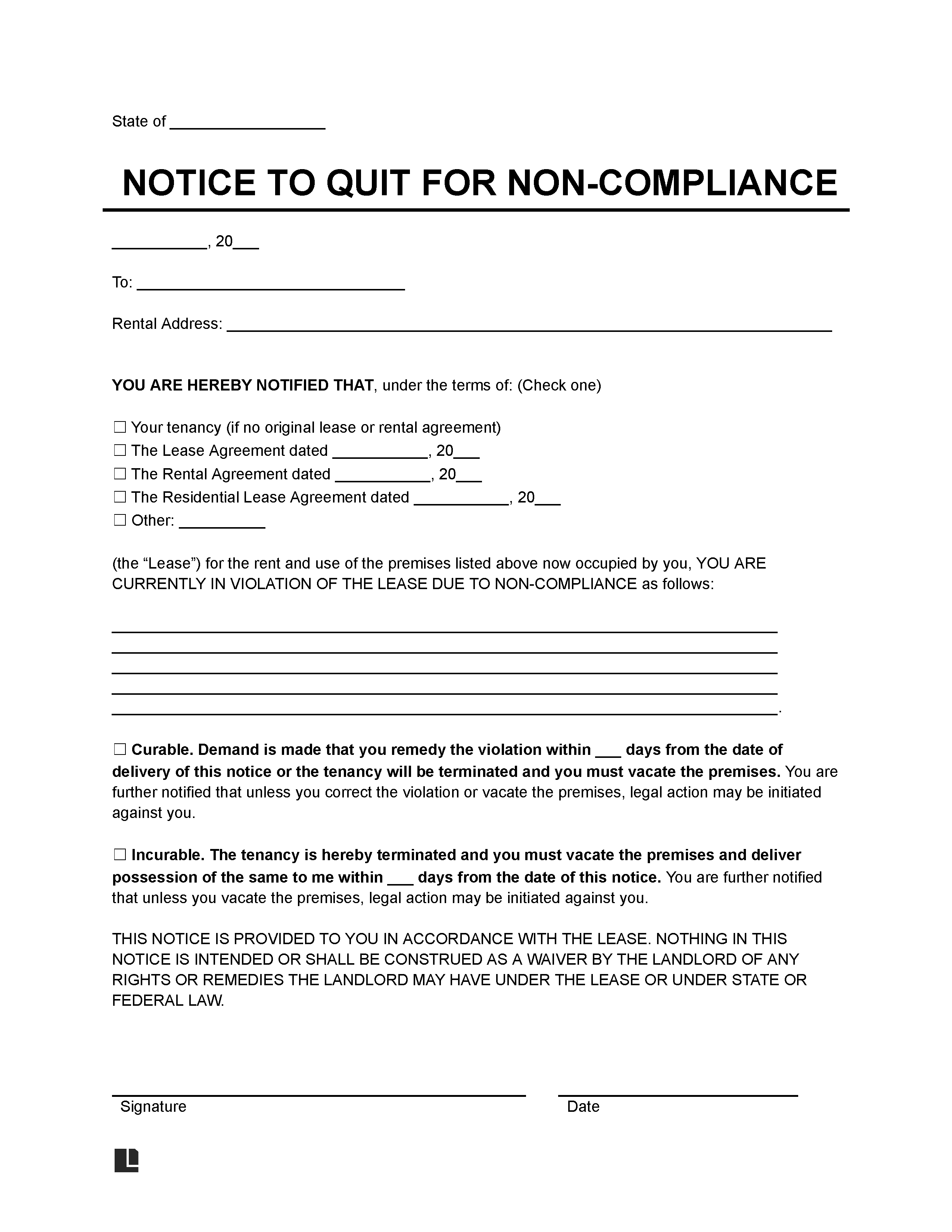
Sample Lease Violation Letter
View an example of our lease violation notice template to see how to inform a tenant of a lease breach, including a summary of the breach and whether the tenant has time to correct it. Fill out our notice of lease violation template and download a copy in PDF or Word.