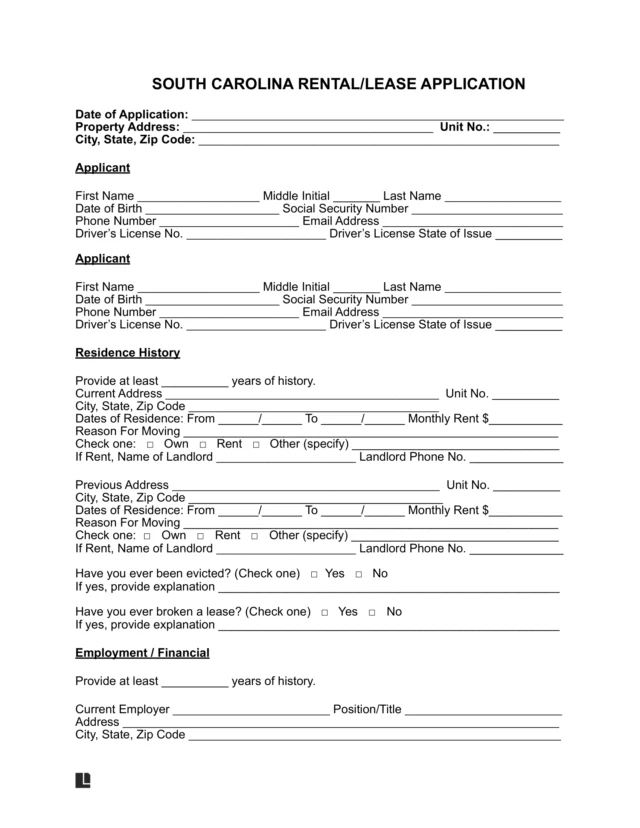
What Is a South Carolina Lease Agreement?
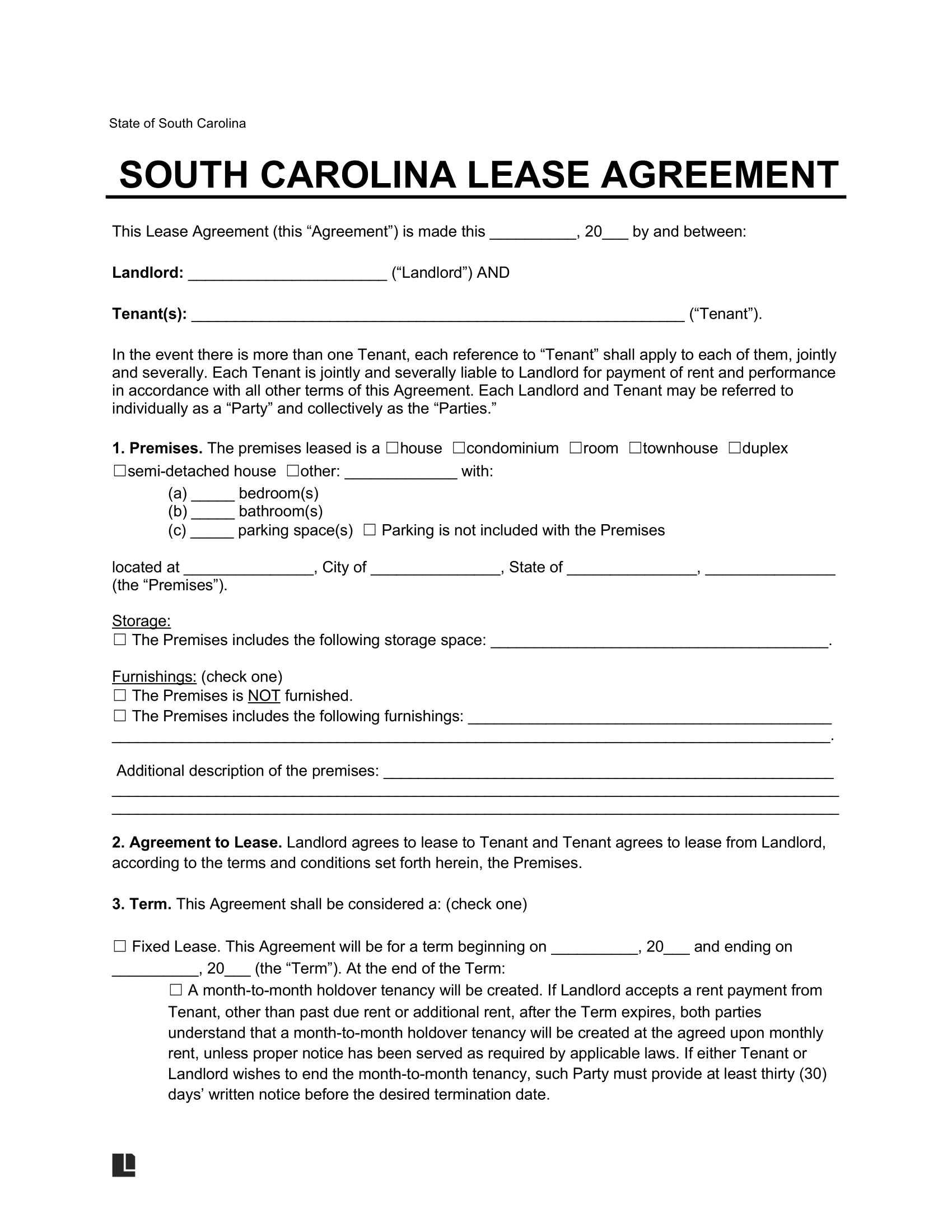
A South Carolina lease agreement is a contract between the landlord and tenant. This document defines the duties and rights of both parties. It must also detail rent, fees, deposits, maintenance, and terminations.
Use Legal Templates’s free South Carolina lease agreements for a proper contract. Our easy-to-use templates offer binding and compliant terms.
South Carolina Landlord-Tenant Laws
In South Carolina, landlord-tenant laws aim to protect the parties involved in a lease. These regulations can influence the terms of the lease. View the table below for an overview of the most relevant lease laws in South Carolina.
| Topic | Rules | Statutes |
|---|---|---|
| Rent Control | Not permitted | SC Code § 27-40-310 |
| Security Deposits | No maximums | None |
| Late Fees | No maximums, but must be included in the lease terms | None |
| Grace Period | 5 days after rent due date | SC Code § 27-40-710(B) |
| Landlord Entry | At least 24 hours' notice | SC Code § 27-40-530(a) |
South Carolina Lease Agreements – By Type
A lease agreement may also vary depending on the desired duration and purpose of the tenancy. South Carolina residential, commercial, and short-term leases include specific provisions and formatting. Consider the various types of leases to determine which one best suits your needs.
South Carolina Standard Lease Agreement
Establishes occupancy rights for a property.
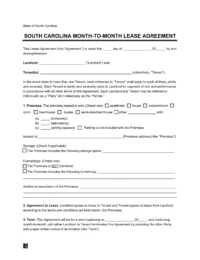
South Carolina Month-to-Month Rental Agreement
Lets a landlord rent their property to a tenant for a month at a time.
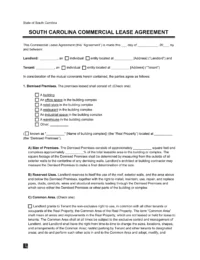
South Carolina Commercial Lease Agreement
Focuses on renting spaces for office or retail purposes.
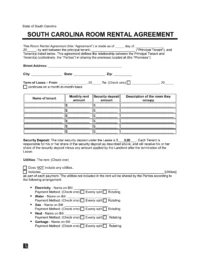
South Carolina Room Rental Agreement
Documents conditions and rules set by a landlord for a tenant's use and maintenance of a rented room.
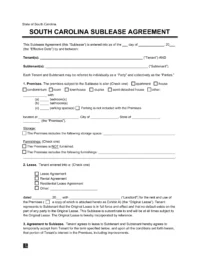
South Carolina Sublease Agreement
Lets a tenant rent their leased property to a subtenant for a specific period.
South Carolina Rent-to-Own Lease Agreement
Contains a delayed purchase option within the lease.
Rent Payment Regulations in South Carolina
In South Carolina, rent is due on the first of each month, unless the lease agreement states otherwise. The state does not allow rent control laws; however, landlords must always act in good faith, including providing reasonable notice for rent increases.
Additionally, the state has no maximums for late fees. Any fees must be stated in the lease terms. For unpaid rent, landlords must provide a grace period of five days after the due date. After this grace period, the landlord has the right to issue a 5-day notice to quit for nonpayment of rent.
South Carolina Security Deposit Rules
Security deposits in South Carolina have no limit; however, landlords should remain reasonable and act in good faith. There are also no regulations for holding the deposit, providing receipts, or collecting interest.
At the end of the lease term, the deposit must be returned to the tenant within 30 days of the end date. Landlords can also deduct funds from the security deposit to cover unpaid rent or damages caused by the tenant. These deductions require a written and itemized statement for each cost.
Landlord Entry and Repairs in South Carolina
When the landlord needs to enter the rental unit, they must provide at least 24 hours’ notice to enter and should plan to enter at a reasonable time, generally between the hours of 8:00 a.m. and 8:00 p.m. No notice is required for emergencies, scheduled services, or services requested by the tenant, but the landlord should still announce their intent to enter if it is possible to do so
Additionally, the landlord and tenant share responsibility for property maintenance and repairs. Landlords must maintain common areas, provide running water and hot water, and meet housing and building codes. In turn, the tenant must keep their dwelling unit in a safe and clean condition.
Terminating a South Carolina Lease
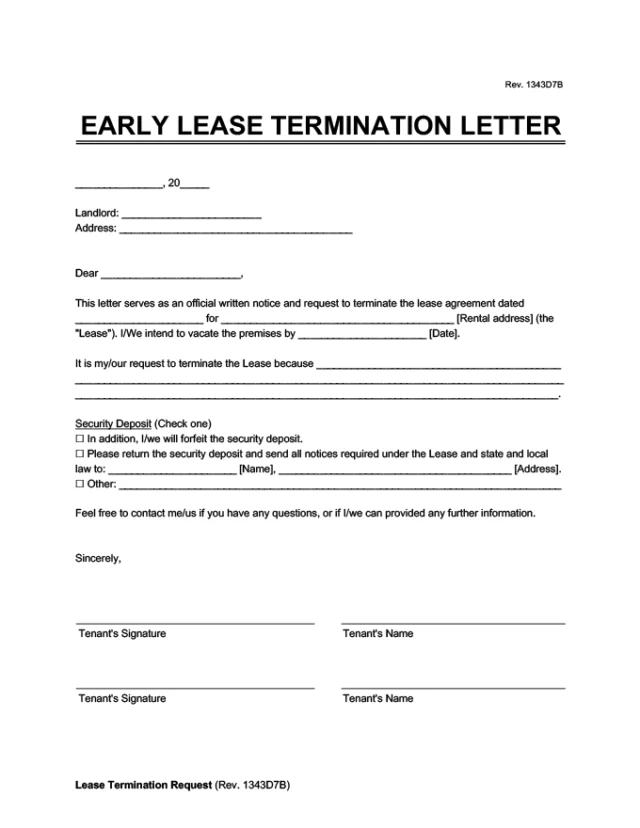
When either party wishes to terminate the contract, they must follow the procedures in the lease. For a month-to-month tenancy, South Carolina requires a 30-day notice of termination. Week-to-week agreements can also be ended with 7 days’ notice.
If a landlord places personal property belonging to a tenant who was evicted on a public street or highway, the appropriate county or municipal officials should remove it within 48 hours. If the property is located in a county that doesn’t collect trash from public streets, the landlord may remove the personal property from the premises after 48 hours and dispose of it in accordance with the city or county’s standard procedures.
Sample South Carolina Lease Agreement
Legal Templates offers free South Carolina lease agreement forms with customizable and compliant terms. Use our downloadable templates, available in PDF and Word formats, to create your own agreement.