What Is a Short-Term (Vacation) Rental Agreement?
A short-term (vacation) rental agreement outlines rental terms and conditions for short tenancies. You (the landlord) and the tenant (or “guest”) agree to follow the established terms while the tenant occupies the property. The typical rental period is between one and 30 days, but it may last as long as six months. Check your jurisdiction to see what it defines as a short-term rental period.
A vacation rental contract is similar to a standard residential lease, but outlines terms specific to short-term stays. For example, it covers rules, check-in times, cleaning fees, and guest limits.
Short-term rental contracts are not the same as month-to-month or week-to-week leases. The latter two are periodic, meaning they renew each period. They only end when one party issues proper notice under state law. Short-term rental contracts are one-time arrangements, often associated with tourism.
Who Needs a Short-Term Rental Agreement?
Anyone planning to rent a property for a short time can benefit from a short-term vacation rental agreement. This includes Airbnb and Vrbo hosts and homeowners looking to rent their property.
Vacation property owners can use this agreement to rent to travelers on vacation or work trips. This allows them to take advantage of the high demand in tourist or business areas.
Other homeowners may use short-term agreements to let prospective buyers temporarily stay in their homes. Under this arrangement, tenants can experience what it’s like to live in the property, helping the homeowner close a sale.
What If I Don’t Use a Short-Term Rental Agreement?
Without a short-term rental agreement, you lack protection when allowing tenants to stay on your property. There won’t be precise term dates, so tenants may overstay their welcome. Plus, tenants won’t have clear rules to follow, creating a risk of property damage and increased maintenance.
A temporary rental contract establishes consequences for destructive behavior or other lease violations, offering you legal protection if something goes wrong. When you create a short-term rental agreement with Legal Templates, you can easily define the terms of each rental.
Tailor each agreement for different tenants and properties so you can host multiple guests over days, weeks, or months. With this contract in place, you can enforce your terms and help an ever-changing lineup of guests understand their obligations.
Do I Need to Register My Short-Term Rental?
Before you write a short-term rental agreement, you must understand the requirements for registering it. Short-term rental regulations vary depending on your property’s location. For example, San Francisco requires vacation rental owners to register their hosting business with the Treasurer & Tax Collector’s Office and the Office of Short-Term Rentals (City and County of San Francisco).
When registering a rental, ensure you meet the requirements in your area. Before renting your property on a short-term basis, you may need to:
- Live on the property for a certain amount of time
- Be a permanent resident of the city
- Plan to live on the property for a certain number of days per year
- Be an owner or tenant
If you must register your short-term rental, you may also need to apply for a short-term rental license and pay licensing fees. Ensure you follow zoning and residency laws concerning where short-term rentals are allowed and who may operate them. Depending on your city’s rules, you may also need to get a business license. If you’re operating your rental as a business, consider forming an LLC to register appropriately and reap tax benefits.
Paying Taxes Associated With a Short-Term Rental
Regardless of whether you have to register your property, you must plan to pay relevant taxes, including sales tax and transient occupancy tax.
How to Write a Short-Term Rental Agreement
A short-term lease agreement helps establish arrangements with guests and increases your rental business’s efficiency. Follow these steps to write a legally sound contract and host your guests with confidence.
1. Identify the Landlord & Tenant
Your short-term rental agreement should clearly identify you as the property’s host. Local laws may impose residency requirements or make short-term rentals through parties other than the owner illegal, so keep that in mind when drafting your contract.
You must also list the primary tenant’s name. Clarify if any other guests will stay with the primary tenant. If so, state their ages and relationship to the primary tenant. Including all guests helps you, as the host, comply with maximum occupancy laws and manage liability.
2. Describe the Property
Describe the rental property to clarify what the tenant will receive. Include the following information:
- Property address
- Property type
- Number of bedrooms and bathrooms
- Common areas
- Parking spots, restrictions, and applicable laws
Short-term vacation rentals are generally fully furnished. List all furnishings and amenities and their condition in your rental agreement. Using our template, you can also cover details to limit liability, including a disclaimer about the dangers of hot tub use and a disclosure about lead-based paint (if applicable to your property).
Our guided form helps you get the right wording to protect your property. We give guidelines for guests to follow if they break any items and help you communicate that they may not remove any furnishings.
3. Define the Rental’s Duration
Your contract should clearly define how long your guests will stay, preferably with specific calendar dates for check-in and check-out. Review local laws before renting your property to see how long a short-term lease can run without becoming a traditional lease. Include check-in procedures and access codes so guests can arrive and leave on time.
Our template lets you easily enter check-in and check-out dates with a drop-down calendar. Plus, you can clarify whether a minimum number of nights’ stay is required to reduce vacancies and increase your revenue potential.
4. Outline House Rules
You can customize a short-term rental agreement per property or per tenant to meet your needs as a landlord. An appropriate agreement outlines your rules for guests to follow. These can include rules pertaining to:
- Smoking
- Amenities usage
- Pets
- Quiet hours
- Garbage disposal
- Bed sheet cleaning
- Guest maintenance responsibilities
If your local area has regulations such as noise ordinances or Homeowners Association (HOA) rules, alert your guests about these as well.
5. Detail the Rent Amount & Deposits
Spell out exactly how much money the tenant will owe in the contract. This includes a reservation deposit, the total rent amount, and the security deposit in case of damage. Using our template, you can record each cost in a separate field and add them to communicate the total payment the guest owes.
Are Security Deposits Required?
Security deposits are more common with longer-term leases, but landlords can still charge security deposits for short-term leases to protect against property damage and deter problematic behavior.
Include additional charges as necessary, such as those for:
- Sales tax
- Rental tax
- Occupancy tax
- Cleaning service fees
- Admin fees
- Pet fees
Also, list the payment methods you accept. This way, the tenant will know if they have to find an alternative method to pay you for their stay.
6. Clarify the Cancellation Policy
A cancellation policy specifies how long a guest has to cancel a reservation and receive a refund on their deposit. Some hosts allow full refunds until a certain date, while others offer partial refunds. Decide what makes sense for your situation, and use our template to record the cancellation and refund details.
You can also address what happens if a sudden and severe weather event (an “act of God”) prevents the guest from staying at the property. Some hosts offer guests a prorated refund for the nights they can’t stay, while some hosts don’t allow refunds at all. Consider the impact of the weather on the client when settling on fair terms.
7. Specify Notice Delivery Methods
Note the delivery method the parties must use for notices, such as property information or eviction notices if the tenant stays beyond their allowed period. Choose from these delivery methods for notices:
- Personally delivered
- Certified or registered mail (with return receipt)
- Overnight courier service
8. Include Confirmation & Check-In Documents
Our short-term rental agreement template includes a rental inspection checklist that summarizes the key steps for the landlord and tenant to follow. You can also include a booking confirmation recapping the arrival/departure dates, guests, rent due, and other fees.
9. Finalize Details
Specify the resolution method you and the tenant will use to handle disputes, whether it’s:
- Court litigation
- Arbitration
- Mediation
- Mediation first, then arbitration
Create clarity by naming the state whose laws will govern the short-term rental contract. Also, list the date both parties will sign and agree to the terms.
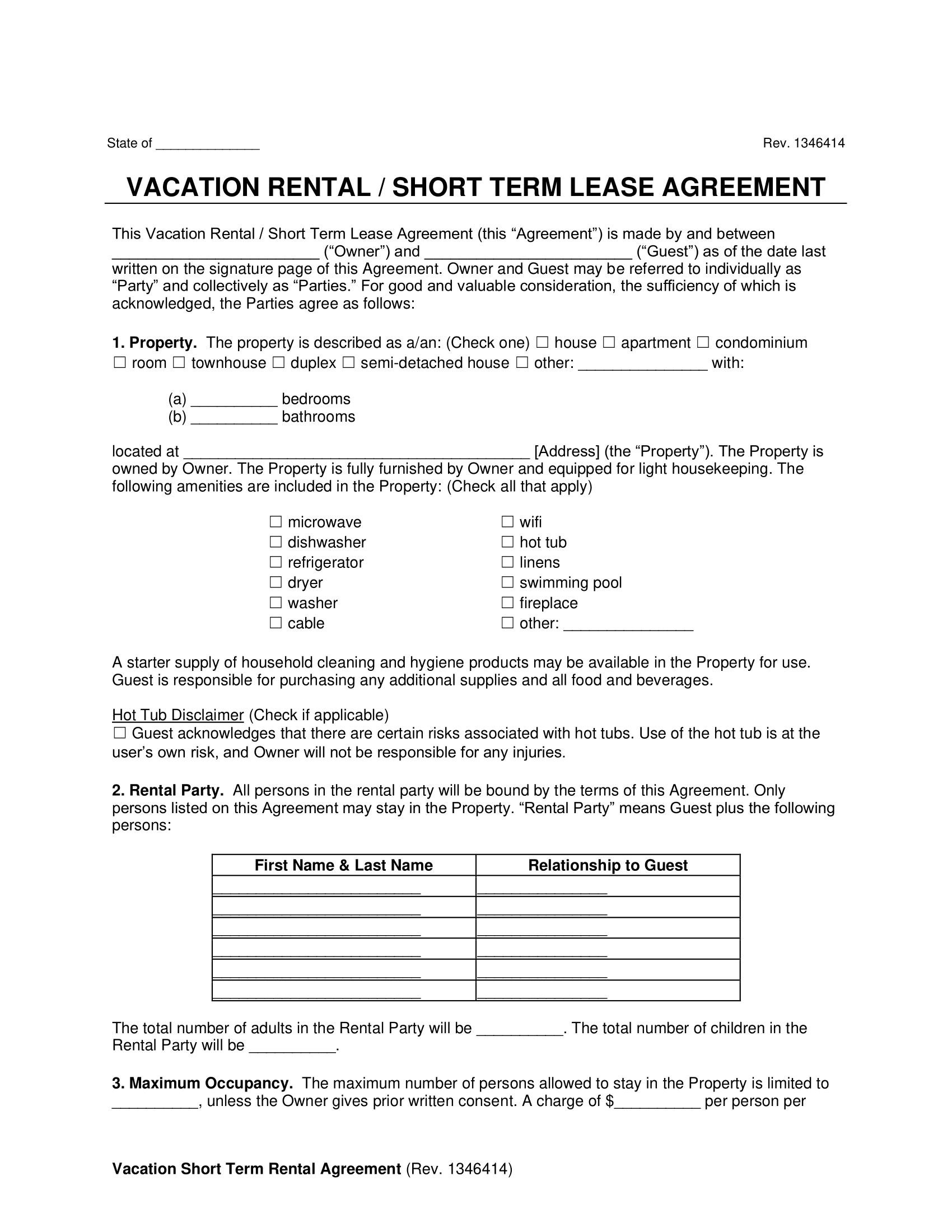
Short-Term (Vacation) Rental Contract Sample
View a short-term (vacation) rental contract sample to understand its format. Then, create your own using our guided form. Available to download in PDF and Word format.