What Is a New York Power of Attorney?
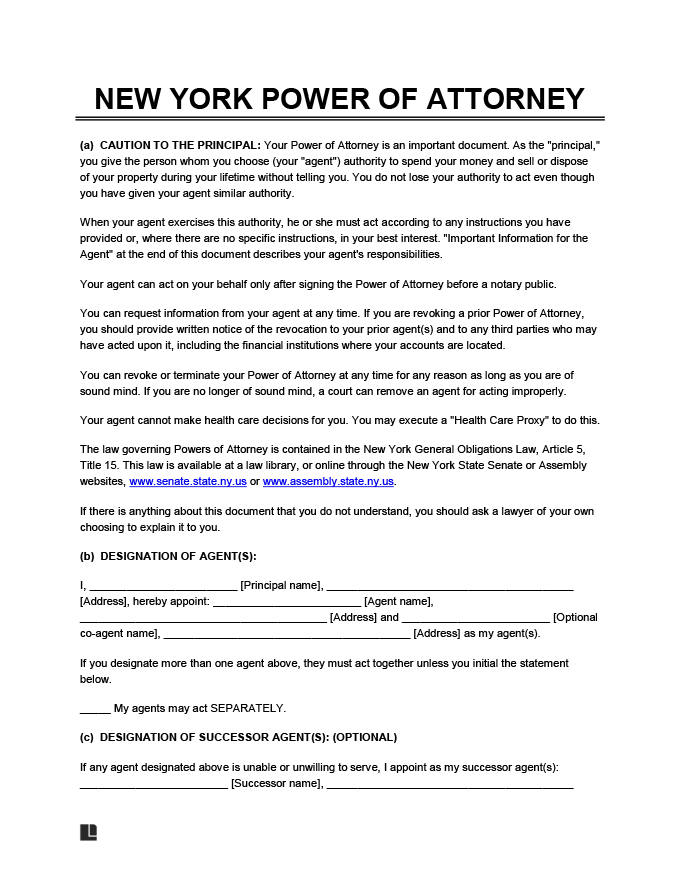
A New York power of attorney allows someone (the “agent”) to act on behalf of another person (the “principal”). The agent can make decisions regarding the principal’s healthcare, finances, or other personal matters. The principal can complete the form to grant or restrict powers as they see fit.
A valid power of attorney in New York must conform to the statutory short form document (NY Gen Oblig L § 5-1513). To write a POA, the principal must be at least 18 and have mental capacity.
Types of Powers of Attorney in New York
Before you write a power of attorney in New York, you should familiarize yourself with the different types. Using the right type can help you better communicate your estate planning goals.
Durable vs. Non-Durable
A durable POA in NY remains intact even if you lose the ability to make decisions due to an injury or illness. However, a non-durable POA becomes ineffective if you develop an incapacity. A non-durable POA is only valid as long as you’re mentally competent.
If you don’t specify durability in your NY POA, it’s automatically assumed to be durable (NY Gen Oblig L § 5-1501A). Make sure to clarify whether you want your POA to be durable so there’s no confusion later.
Medical
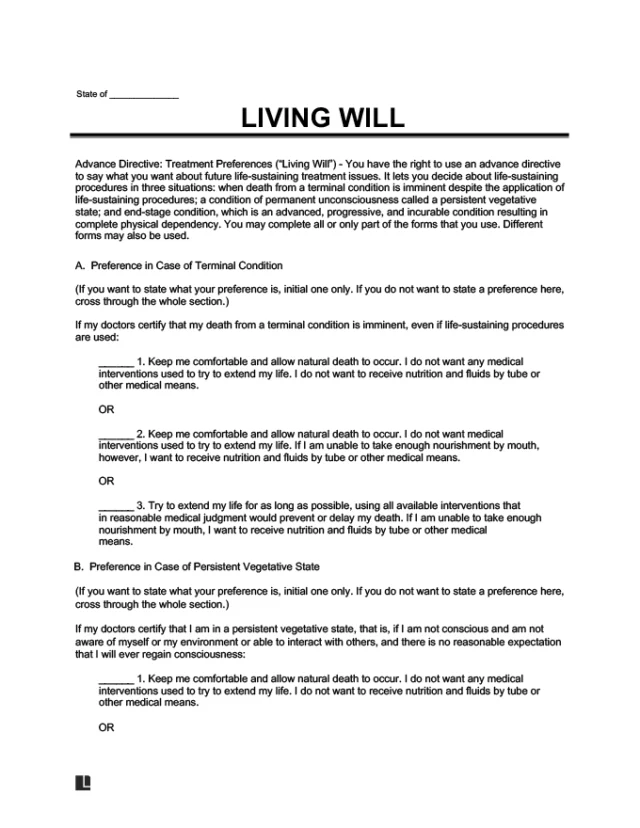
A NY medical power of attorney (also called a health care proxy) lets you appoint an agent to make medical decisions on your behalf. If you’re unconscious, in a vegetative state, or otherwise unable to act, they can make decisions for you regarding:
- Medical treatments
- End-of-life care
- Access to medical records
- Tissue and organ donation
A medical POA in New York is governed under different laws than standard POAs. You can refer to NY Pub Health L § 2981 for the applicable regulations.
Financial
A financial power of attorney in NY State lets the principal permit an agent to take charge of their financial matters. Depending on their wishes, the principal can allow the agent to complete these actions on the principal’s behalf:
- Access bank accounts
- Make investments
- File taxes
- Manage insurance benefits
- Conduct real estate transactions
Durable (Financial)
Allow an agent to act on the behalf of the principal when the principal is deemed mentally or physically incapacitated.
Signing Requirements: Notary public and two witnesses (GOB § 5-1501B).
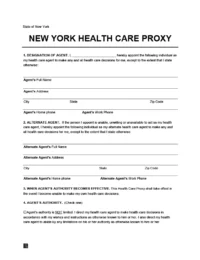
Medical
Describe what medical actions should be taken in the event of a severe illness or incapacitation.
Signing Requirements: Two witnesses. (PBH § 2981(2)).
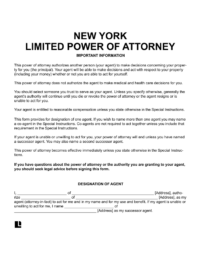
Limited (Special)
Authorize an agent for limited transactions and circumstances.
Signing Requirements: Notary public and two witnesses (GOB § 5-1501B).
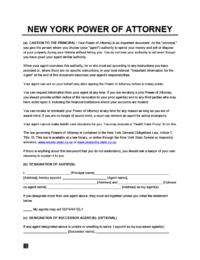
Non-Durable (General)
Give an agent broad powers to handle your affairs. You can grant the authority to do almost any legal act that you can do.
Signing Requirements: Notary public and two witnesses (GOB § 5-1501B).
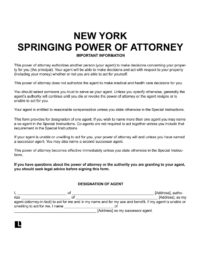
Springing
Comes in effect at a future time and only when a specific event occurs, such as the incapacitation of the principal.
Signing Requirements: Notary public and two witnesses.
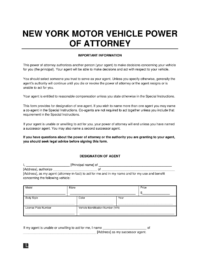
Vehicle
Appoint another individual to take care of your vehicle registration and titling issues.
Signing Requirements: Notary public.
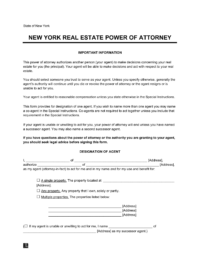
Real Estate
Gives an agent the capacity to handle the principal's real estate transactions.
Signing Requirements: Notary public.
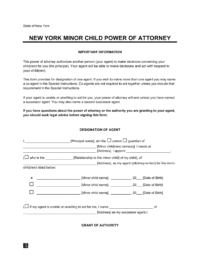
Minor (Child)
Authorizes temporary authorization to someone else for a minor's wellbeing.
Signing Requirements: Notary public.
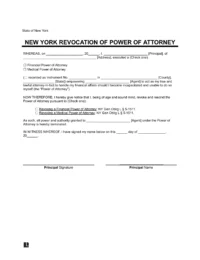
Revocation
Use to nullify an authority given to an agent by an existing power of attorney.
Signing Requirements: Signed by the principal, however notarization is recommended (§ 5-1511).
How to Write a Power of Attorney in New York
A New York state power of attorney form conveys all parties’ information and the principal’s desires. It also contains terms for its effective date and durability. Learn the steps involved in writing one below.
- Name the principal and agent: Provide the principal’s and agent’s names and contact information. Specify whether there will be any co-agents or successor agents.
- Grant powers: Grant or restrict general authority over property, financial affairs, and estate matters. Familiarize yourself with the powers that are excluded from NY POAs (NY Gen Oblig L § 5-1501C). If you want to allow the agent to give gifts of more than $5,000 per year, you can specify this in the POA’s “Modifications” section.
- Establish the effective date: A NY POA goes into effect when the principal’s and the agent’s signatures are acknowledged (NY Gen Oblig L § 5-1501B). If you prefer a different time of effectiveness, state it in the document.
- State the durability: State whether you want the document to be non-durable, as state law indicates that it will be durable by default.
- Sign: The principal and agent must sign the NY POA, but the agent can sign at a different time than the principal.
New York Power of Attorney Legal Requirements and Considerations
Your New York power of attorney must comply with state laws to be valid. Learn about the key requirements below.
Notarization
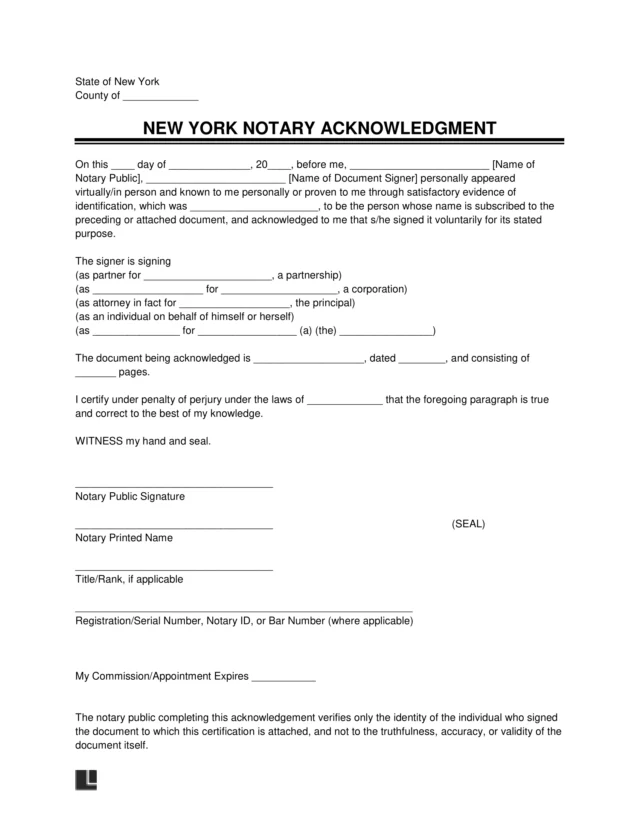
The principal’s and agent’s signatures must be notarized for a power of attorney in New York (NY Gen Oblig L § 5-1513). You can use Legal Templates’s New York notary acknowledgment form to seek acknowledgment from a notary public.
The principal’s signature must also be witnessed by two disinterested witnesses (NY Gen Oblig L § 5-1501B).
Filing
Filing your New York POA is not required unless you’re using it to convey real estate or complete tax matters. Depending on your situation, you may need to record your document with the county clerk where the property resides or with the New York State Department of Taxation and Finance.
Acceptance by Third Parties
Any third party, like a bank, that receives a POA from a principal must accept or reject the POA within 10 business days (NY Gen Oblig L § 5-1504). Any third party must have a valid reason to reject a POA.
Revocation
Per NY Gen Oblig L § 5-1511, a NY POA becomes invalid when any of the following actions occur:
- The principal dies
- The principal becomes incapacitated (for non-durable POAs only)
- The principal revokes the POA
- The principal revokes their agent’s authority, and there are no other agents available
- The agent dies, resigns, or becomes incapacitated, and there are no other agents available
- The agent’s authority terminates, and there are no other agents available
- The POA’s purpose is accomplished
- A court order revokes the POA (as provided in NY Gen Oblig L § 5-1510 or in NY Ment Hygiene L § 81.29)