What Is a Pregnancy Verification Letter?
A pregnancy verification letter is an official document that shows proof of pregnancy. A healthcare professional writes the letter after confirming the pregnancy. They also sign it to make it official.
The letter may include the pregnant individual’s name, expected due date, or other basic details. It is often needed for work, insurance, government programs, or other official matters.
When Do You Need a Pregnancy Verification Letter?
A pregnancy verification letter is often required in the following situations:
Health Insurance
Your insurance company may require proof before they cover prenatal visits. Without a proof of pregnancy letter from a doctor, claims may be delayed or denied.
Employment
Employers often ask for written confirmation of pregnancy to approve maternity leave under the Family and Medical Leave Act (29 US Code § 2612). A letter may also be needed to adjust work duties, such as limiting heavy lifting.
Prepare for the Birth of a Child
Use Legal Templates’s maternity letter of intent to request a leave of absence for childbirth and the first few weeks of your child’s life.
Government Programs
Programs like Medicaid ask for proof of pregnancy to approve benefits.
Travel and Immigration
Airlines might need a doctor’s note to confirm you can fly safely in late pregnancy. Immigration offices may also ask for proof when you apply for a visa or residency.
Traveling With a Minor?
If you’re traveling with a newborn, you may need a doctor’s letter clearing them for travel. Read about other key travel documents for minors in our comprehensive guide.
Legal Cases
Courts may require proof of pregnancy in cases about paternity, custody, or parental rights. A letter helps provide clear evidence.
Who Can Issue a Pregnancy Verification Letter?
Only certain professionals are allowed to write a pregnancy verification letter. To make sure your letter is accepted, you can request it from one of the following individuals or entities:
- Licensed physician: You can request the letter from your primary doctor or OB-GYN.
- Nurse practitioner or physical assistant: These licensed professionals can confirm pregnancy and issue letters in many states. They are a good option if you see them regularly for prenatal care.
- Midwife: In some states, certified midwives can issue pregnancy verification letters. For example, Texas law recognizes licensed midwives under Texas Health and Safety Code § 203.002.
- Clinics: Community health centers and organizations such as Planned Parenthood often provide pregnancy verification letters. These can be helpful if you do not have a regular doctor.
What Should Be Included in a Pregnancy Verification Letter?
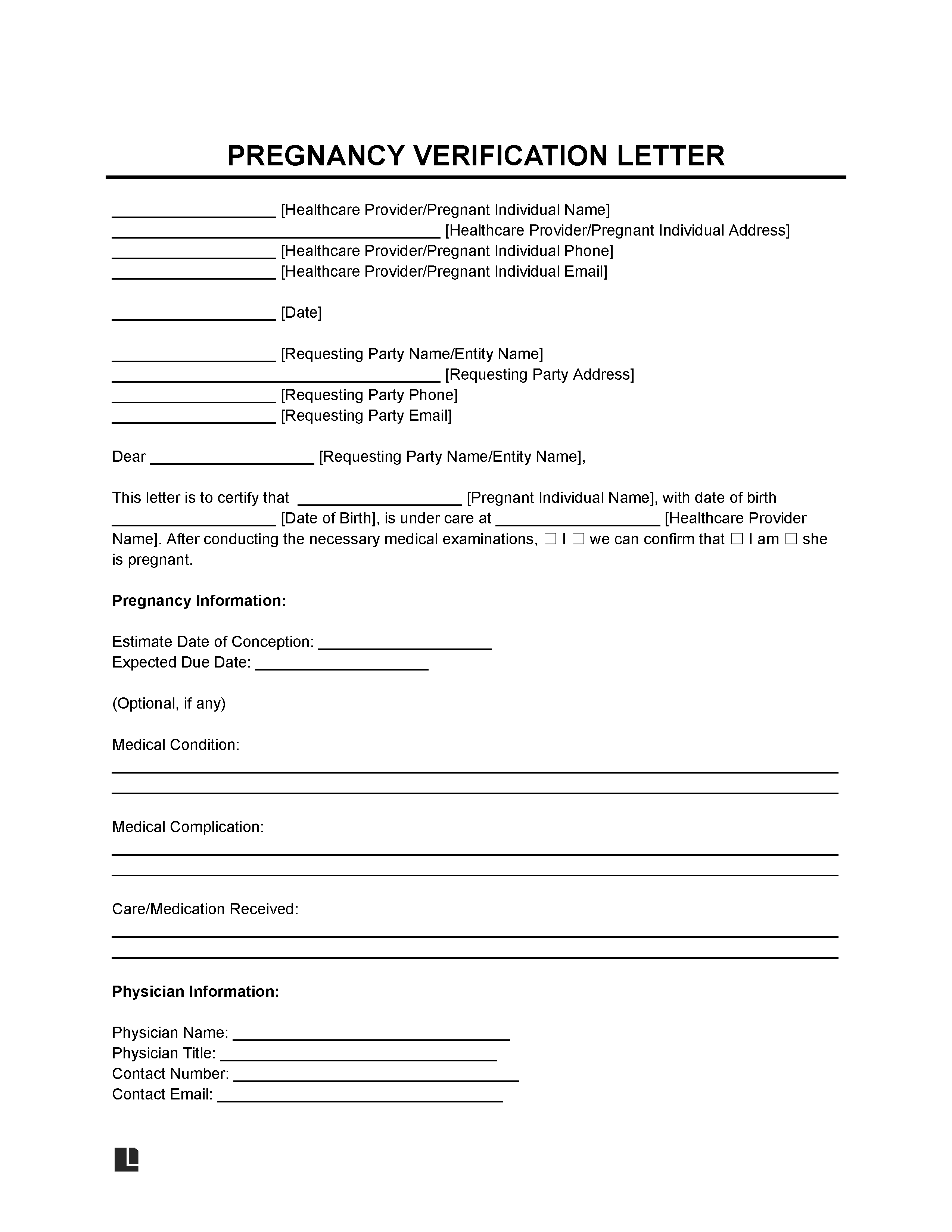
For a pregnancy verification letter to be accepted, it must cover a few key details. These details make the letter official and easy to verify. Here’s what a pregnancy verification letter should include:
Pregnant Individual Information
The pregnant individual’s full name and date of birth should be written down to confirm who the letter is for.
Requesting Party Information
The name, address, and contact details of the requesting party should then be added. This could be the employer, agency, or organization asking for the confirmation letter.
Pregnancy Information
The estimated date of conception and expected due date should be clearly recorded. In some cases, the letter can include medical conditions, complications, or medicines the pregnant person takes.
Healthcare Provider Information
Include the provider’s name, title, and contact information. It allows the organization receiving the letter to verify its authenticity.
Authorization and Signature
The pregnancy verification letter should include the healthcare provider’s signature and date. Under HIPAA, some situations may require the patient’s consent to release these records.
How to Get a Pregnancy Verification Letter
The letter must come from a licensed healthcare provider or a clinic. There are several ways to obtain a pregnancy verification letter, such as:
- Request during a prenatal visit: Most people request the letter at a regular checkup. The doctor or OB-GYN can confirm the pregnancy and prepare the letter immediately.
- Contact a clinic: Some people do not have a regular doctor. In that case, a community health center or Planned Parenthood can help. After an exam, they can provide a pregnancy verification letter.
- Follow state program rules: Some states may require official forms instead of letters. For example, Texas Medicaid uses Form H3037 to verify pregnancy for benefits. Always check program guidelines to ensure the correct form is submitted.
Sample Pregnancy Verification Letter
View our sample pregnancy verification letter template to see how it is filled out and what details to include. Follow our step-by-step questionnaire to customize your document and download your free pregnancy verification letter in PDF or Word format.