What Is a 7-Day Eviction Notice?
A 7-day eviction notice is a written notice landlords can give tenants before filing an eviction case in court. This notice informs the tenant that they must:
- Pay overdue rent
- Fix a lease violation
- Move out within seven days
Essentially, this notice provides the tenant an opportunity to resolve the issue and avoid further legal action. If the tenant does not comply before the deadline, the landlord may proceed with formal eviction.
Note that state law determines when landlords can use a 7-day notice. While some states allow landlords to use this notice for unpaid rent or lease violations, others permit a 7-day notice to end a week-to-week tenancy or address serious misconduct. Depending on your jurisdiction and the severity of the issue, tenants may be allowed to correct the issue and remain in the rental property. In other cases, tenants moving out is the only solution.
When to Use a 7-Day Notice to Vacate
Whether a landlord can use a 7-day notice to vacate depends on state law. Before serving a notice, review your state’s landlord-tenant laws to confirm that a 7-day notice is appropriate. Your state may have a required notice period depending on the situation. Here are some common situations where using a 7-day notice may be appropriate:
Rent or Lease Issues the Tenant Can Fix
Some states allow tenants to fix a “cure” for a lease violation and remain in the rental property. Common violations where this may apply include:
- Nonpayment of rent
- Unauthorized occupants
- Unauthorized pets
- Failing to maintain the rental property
- Minor lease violations (e.g, violating noise rules, improper disposal of trash)
- Health or safety issues that can be corrected
For example, under AL Code § 35-9A-421, landlords may provide tenants with a seven-business-day notice period to remedy certain lease violations or unpaid rent.
Serious Violations That May End the Lease
Certain violations are serious enough to warrant lease termination without giving the tenant an opportunity to fix them. These are known as non-curable violations and may include:
- Repeated violations of the lease agreement
- Serious property damage that goes beyond normal wear and tear
- Criminal activity
- Any conduct that threatens the health and safety of others
Under FL Stat § 83.56, landlords may terminate a tenancy with a 7-day notice without an opportunity to cure for certain repeat or serious violations.
In some states, landlords can use a 7-day notice to end a week-to-week rental arrangement. Unlike notices for unpaid rent or lease violations, this type of notice is not based on tenant misconduct.
States That Allow a 7-Day Eviction Notice
States have different rules for when landlords can use a 7-day eviction notice. Take a look at the table below to learn more about the common situations where a 7-day notice is permitted and whether tenants typically have the opportunity to fix the issue.
| State | When You Can Use a 7-day notice? | Curable? |
|---|---|---|
| Alabama | Lease violation Unpaid rent | Yes |
| Alaska | Unpaid rent | Yes |
| Delaware | Lease violations | Yes (except serious violations) |
| Florida | Lease violations Week-to-week tenancy termination | Yes (except for serious violations) No |
| Illinois | Week-to-week tenancy termination | No |
| Iowa | Lease violations | Yes (unless 2nd violation within 6 months) |
| Kentucky | Unpaid rent | Yes |
| Maine | Lease violations Unpaid rent | Yes Yes |
| Michigan | Unpaid rent | Yes |
| Nebraska | Unpaid rent | Yes |
| New Hampshire | Unpaid rent | Yes |
| New Mexico | Lease violations | Yes (unless it is a 2nd violation within 6 months) |
| North Carolina | Month-to-month tenancy termination | No |
| Ohio | Week-to-week tenancy termination | No |
| Tennessee | Second violation of lease terms in 6 months Unpaid rent twice in 6 months | No No |
How to Serve a 7-Day Notice
You can typically serve a 7-day notice in person, by mail, by posting it at the rental property, or by giving it to another resident. Check your state’s rules, then keep a copy of the notice and proof of delivery.
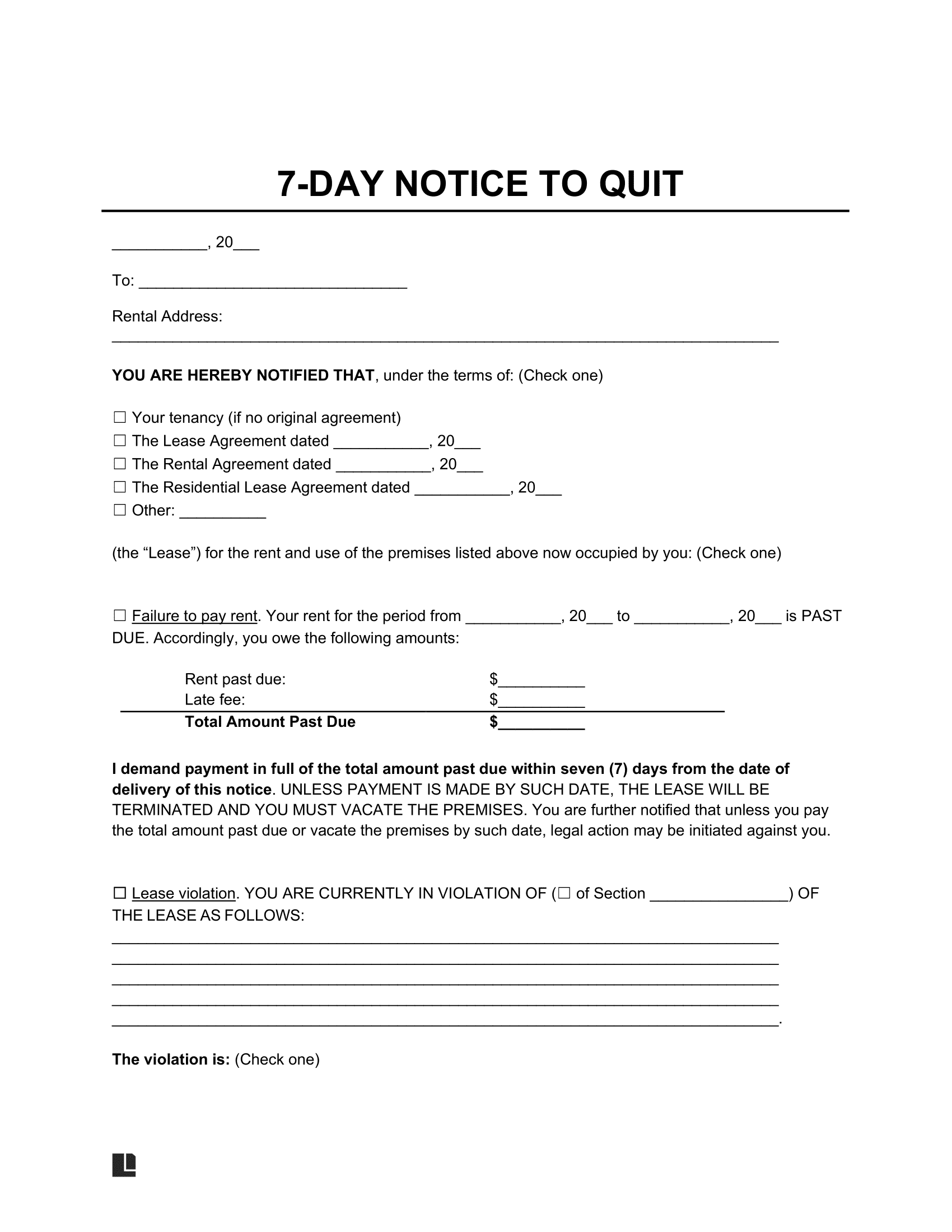
Sample 7-Day Eviction Notice
View a sample 7-day eviction notice template below to see how to properly identify the parties and the reason for the eviction notice. Once you’re ready, use Legal Templates’s step-by-step questionnaire to customize your form and download it in PDF or Word format.
What Happens After a 7-Day Eviction Notice Is Served?
After receiving a 7-day eviction notice, a tenant may pay overdue rent, fix the issue, move out, or take no action. If the tenant resolves the issue within the required timeframe, the landlord may be unable to proceed with the eviction unless the breach is incurable by law. Landlords should wait until the full seven-day notice period has expired before taking any further action.
Note that in some states, accepting rent after serving the 7-day notice may affect the landlord’s ability to proceed with the eviction. For example, under Florida law, landlords who accept rent payments after giving an eviction notice may waive their right to terminate the rental agreement (FL State § 83.56).
If the tenant does not comply with the notice by the deadline, the landlord may file for eviction. Note that landlords cannot legally evict a tenant from the property without a court order.
What If My State Doesn’t Use a 7-Day Eviction Notice?
If your state requires a different notice period, use the appropriate eviction notice for your state. For example, your state may require:
- A 3-day eviction notice for unpaid rent.
- A 10-day or 14-day eviction notice for lease violations.
- A 30-day or 60-day eviction notice to end certain tenancies.
Double-check your state requirements before serving an eviction notice. Using the wrong notice may delay your eviction process.