What Is a Landlord Repair Notice to Tenant?
A landlord repair notice tells the tenant what needs fixing and gives the landlord legal access to make the repair. Tenants in most states have a right to a habitable home, so addressing repairs is part of that obligation. Arkansas is an exception in how it handles habitability, though leases entered into on or after November 1, 2021 are subject to baseline requirements under Act 1052.
Landlords need to keep the unit livable with working heat, water, electricity, plumbing, and ventilation. Courts can still find a unit uninhabitable even when it technically meets code, which raises the stakes. A repair notice helps show the landlord is meeting these repair duties and taking reasonable steps to fix the problem.
When Should Landlords Send a Repair Notice?
Landlords should send a repair notice when:
- They need to enter the unit for repairs or maintenance.
- They want a clear written record of the issue.
- They’re planning major repairs, routine fixes, or contractor visits.
Major repair duties can’t be shifted to the tenant, and habitability can’t be waived. Because of that, landlords are required to handle repairs that affect safety or essential services, or where the premises are in violation of local health and safety codes..
For more on how repair duties are divided, see our guide on tenant and landlord responsibilities.
How Much Notice Do Landlords Need to Give for Repairs?
Most states sit in the same range for repair notice. Key rules include:
- About 24 hours of notice in most states, with some extending that to 48 hours.
- “Reasonable notice” is the general legal standard, which gives landlords some flexibility as long as the timing is fair.
- No notice required for emergencies, especially when the issue affects health or safety.
- Entering without proper notice can count as harassment in some states, including California.
A clear notice protects both sides by showing when and why the landlord needs to enter for repairs. It also helps avoid claims of improper entry and keeps the tenant ready for the visit. When notice follows state rules, repairs move faster and with fewer conflicts.
A repair notice typically satisfies your entry-notice requirement if it includes all required details. If you need a standalone entry notice, use our landlord notice to enter.
What to Include in a Landlord Repair Notice to Tenant
A repair notice should answer the basic questions tenants will have about the work and the entry. These questions help set expectations and keep the repair on schedule. Your notice should answer:
- Who is sending the notice, and who are the tenants? List yourself and all tenants on the lease.
- What is the full property address? Make sure the notice connects to the right unit.
- When will the repair happen? Include the start date, end date, and the time window for entry.
- Have you given the required notice? Confirm that the entry meets your state’s timing rules and any other terms required by the lease agreement.
- What exactly is being repaired? Be specific, especially when the issue involves heat, water, plumbing, electrical systems, pests, or structural concerns.
- Who will enter the unit? Note whether it’s you, maintenance staff, or a contractor.
- Does the tenant need to prepare anything? Tell them if space needs to be cleared or pets secured.
- How can tenants reach you? Provide your phone number and email.
- When was the notice issued? Add the date so there’s a clear record.
These questions make it easy to create a repair notice that tells tenants what to expect before entry. They also help record the key details that show proper notice was given.
How to Deliver a Landlord Repair Notice to Tenant
Send the repair notice in writing so there’s a clear record of what you provided. Keep track of when and how you sent it so the timeline is easy to verify. Save any replies from the tenant about timing, since these help confirm access.
If the issue affects health or safety, reach out right away so the tenant knows the repair can’t wait. These steps show that proper notice was given before entry.
How State Laws Can Change Your Repair Notice
State and local laws don’t treat repairs the same way, and those differences can change what your repair notice needs to cover. Some places set strict timelines, while others define essential services differently or give tenants additional options. Here are the key variations that can affect your notice.
| How State or Local Laws Can Differ | What It Means for Your Repair Notice |
|---|---|
| Stricter local standards | Cities may require higher safety and housing standards, which can shorten your notice timeline. |
| Different essential-service rules | Heat, water, and electricity laws vary by state, which affects how urgent your notice needs to be. |
| Repair-and-deduct options | Some states let tenants fix issues and deduct the cost if they follow required steps. |
| Deadlines for serious issues | Certain hazards must be repaired quickly, sometimes within a defined timeframe. |
| Inspector involvement | Inspectors can order repairs and issue fines if problems aren’t resolved. |
| Different tenant remedies | Options like rent withholding, early move-out, small claims, or reporting issues depend on local law. |
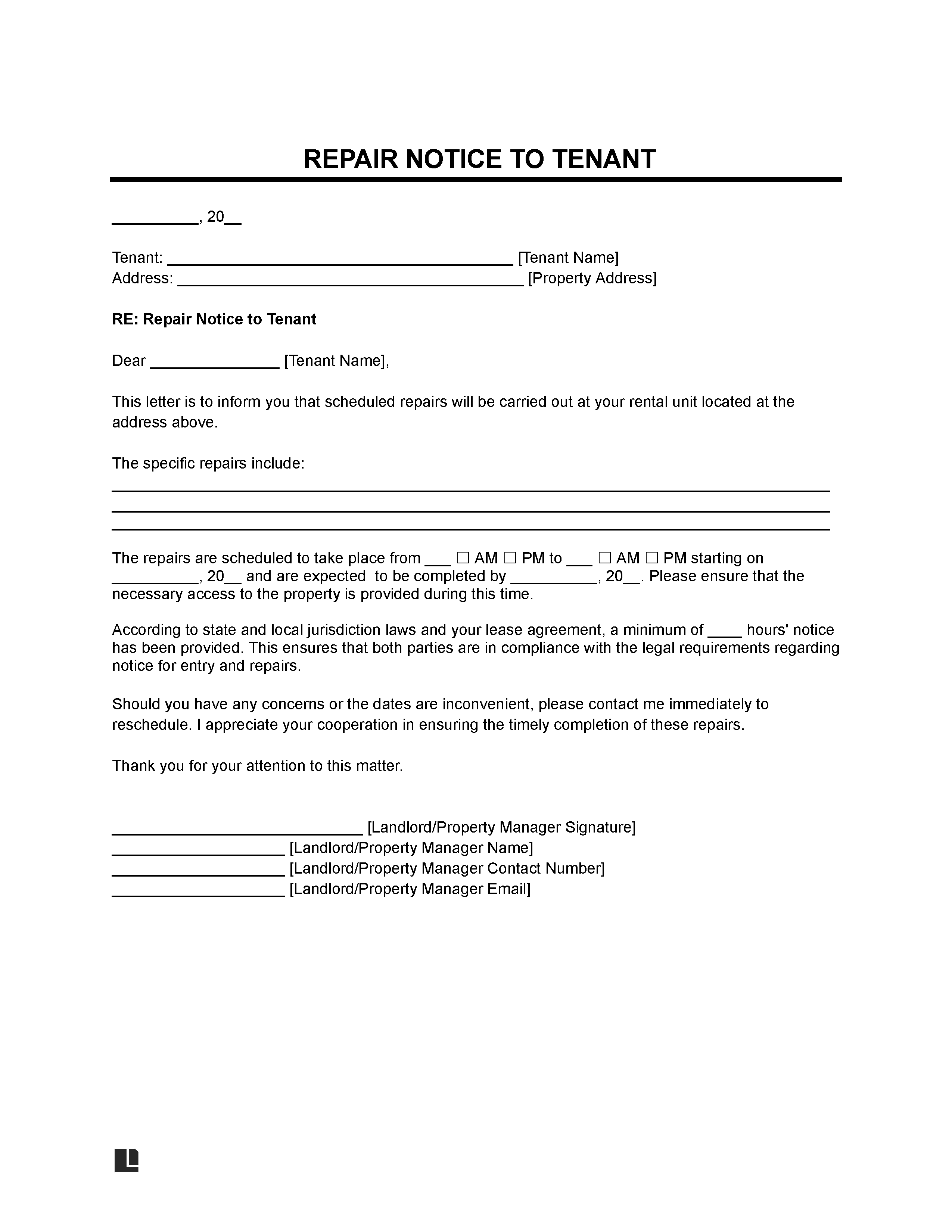
Sample Notice to Tenant for Repairs
Here’s a sample repair notice so you can see how the document is written. After viewing it, you can customize and download your own repair notice using our questionnaire. The final document is available in PDF or Word.