What Is an Investment Letter of Intent (LOI)?
An investment letter of intent (LOI) describes the basic terms of a proposed investment. It usually lists important details such as the investment amount, deal structure, and expected timeline.
Parties often sign an LOI while they’re still negotiating. The deal isn’t final yet, but both sides want to confirm they plan to move forward. The LOI lays out the main terms before lawyers draft the full agreements. Some people call it an “agreement to agree.” It doesn’t complete the investment. It simply outlines the key terms so everyone understands how the deal may work.
Putting these terms in writing also helps catch issues early. If something doesn’t work, both sides can fix it before spending more time and money on detailed contracts.
Investment LOI vs. Term Sheet
These terms are sometimes used interchangeably. In general, an investment LOI gives a high-level outline of a proposed deal, while a term sheet lists the key financial terms in greater detail.
Is an Investment Letter of Intent Legally Binding?
Most investment letters of intent are not legally binding. They describe the proposed terms of an investment but usually do not require either side to complete the deal. However, an LOI can become binding depending on how it’s written and how the parties act after signing it. A court may review the document and the surrounding circumstances to understand what the parties intended. Factors courts may consider include:
- The language used in the document
- Whether the LOI clearly states it is non-binding
- What the parties did after signing the letter
- Any prior business relationship between the parties
Even when most of the LOI is non-binding, some sections may still be enforceable. Confidentiality provisions are a common example. In some cases, an investment LOI may be written as a binding subscription agreement. When that happens, the investor’s commitment cannot be withdrawn unless the company rejects the investment.
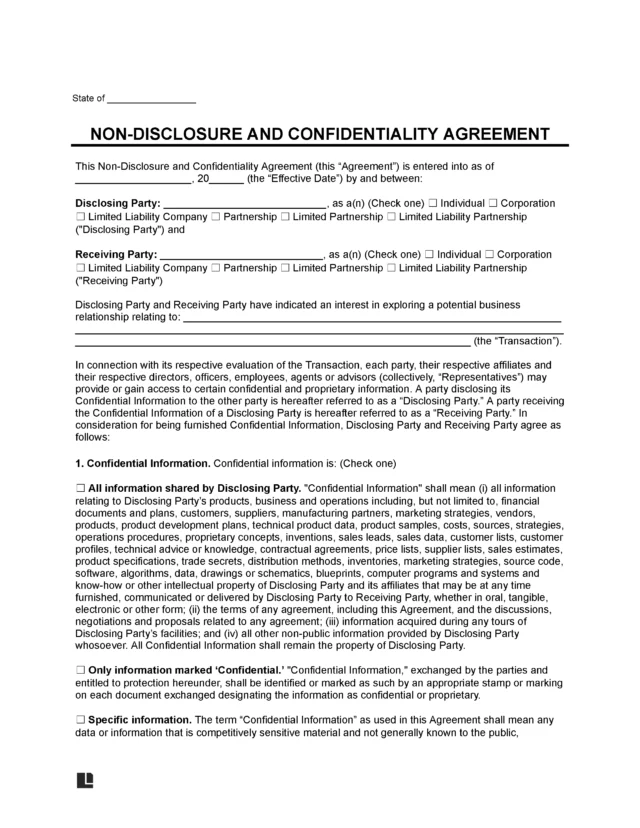
Some investment LOIs include binding confidentiality terms. To protect sensitive information during negotiations, consider using a confidentiality agreement or a non-disclosure agreement (NDA).
When Is an Investment Letter of Intent Used?
An investment letter of intent is usually used early in an investment negotiation. At that point, the parties have discussed the basic structure of the deal but have not created the final contracts. Investment LOIs are commonly used:
- During early negotiations to outline price, structure, and timeline
- Before lawyers draft the final investment agreements
- At the start of due diligence, when investors begin reviewing company records
- In private investments between investors and companies
- In mergers, acquisitions, or joint ventures
- When startup founders raise capital from angel investors, venture capital firms, or private investors
- During private company acquisitions, before drafting the final purchase agreements
The purpose of an investment LOI is to record the key terms before moving to detailed legal contracts. Legal Templates helps you document those terms before the final agreements are prepared.
What to Include in an Investment Letter of Intent
An investment LOI records the key details of a proposed investment. To complete one, you will need information about the investor, the company, and the structure of the deal. Most letters include the:
- Date of the letter
- Investor name (individual or company)
- Company name and registered address
- Type of investment (equity, debt, convertible note, etc.)
- Pre-money valuation
- Total investment amount
- Equity percentage the investor will receive
- Investment structure (shares, convertible note, or other instrument)
- How the investment funds will be used
- Financing contingency (yes or no)
- Board seat rights (yes or no)
- Additional conditions for the investment
- Target closing date
- Key investment team members (name, title, background)
- Company representative receiving the letter
- Delivery method (mail or electronic)
Writing these details down early helps both sides confirm the valuation, ownership stake, and other important terms before preparing the final agreements.
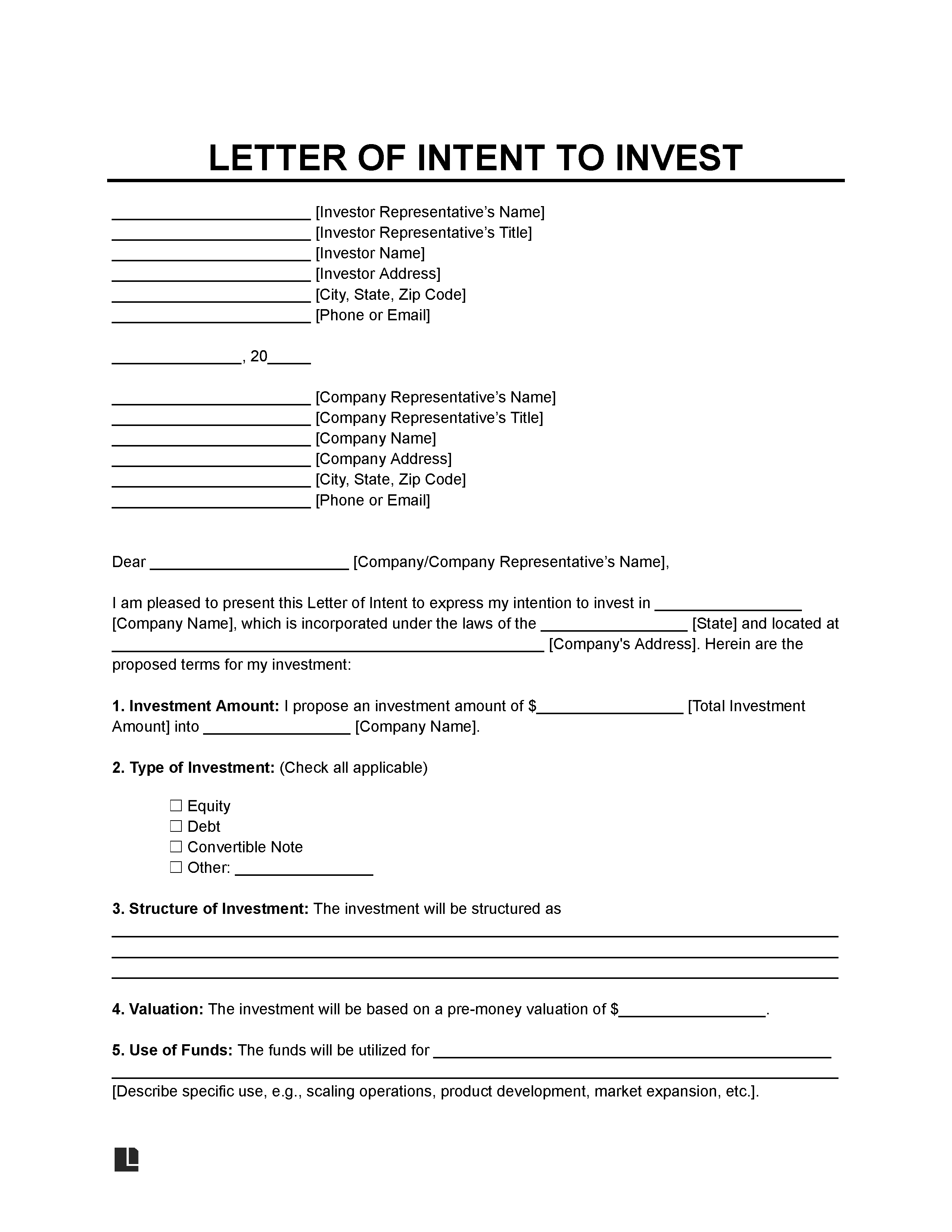
Investment Letter of Intent Sample
Review the sample below to see how an investment LOI is structured. When you’re ready, you can customize the template and download it in Word or PDF format.
What Happens After Signing an Investment LOI?
Signing an LOI does not complete the investment. Instead, it usually moves the deal into due diligence and final contract preparation. What happens next generally depends on whether the parties decide to move forward with the deal.
If the Deal Moves Forward
If both sides decide to proceed, the next steps usually include:
- Due diligence continues or becomes more detailed as the investor reviews financial records, operations, and other business information.
- The parties negotiate and draft the final agreements that document the investment.
- Some terms may change from what appears in the LOI as negotiations continue.
- Conditions in the LOI must be met, such as financing requirements, approvals, or deadlines.
At this stage, the investment LOI itself doesn’t transfer money or ownership. The investment is completed only after the parties sign the final agreements and close the deal.
When a deal moves toward closing, the parties often prepare additional documents. These may include a share (stock) purchase agreement for equity investments and a shareholder agreement describing ownership rights and company governance.
If the Deal Falls Through
Not every LOI leads to a completed investment. If the deal doesn’t move forward, the outcome usually depends on how the letter was written.
- If the LOI is non-binding, each side typically covers its own costs.
- If an investor doesn’t fund the stated amount, they usually aren’t legally required to invest.
- If one party fails to negotiate in good faith, disputes may arise.
- If the deal falls through, outcomes often depend on the wording of the LOI and the jurisdiction involved.
- In some cases, courts have enforced certain LOIs depending on the circumstances.
For these reasons, it’s important to review the terms of the LOI carefully before signing. Even when the letter is mostly non-binding, the wording can still affect how disputes are handled if negotiations break down.