What Is a Business Sale Non-Disclosure Agreement?
A business sale non-disclosure agreement (NDA) is a legally binding contract. It is a type of confidentiality agreement used before or during discussions about the sale of a business. This agreement lets business owners share sensitive information with a potential buyer while keeping it protected.
In simple words, a business sale NDA helps set clear rules for how the buyer can use the information shared. The buyer agrees to:
- Keep the information private
- Only use it to review the possible purchase
This agreement is especially important during early negotiations. During this stage, the seller may need to share:
- Financial records
- Customer or vendor details
- Internal processes or other trade secrets
Courts generally enforce NDAs when they are properly written and signed.
When to Use a Business Sale Non-Disclosure Agreement?
Use a business sale NDA before sharing sensitive information with a potential buyer. It often works alongside other documents, such as a buy-sell agreement or a business purchase agreement.
You should use a business sale NDA to:
- Share private business information with potential buyers. This can include financial records, customer data, and operational data.
- Protect trade secrets. This can reduce the risk of competitors gaining access to valuable information.
- Control how shared data is handled. You can require the buyer to return or destroy documents if the deal falls through.
- Limit who knows about the sale. This way, you can prevent information leaks that could affect the business.
- Screen serious buyers. So you can assess candidates and prevent information from being shared with the wrong people.
You may also need a non-compete agreement for a business sale to prevent competition after the sale.
Sample Business Sale Non-Disclosure Agreement
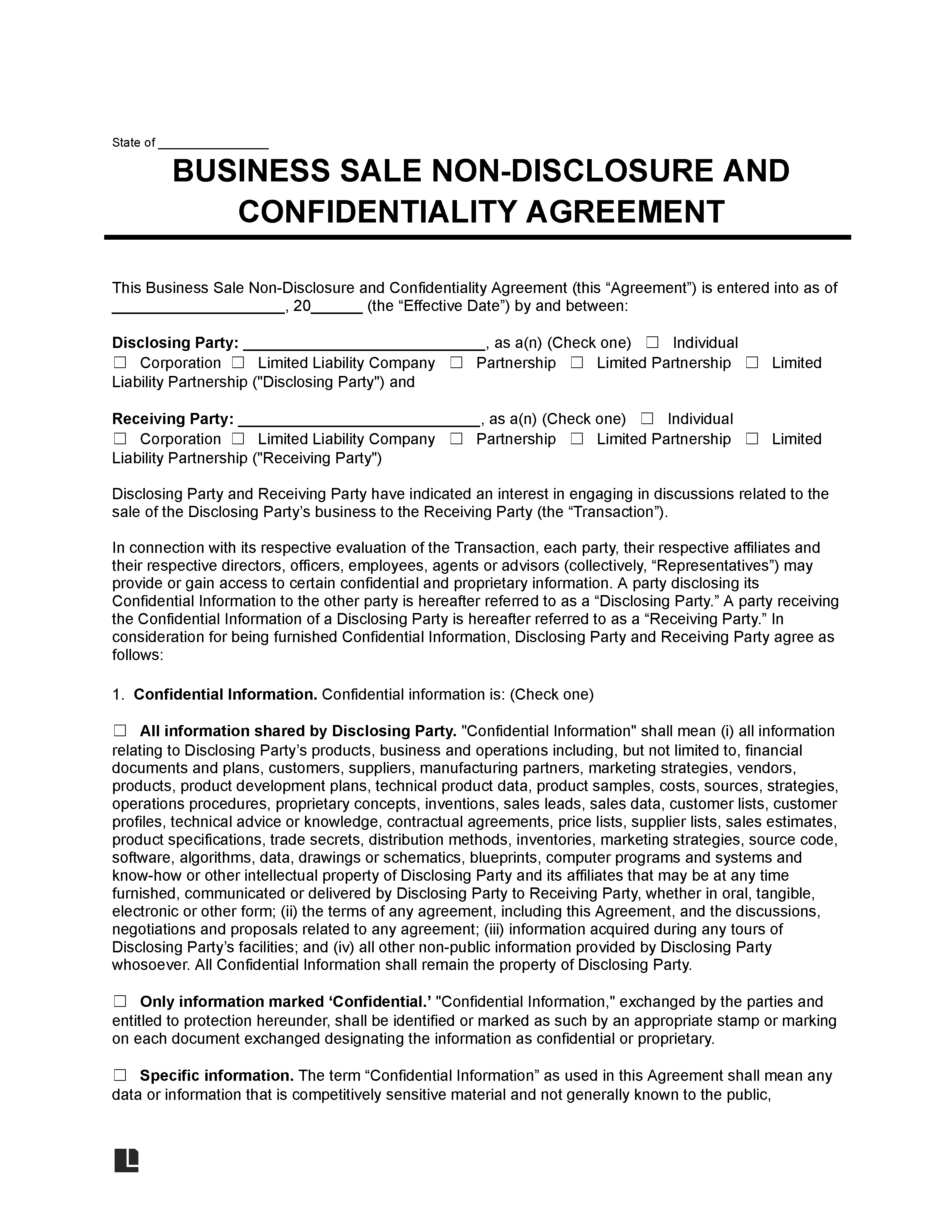
View a sample business sale non-disclosure agreement template below. It shows how to structure your agreement and keep your business information private. When ready, use Legal Templates’s step-by-step questionnaire to complete and download your agreement in PDF or Word format.
What Information Does a Business Sale NDA Protect?
A business sale NDA helps keep business information private during a sale. It often covers the details a buyer reviews before making a decision, such as:
- Financial statements and tax records. Profit-and-loss statements, balance sheets, and other financial data. If you are only sharing financial data, you can also use a financial information non-disclosure agreement.
- Customer and vendor lists: contact details, contracts, and pricing agreements.
- Pricing strategies: pricing models and revenue data.
- Business operations and internal processes: workflows and internal systems.
- Proprietary information: formulas and methods used by the business.
- Employee information: roles, compensation, and other details.
What Does a Business Sale Non-Disclosure Agreement Include?
Here are some key details you should include in your business sale NDAs:
- Parties involved: Identify the disclosing party (the seller) and the receiving party (the potential buyer). You may also include representatives, such as attorneys or advisors.
- Description of the potential sale: State that the parties are discussing a possible sale or transfer of the business. Make sure you state that any shared information is for this purpose only.
- Definition of confidential information: Define what information is protected.
- Exclusions from confidentiality: Clarify what information is not protected. This can include details that are public or already known.
- Permitted use of information: Limit how the buyer can use the information. It should only be used to evaluate the potential purchase, not for personal gain or competition.
- Consequences of breach: Explain what happens if the agreement is broken. For example, possible legal action.
- Term and duration: Set the agreement’s duration. Also specify how long the information should remain confidential.
- Signatures: Include signatures from both parties to make the agreement legally enforceable.
Once you find a serious buyer, you can use a business purchase letter of intent to outline the key terms of the sale.