What Is a Furlough Letter?
A furlough letter explains a period of temporary unpaid leave while the employee stays employed. The employee keeps their job status and often their benefits, which signals that the employer plans to bring them back. Because the employment relationship continues, a furlough isn’t treated the same as a layoff.
Furloughs can involve reduced hours or a full stop to work, depending on what the business needs. They can last for a short stretch or run longer, and the rules differ for hourly and salaried staff under the FLSA. Exempt employees, for example, can’t perform any work during a furlough week.
The letter brings all these details together by outlining the dates, any changes in hours, and what the return will look like. This clarity helps the employee understand what to expect while they’re away and how the transition back will work.
Some benefit plans only keep health coverage active for a limited time during unpaid leave or reduced hours, so a long furlough may cause the coverage to end.
When that happens, employers need to offer COBRA, which lets employees keep their health insurance by paying the full premium. Checking your plan rules helps you write a furlough letter that lines up with the coverage terms.
When to Use a Furlough Letter
A furlough letter works best when the slowdown is temporary, and you expect to bring employees back. It helps manage labor costs without losing trained staff, which is often cheaper than replacing them later. Many businesses turn to furloughs when work drops because of seasonality, supply delays, or general uncertainty.
Furloughs also make it easier to adjust schedules. Hourly workers may need reduced hours or zero-hour weeks, while exempt employees must take full unpaid weeks to meet FLSA rules. Some companies rely on short furloughs during holiday shutdowns or slow periods, and government agencies may use them during funding gaps.
Use a furlough letter when:
- The role will still be needed once work picks up.
- Keeping trained staff costs less than rehiring.
- You need to reduce hours or pause work without ending employment.
A furlough letter ties everything together. It explains the schedule, sets the timeline, and gives employees what they need to prepare during the slowdown. Legal Templates guides you through drafting one that fits your policies.
Part-time, temporary, or contract workers may not qualify for unemployment during a furlough, and the admin work involved can reduce any savings. Furloughing key or specialized employees can also backfire if losing their skills costs more than the short-term cut.
How to Write a Furlough Letter
A strong furlough letter sets the tone for the entire process. It gives employees the facts they need upfront and helps the company document every decision. The steps below walk you through exactly what to include.
- Add the basic details. Start with the date, the company’s full registered name, and the business address. Then add the employee’s full name and home address so the furlough notice is clearly documented.
- State the reason for the furlough. Keep this to a short, factual line that explains why the furlough is happening, such as a slowdown or temporary shutdown.
- Set the furlough period. Note how long the furlough will last and the exact date it begins so the employee has a clear timeline to follow. Some employers rotate furlough days or let employees choose their own dates. For example, Badger Mining allowed employees to pick furlough days that worked around childcare and other needs.
- List the point of contact. Include the full name, email address, and phone number of the person handling furlough questions to give employees a direct place to reach out.
- Identify the sender. Finish with the sender’s full name and job title to confirm who authorized the furlough.
Together, these steps create a letter that’s easy to understand and simple to act on. They also help the company share furlough decisions in a consistent, professional way.
If you’re handling staffing changes or planning for disruptions, these related documents can help keep everything consistent:
- Employment termination letter
- Return to work letter
- Business continuity plan (BCP)
- Emergency action plan
They make it easier to handle each stage of the process with clear, well-structured communication.
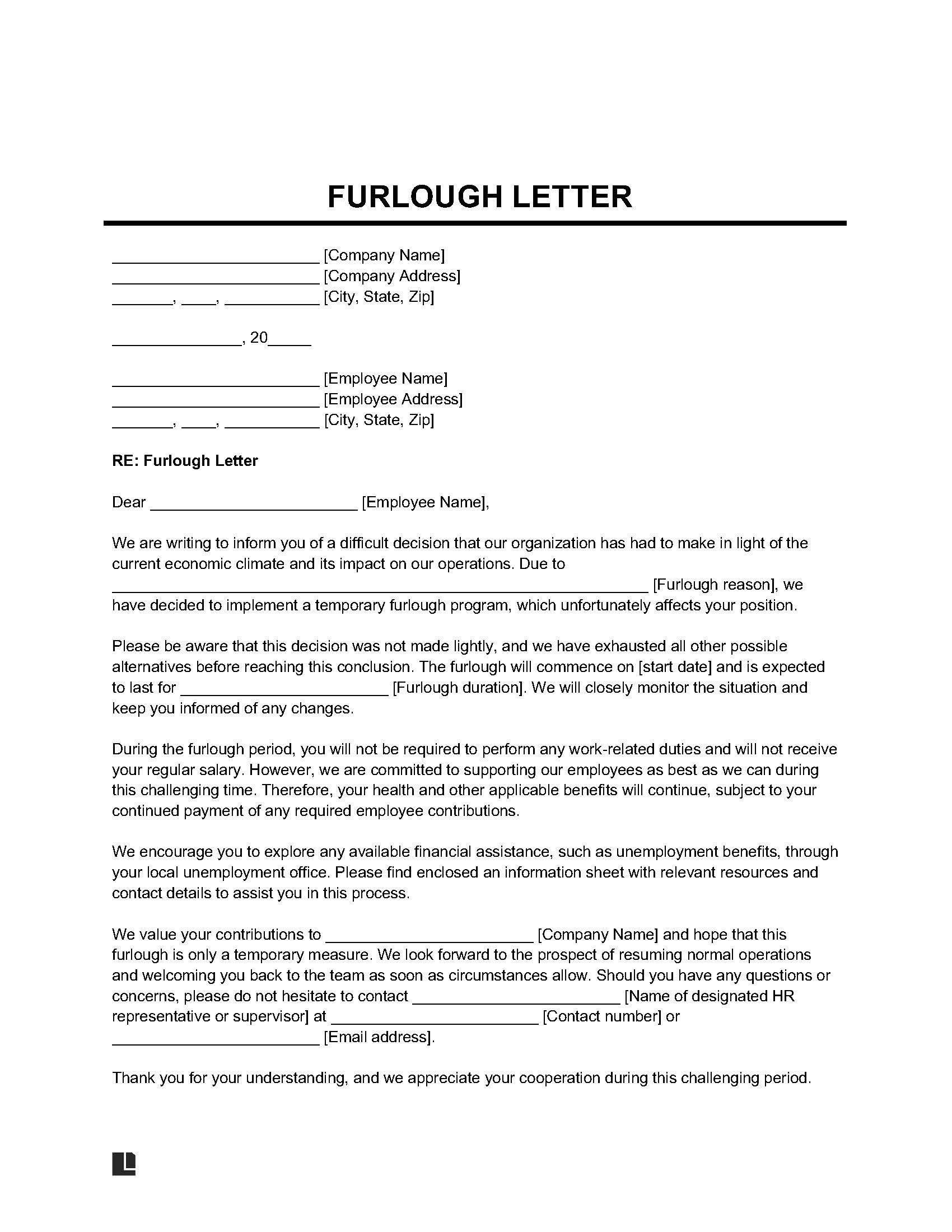
Furlough Letter Sample
This sample furlough letter to employees shows how to put the key details into a clear, simple format. Use it as a guide for your own letter, then customize and download the template in Word or PDF when you’re ready.