Employment Contracts by State
Employment laws differ across states, and those differences can shape how you hire. Some restrict background checks, while others set rules on credit use and references. Knowing your state’s limits helps you write compliant employment contracts.
- Alabama
- Alaska
- Arizona
- Arkansas
- California
- Colorado
- Connecticut
- Delaware
- District of Columbia
- Florida
- Georgia
- Hawaii
- Idaho
- Illinois
- Indiana
- Iowa
- Kansas
- Kentucky
- Louisiana
- Maine
- Maryland
- Massachusetts
- Michigan
- Minnesota
- Mississippi
- Missouri
- Montana
- Nebraska
- Nevada
- New Hampshire
- New Jersey
- New Mexico
- New York
- North Carolina
- North Dakota
- Ohio
- Oklahoma
- Oregon
- Pennsylvania
- Rhode Island
- South Carolina
- South Dakota
- Tennessee
- Texas
- Utah
- Vermont
- Virginia
- Washington
- West Virginia
- Wisconsin
- Wyoming
What Is a Contract of Employment?
An employment contract sets out the terms of employment between an employer and an employee, defining the employment relationship and the employer-employee relationship in a clear written agreement. It usually includes details about the job and how it will be managed over a specific period of time or for the full duration of employment. Most written employment contracts include:
- Job scope, job description, and job duties, plus how the employee will be compensated
- Key conditions that explain the working relationship, hours, employee benefits, and how the agreement may end
An employee job contract can be written or verbal, but having a written employment contract offers stronger legal protection. It clearly defines pay, duties, and expectations, giving both sides support if something changes later. A written contract also builds trust, promotes accountability, and helps maintain fair workplace standards for new hires and new employees. You can create yours quickly with an employment contract template from Legal Templates.
Are Employment Contracts Legally Binding?
Yes. Once both sides sign, the contract becomes legally binding—whether it governs a permanent role, at-will employment, or one of many fixed-term contracts set for a defined amount of time. Both parties must follow the terms and comply with state and federal laws.
Types of Employment Contracts
Employment contracts come in various forms, depending on the job, duration of employment, and whether the role is at-will employment or governed by one of several fixed-term contracts. Knowing the main types helps you choose the right one for your business.
Need an employment contract in Spanish? Use our contrato de trabajo.


Define project-based work for self-employed professionals
Freelance

Hire temporary or seasonal staff, with clear terms on pay and set duration until the contract's end
Fixed-Term

Establish expectations and responsibilities for interns
Internship

Specify duties, rights, and expectations for part-time staff
Part-Time
Detail ongoing employment terms until terminated
Permanent

Assign project tasks to other companies or individuals as an independent contractor
Subcontractor
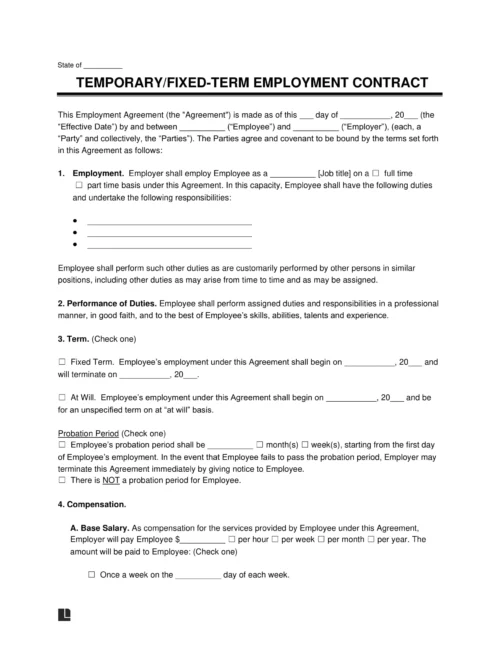
Define short-term employment with a set or flexible end date
Temporary
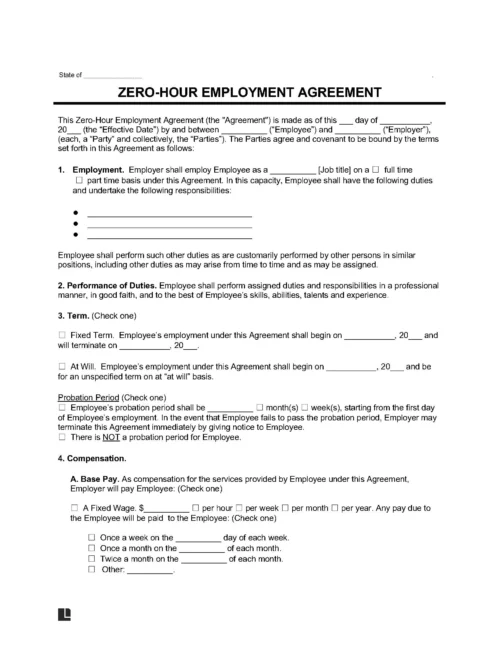
Hire staff without guaranteed working hours
Zero-Hour

Hire an at-will employee that works with no set end date
At-Will
Employment Contracts By Profession
Employment contracts look different across industries. Each profession has its own standards for pay, duties, and terms, so choose a contract that fits your field.
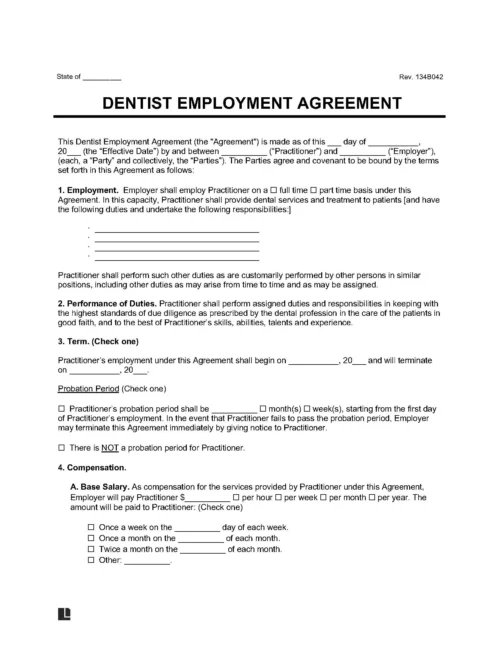
Hire dentists to expand your practice and serve more clients
Dentist
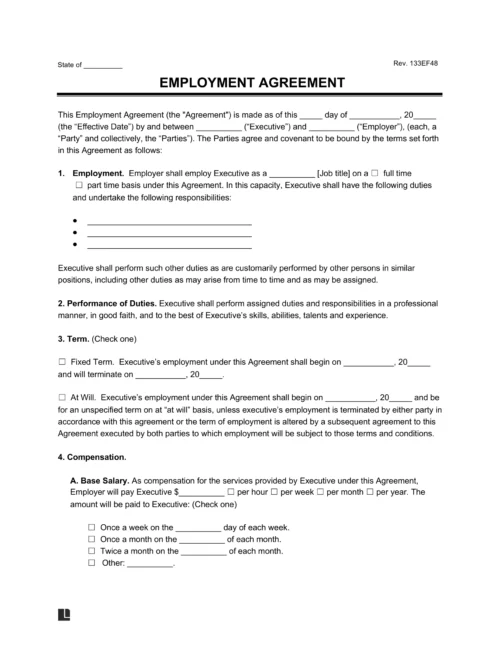
Define executive roles with negotiated terms and expectations
Executive
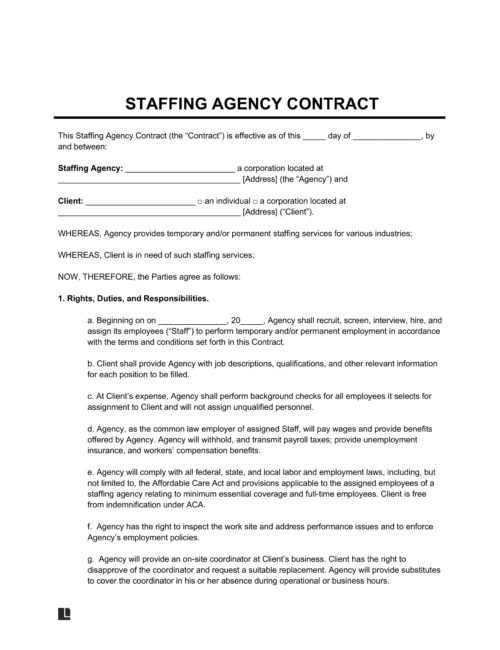
Establish staffing agreements between agencies and companies
Staffing Agency
Other Employment Forms You May Need
Depending on the situation, you may need additional employment forms to cover things like confidentiality, contract work, or ending employment on fair terms.

Restrict competition to safeguard a company’s advantage
Non-Compete Agreement

Protect confidential information by restricting disclosure
Non-Disclosure Agreement

Outline severance terms for pay and benefits after termination
Severance
How to Write an Employment Contract
Build employment contracts that work for both sides. Keep each clause clear and fair so both parties know what to expect. The sections below give you a starting point.
1. Follow Hiring and Discrimination Laws
Federal and state laws outline what employers can ask and promise. These are a few key federal rules that guide fair hiring:
- Civil Rights Act (1964)
- Age Discrimination in Employment Act (1967)
- Pregnancy Discrimination Act (1978)
- Immigration Reform and Control Act (1986)
- Americans with Disabilities Act (1990)
To stay compliant, keep the focus on job skills and performance rather than personal traits. Avoid questions about health, religion, or family plans, and communicate job details clearly from the start. Always be honest about the role and avoid making promises you can’t keep.
Keep in mind, though, that these are just a few examples of how to make sure your employment contracts follow hiring and discrimination laws. Always check the specific federal and state rules that apply to your business before hiring.
2. Handle Background Checks and Privacy Properly
Get written consent before running a background or credit check under the Fair Credit Reporting Act (FCRA). If the report affects your hiring decision, share it and explain the applicant’s rights. Always check state laws first, since some limit how arrest or conviction records can be used. And remember, you can’t reject someone for having a bankruptcy history.
3. Classify Workers Correctly
Confirm whether the worker is an employee or an independent contractor before writing the contract. This choice affects taxes, benefits, and legal rights, so getting it right matters. Independent contractors can bring flexibility and lower costs, but misclassification can create serious legal trouble.
It happens more often than you might think. The National Employment Law Project found that 10-30% of employers misclassify their workers. One case, Chavez-Deremer v. Medical Staffing of America (2025), made the risk clear. A staffing agency was fined $9.3 million for misclassifying over 1,000 nurses. The ruling sent a strong message. Know the rules, get advice early, and avoid taking chances with worker classification.
4. Write Clear, Fair Contracts
Before anything is signed, employers typically issue an offer letter, followed by a formal written employment contract that outlines the agreed-upon probationary period, authority level, and compensation. Then decide whether the job will be at-will, exclusive, or one with specific authority. Taking time to agree on these details early keeps the relationship clear and fair. As you write, make sure to cover key details like:
- Job title, duties, and pay
- Employment type (full-time, part-time, temporary, or permanent)
- Start date and location
- Work schedule and benefits
- Probation period, if there’s a trial phase
- Termination process (for cause, without cause, or due to death or disability)
- Resignation terms (notice period, final pay, or bonus eligibility)
- Non-compete and confidentiality clauses
- Ownership of work or intellectual property
- Dispute resolution steps
- Accommodations for religious or educational reasons
Keep the language simple and fair so both sides know what they’re agreeing to. Otherwise, unclear or one-sided clauses can lead to pay issues, unmet expectations, or even early termination disagreements.
As time passes, roles and regulations can shift, so it’s important to keep contracts current. Review them regularly and make updates when needed. For example, if a remote employee moves to another state, you may have to adjust tax details, pay structure, or work hours to stay compliant.
To simplify the process, download a Legal Templates’ employment contract template. It’ll help you build a fair, professional agreement in a fraction of the time.
Limit non-competes to a reasonable time and scope so they stay enforceable. Courts often reject overly strict terms that restrict future work. In some states, like California, non-compete clauses in employment contracts aren’t enforced at all.
How to Handle Changes in a Contract of Employment
Any change to an employment contract needs approval from both sides. Don’t adjust pay, duties, or hours without mutual consent. If major terms change, offer something in return, like a raise or a new benefit. Sometimes, continued work can count as legal consideration for an agreement, but it’s always safer to confirm any additional benefits in writing.
The process can vary depending on the contract, so check the original terms before making any updates. Once both sides agree, record the change and keep a copy.
Clear records make it easy to see what changed and when. Keeping them organized also goes a long way, and Legal Templates’ employment contract template helps you document updates in a format that’s simple to refer back to later.
Consider using a contract addendum to provide supplemental terms without changing the original contents of an employment agreement.
Employee Benefits, Compensation & Time Off
Many employment agreements include more than just wages. Clearly outlining employee benefits helps avoid disputes and supports long-term retention. Common benefits addressed in an employment contract include:
- Health insurance eligibility and employer contribution levels
- Paid time off, including allocated vacation days, and approved sick leave.
- Employer-sponsored retirement plans, such as 401(k) matching
- Equity incentives like stock options, where applicable
These benefits should always be documented in the written agreements so both the employer and employee understand what is included from the start of the working relationship.
Protecting Confidential Information & Business Interests
To safeguard company assets, many employment contracts include a confidentiality agreement that prevents employees from disclosing sensitive data. This often covers:
- Client lists and internal systems
- Proprietary processes and trade secrets
- Pricing strategies and internal financial data
Employers may also include non-solicitation clauses to prevent former workers from recruiting clients or coworkers after leaving. In some cases, non-competition restrictions are used to limit competitive employment after termination, though enforceability varies widely by state.
What Counts as a Breach of Employment Contract?
A breach of employment contract occurs when either the employer or employee fails to meet the key terms of the agreement. This can happen when wages go unpaid, a job ends early without a valid reason, or confidentiality is broken.
Breaches usually involve written or implied employment contracts, but even at-will arrangements can be violated if promises are made in writing and not kept. When a breach happens, the affected party can seek damages to recover financial losses caused by the broken agreement.
If someone breaks the terms of an employment contract, send a breach of contract demand letter before pursuing legal action. It’s a quick, professional way to ask for payment or correction and gives the other party a chance to fix the issue.
When Is Termination of an Employment Contract Legal?
Termination is legal when it follows the terms of the contract and complies with employment law. Some agreements let either side end employment at will with notice, while others require cause or severance.
Since rules vary by state and contract type, it’s important to review the agreement before making any decision. Well-written termination clauses set out notice periods, valid reasons, and what payments apply. They help both sides end the agreement clearly and fairly.
Arbitration, Termination & Legal Protection
Many contracts include arbitration provisions that require disputes to be resolved through arbitration outside of the court system. This can reduce costs and speed up resolution.
Termination clauses should also explain when termination is lawful and what happens if wrongful termination is alleged. Some contracts outline severance packages that provide continued pay or benefits for a limited period of time after the role ends.
Clear dispute and termination terms provide stronger legal protection for both parties and reduce uncertainty if the employment relationship ends unexpectedly.
Employment Contract Sample
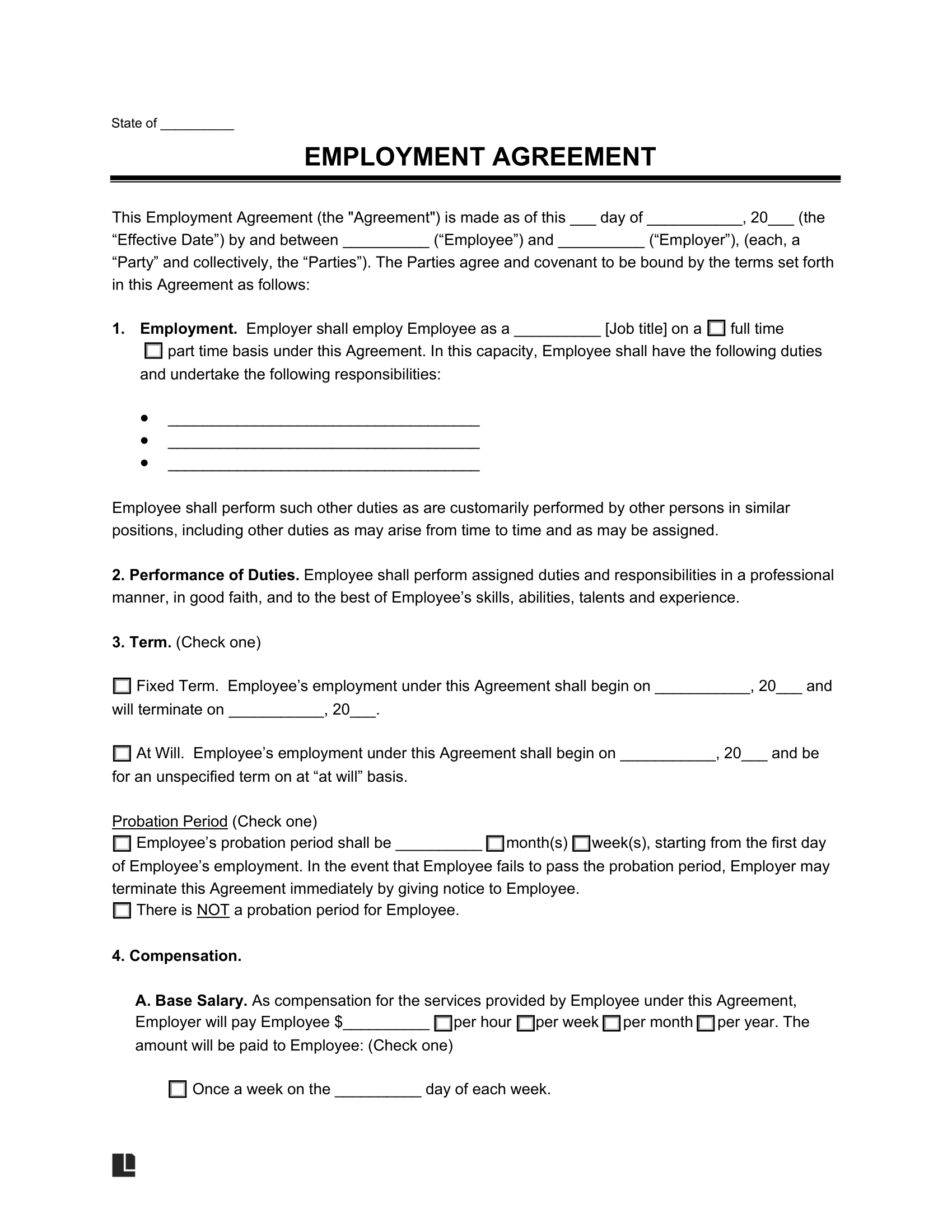
Create a clear agreement that works for both sides. View the employment contract sample to see how to structure key terms. When ready, customize our employment contract template before downloading it in PDF or Word format.